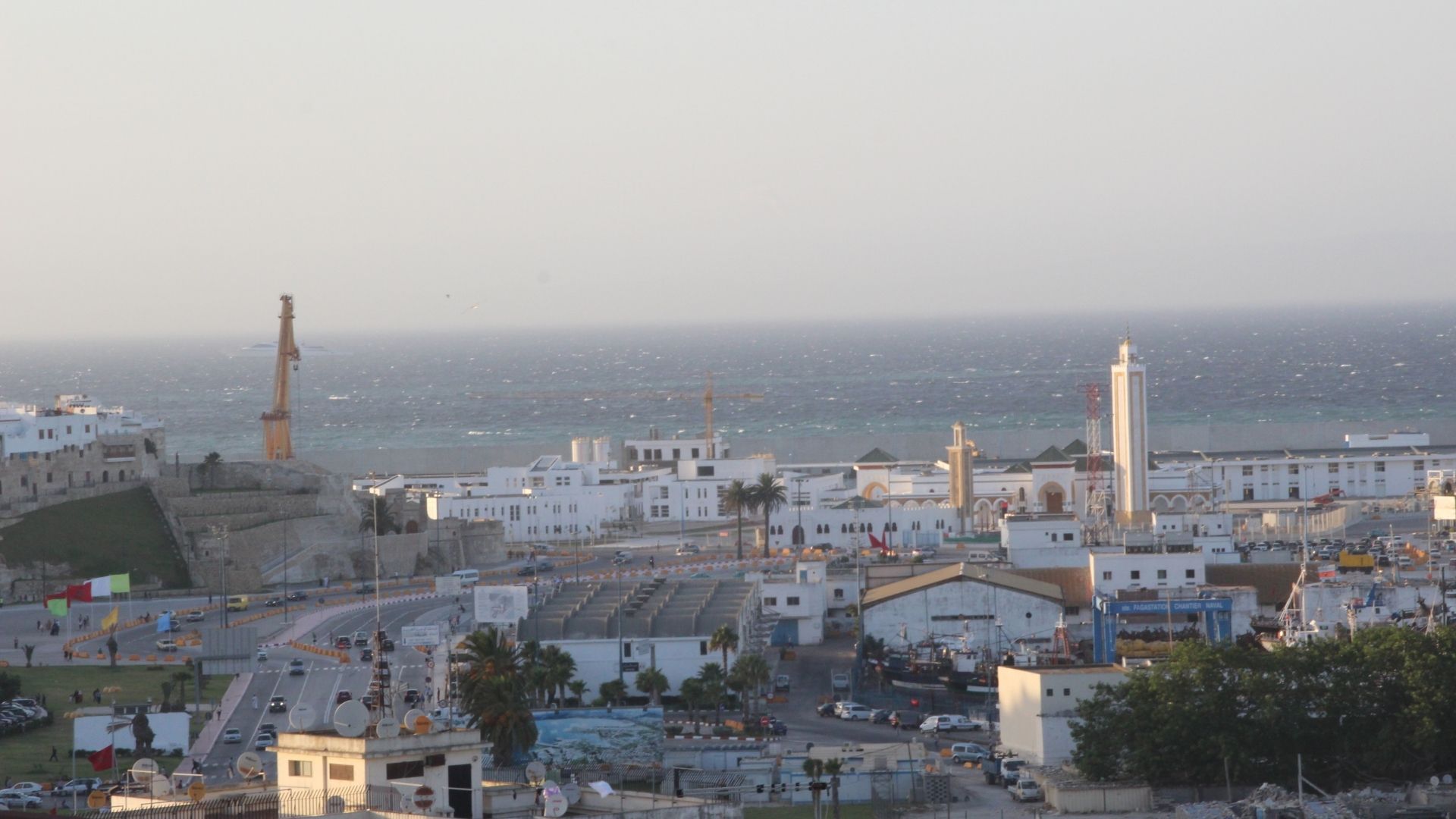
This Tangier travel guide is written for travelers who want to understand the city, not just pass through it. Tangier is not a place that reveals itself instantly. It sits between continents, between oceans, and between histories, and that position has shaped everything about it. You notice it in the light, in the languages spoken on the street, and in the way the city opens outward toward the water.
For many visitors, Tangier is the first stop in Morocco. For others, it is the final pause before crossing back to Europe. Either way, it leaves an impression that lingers. This Tangier travel guide focuses on what makes the city feel lived-in rather than staged, and how to experience it without rushing.
Tangier Travel Snapshot
This Tangier travel guide covers what to see, where to stay, when to visit, and how long to spend exploring Morocco’s historic northern gateway between Europe and Africa.
Location: Northern Morocco at the Strait of Gibraltar
Status: Major port city linking the Atlantic Ocean and Mediterranean Sea
Known For: hillside medina, Kasbah views, international cultural history, coastal scenery
Best For: coastal city breaks, cultural exploration, Spain–Morocco travel routes
Mid-Range Budget: €50–€110 per person per day
Ideal Stay: 2–3 days
Best Time to Visit: Spring and autumn (mild coastal climate year-round)
Not Ideal If: you want Sahara desert landscapes or purely traditional imperial-city travel
On This Page:
Where Tangier Is Located – Tangier Travel Guide Overview
Any useful Tangier travel guide begins with geography. Tangier sits at Morocco’s northern edge, where the Atlantic Ocean meets the Mediterranean Sea. The Strait of Gibraltar lies just across the water, and on clear days, the Spanish coast is visible from the Kasbah.
This position has always mattered. Tangier developed as a port city long before modern borders existed. Traders, diplomats, migrants, and writers all passed through, and many stayed. The city absorbed influences without losing its Moroccan core, which is why Tangier feels different from cities deeper inland.
For a broader understanding of Morocco’s regional diversity, see our guide Things to Do.
Exploring the Medina and Kasbah – Tangier Travel Guide Highlights
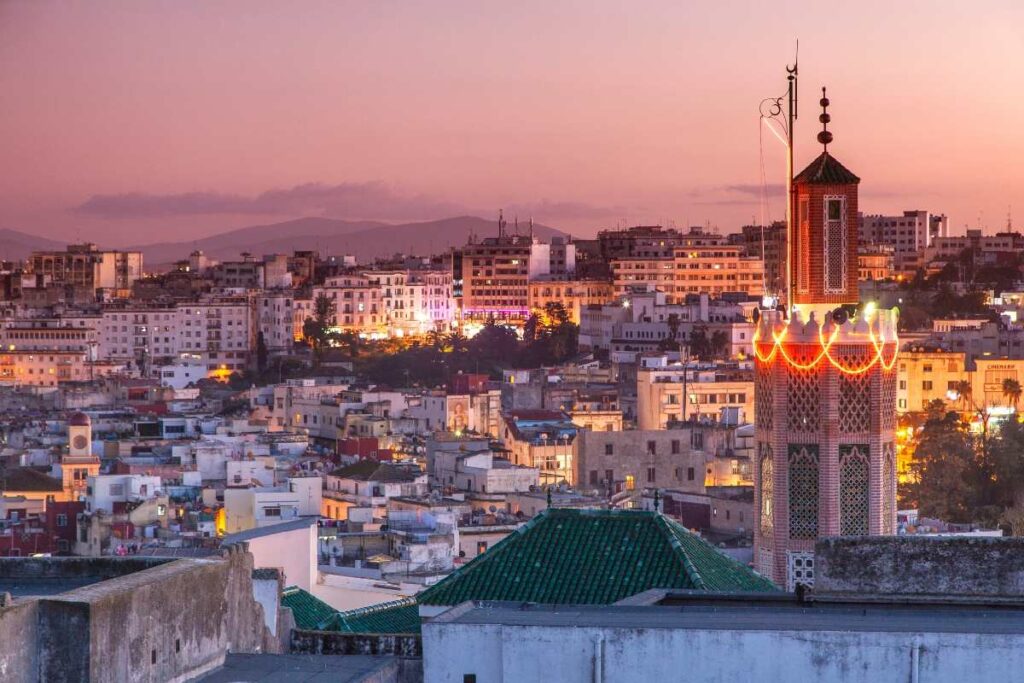
A Tangier travel guide would be incomplete without time spent in the medina. Unlike flatter imperial cities, Tangier’s old city rises toward the Kasbah, with narrow streets that shift suddenly into open viewpoints.
The Kasbah sits above the port, watching both seas. Walking here is not about efficiency. You move slowly. You stop often. A doorway opens into a bakery. A carpenter works behind a half-shuttered shop. Life continues at its own pace.
The Kasbah Museum offers historical context, but the real understanding comes afterward, when you step back into the streets and recognize how those layers still exist.
For official background and destination information, the Moroccan National Tourism Office provides reliable context on Tangier and northern Morocco.
Café Culture and Daily Life – Tangier Travel Guide Insight
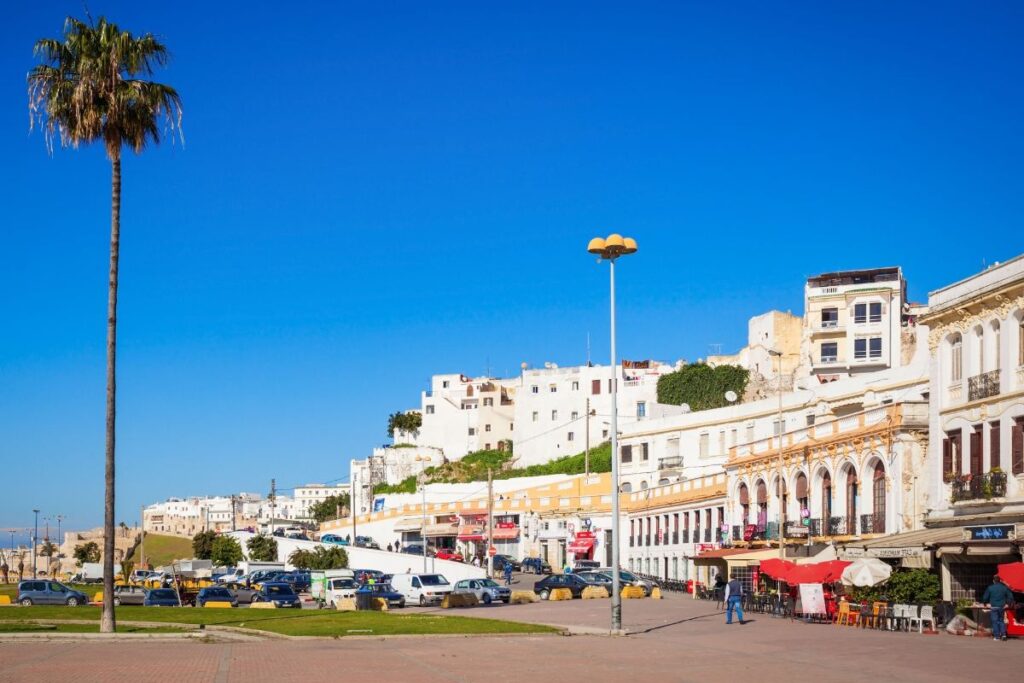
One thing every good Tangier travel guide should mention is the city’s café rhythm. Coffee in Tangier is not something you grab and go. It is something you sit with.
Cafés face the sea, hide inside the medina, or line modern boulevards. You order, you wait, and no one expects you to leave quickly. Conversations stretch naturally. Silence is comfortable.
This tradition comes from Tangier’s long history as a meeting place. Writers once filled these cafés, but today you’ll find students, retirees, artists, and dockworkers sharing the same space. It is one of the simplest ways to feel part of the city.
Walking the Corniche and Modern Tangier
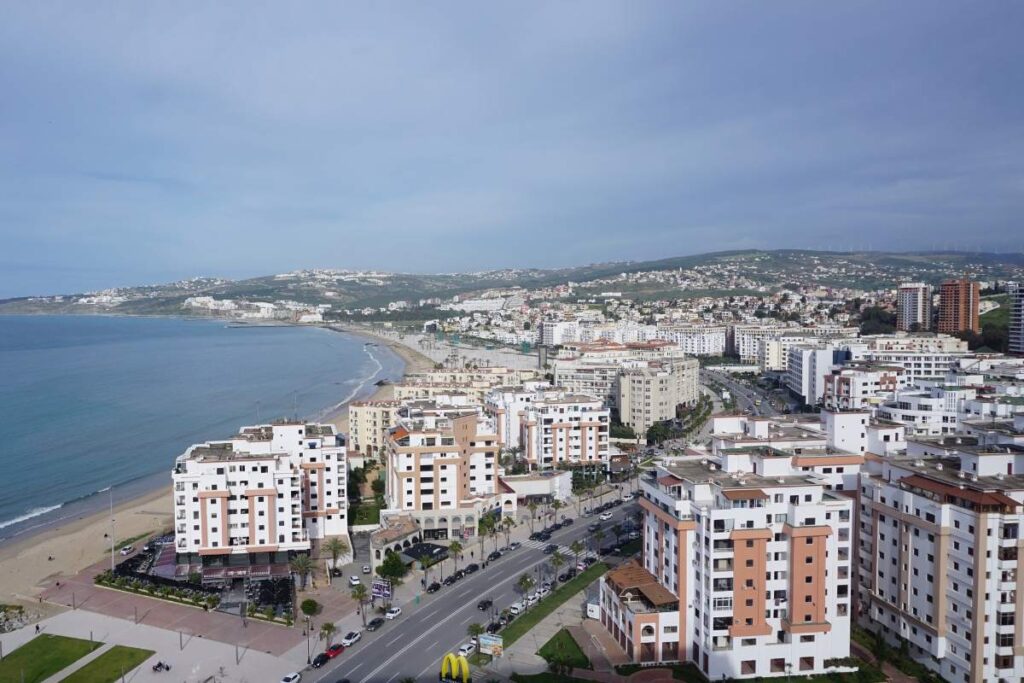
A balanced Tangier travel guide should move beyond the old city. The corniche curves along the bay, open and wide, with uninterrupted sea views. Evenings here are social. Families walk together. Vendors sell roasted corn. Teenagers gather by the railings.
Modern Tangier stretches inland with broad streets and contemporary architecture. This side of the city shows that Tangier is not frozen in nostalgia. It is active, expanding, and connected to the rest of Morocco.
For visitors planning multiple cities, compare Tangier with Marrakech Travel Guide, and Fes Travel Guide.
Day Trips Included in This Tangier Travel Guide
One reason Tangier works well as a base is how close it is to natural and cultural landmarks.
Cape Spartel lies west of the city, where the Atlantic meets the Mediterranean. The wind is strong, the views wide, and the landscape feels open. Nearby, the Hercules Caves face the sea, shaped more by erosion than mythology.
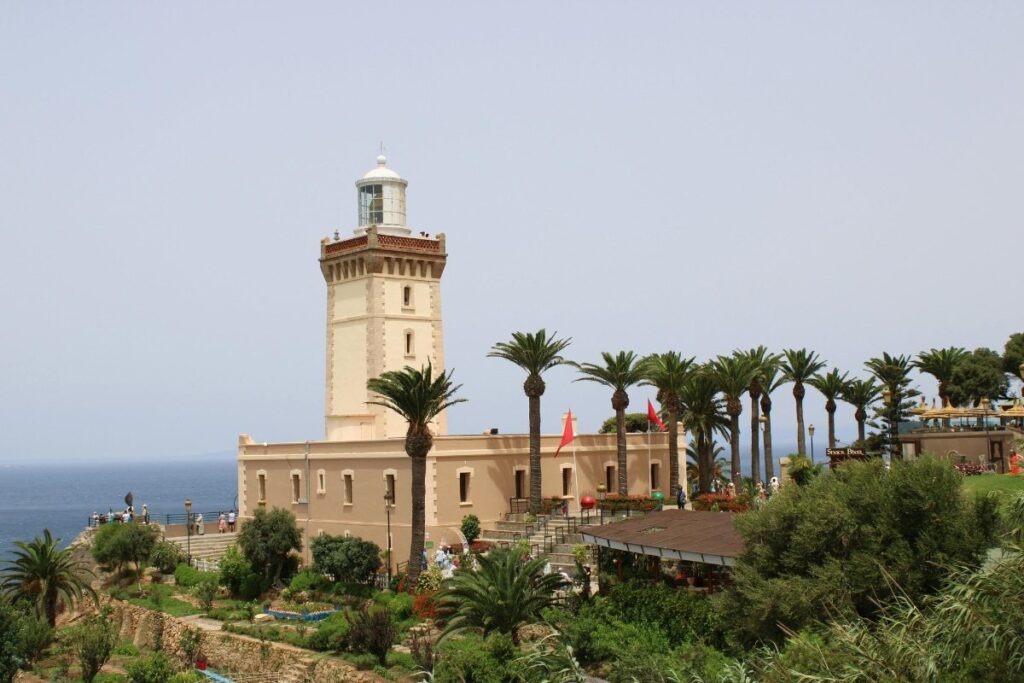
Further inland, Chefchaouen offers a slower pace in the Rif Mountains, while Tetouan reflects Andalusian influence and local tradition. These short trips help place Tangier within a broader northern Moroccan context.
Best Time to Visit Tangier
This Tangier travel guide recommends spring and autumn for comfortable walking and clear skies. Temperatures are mild, and the city feels balanced.
Summer brings energy and long evenings along the coast. Winter remains relatively mild, though wind and rain are more common. Tangier’s weather changes quickly, shaped by its proximity to the sea.
How Many Days to Spend in Tangier
A short stay shows the surface. A longer one reveals the city.
One or two days allow time for the medina, Kasbah, and coast. Three days create space for cafés, walking without direction, and a nearby excursion. More time lets Tangier become a base rather than a checklist.
This Tangier travel guide encourages travelers to slow down. Tangier responds best when you do.
Getting Around Tangier
Inside the medina, walking is essential. Outside it, taxis are affordable and widely available. Distances are reasonable, and navigation is straightforward.
Guided tours can help with orientation, especially on a first visit, but Tangier often makes more sense once you explore independently afterward.
Where to Stay in Tangier
Accommodation choices shape your experience. Riads inside the medina offer immersion. Coastal hotels provide space and sea views. Boutique stays bridge both worlds.
Is Tangier Safe for Solo Female Travelers?
Tangier is generally considered safe for solo female travelers, especially in central districts such as the medina, Kasbah, and seaside areas. Morocco receives millions of international visitors each year, and most trips to Tangier are trouble-free when basic travel awareness is used.
Like many busy port cities, Tangier can involve occasional street persistence, taxi negotiation, or unwanted conversation, particularly in crowded tourist zones. Dressing modestly, walking confidently, and avoiding empty streets late at night usually prevents most issues. Using official taxis, booking well-reviewed accommodation, and keeping valuables discreet further reduces risk.
Many women travel independently in Tangier and across Morocco every year. With normal precautions — the same used in any large European city — the destination is widely manageable for solo travel.
What to Pack for Tangier
Packing for Tangier is straightforward, but the coastal climate and cultural context influence what works best. Comfortable walking shoes are essential for the medina’s uneven streets, while light breathable clothing suits most of the year.
Visitors should also bring a light jacket or windbreaker, even in summer, as Atlantic winds can make evenings cooler along the corniche. Sunglasses, sunscreen, and a reusable water bottle are useful for daytime exploring. For cultural comfort, clothing that covers shoulders and knees is recommended when visiting traditional neighborhoods or religious sites.
A small daypack, portable phone charger, and basic travel adapter (European plug types C or E) complete most Tangier packing lists.
Tangier Tipping Culture Explained
Tipping in Tangier is customary but modest. In cafés and casual restaurants, rounding up the bill or leaving around 5–10% is typical. In higher-end restaurants, a slightly larger tip may be expected if service is not already included.
Taxi drivers usually do not expect a formal tip, but passengers often round the fare up to the nearest convenient amount. Hotel staff, porters, and local guides appreciate small gratuities for helpful service.
Because Morocco still operates heavily in cash, carrying small coins and low-value dirham notes makes tipping easier during everyday interactions.
Internet, SIM Cards, and Connectivity in Tangier
Tangier has strong mobile coverage and reliable internet access across most tourist areas. Hotels, riads, cafés, and restaurants commonly offer free Wi-Fi, although speeds may vary inside older medina buildings.
Many travelers choose to buy a local Moroccan SIM card at the airport or in city shops. Prepaid tourist SIMs are inexpensive and usually include generous data packages, making navigation apps, ride booking, and messaging easy throughout the trip.
International roaming also works in Tangier, but local SIM cards are typically far cheaper for stays longer than a few days.
Explore More Cities in Morocco
Planning a trip beyond Tangier? Discover more destinations across Morocco:
Final Thoughts on Visiting Tangier
This Tangier travel guide is meant to prepare you, not define the experience for you. Tangier works best when you give it time. Walk slowly. Sit often. Watch the water.
The city has always been a threshold, never just a destination. That is what gives it its character, and why people continue to return long after their first visit.
Frequently Asked Questions
Yes. Tangier is worth visiting for travelers interested in history, culture, and coastal scenery. The city offers a different atmosphere from Morocco’s interior cities, shaped by its position between Europe and Africa and its long international past. It is both relaxed and layered, making it rewarding even for a short stay.
Two days are enough to see Tangier’s main highlights, including the medina, Kasbah, and coastline. Three days allow for a slower pace, café time, and nearby excursions such as Cape Spartel or the Hercules Caves. With four or more days, Tangier works well as a base for northern Morocco.
Tangier is generally safe for tourists, especially in central areas such as the medina, Kasbah, and corniche. As in any large city, visitors should stay aware of their surroundings, avoid poorly lit streets late at night, and keep personal belongings secure.
Tangier is best known for its strategic location at the Strait of Gibraltar, its historic medina overlooking the sea, and its role as a cultural crossroads. The city has long attracted writers, artists, and travelers, giving it a distinct identity within Morocco.
The best time to visit Tangier is during spring (March to May) and autumn (September to November). These seasons offer mild temperatures and comfortable conditions for walking. Summer is lively along the coast, while winter is mild but can be windy.
Yes. Tangier can be visited as a day trip from southern Spain via ferry, particularly from Tarifa or Algeciras. While a day trip allows for a quick introduction to the city, staying overnight provides a deeper and more relaxed experience.
Top things to do in Tangier include exploring the medina and Kasbah, walking along the corniche, visiting the Kasbah Museum, relaxing in traditional cafés, and taking short trips to nearby sites such as Cape Spartel and the Hercules Caves.
Tangier is moderately priced compared to other Moroccan cities. Accommodation and dining options range from budget to high-end, allowing travelers to adjust spending easily. Prices are generally comparable to Casablanca and higher than smaller inland cities.
The medina is best explored on foot. For longer distances, small taxis are affordable and widely available. Many visitors also choose guided tours for orientation, especially on a first visit to the city.
Where you stay in Tangier depends on your travel style. Riads in the medina offer an immersive experience, while hotels near the coast provide sea views and easy access to the corniche. Both areas are well connected and suitable for visitors.
