I’ve been to Essaouira more times than I can count. This Essaouira travel guide isn’t built from a checklist — it comes from returning again and again, sometimes for a night, sometimes for a week when Marrakech feels too loud and the air too dry.
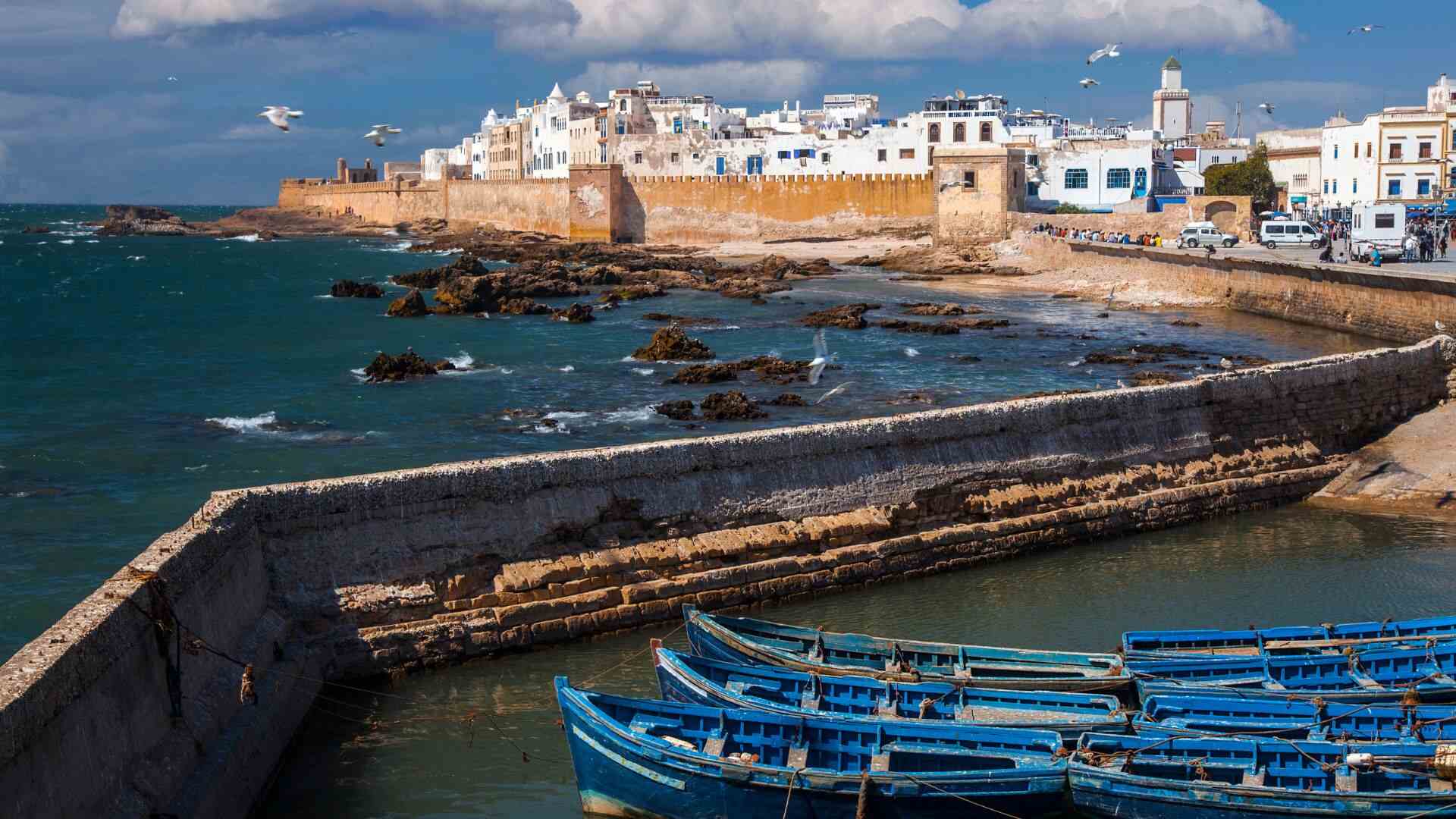
Essaouira doesn’t try to impress you. It doesn’t compete with the scale of Marrakech or the density of Fes. It simply unfolds. White walls against the Atlantic. Blue boats lined up in the harbor. A medina you can actually breathe in.
If you’re looking for intensity, you won’t find it here. That’s not accidental. Essaouira was designed to function — as a port, as a trading hub, as a living city — and that sense of proportion still shapes it today.
Essaouira Travel Snapshot
This Essaouira travel guide introduces Morocco’s relaxed Atlantic port city, known for its UNESCO-listed medina, working fishing harbor, and distinctive coastal atmosphere shaped by wind and ocean light.
Location: Atlantic coast of western Morocco, about 3 hours from Marrakech
Status: Historic 18th-century fortified port city with UNESCO-listed medina
Known For: ramparts, blue fishing boats, fresh seafood, Gnawa music, strong coastal winds
Best For: relaxed coastal travel, couples, photographers, first-time Morocco visitors
Mid-Range Budget: €60–€120 per person per day depending on riad and dining choices
Ideal Stay: 2–4 days for medina exploration, beach walks, and nearby excursions
Best Time to Visit: spring and autumn for warm sun with more manageable wind
Not Ideal If: you want guaranteed calm swimming beaches, luxury resorts, or intense nightlife
Start by understanding how Essaouira’s coastal location and historic port layout shape the experience, then explore the city’s main sights, food culture, nearby excursions, and practical planning advice for your visit.
On This Page:
Is Essaouira Worth Visiting?
Yes — Essaouira is worth visiting for most travelers to Morocco. Known for its Atlantic coastline, UNESCO-listed medina, fresh seafood, and relaxed pace, it offers one of the easiest and most atmospheric coastal stops in the country. While smaller than Marrakech or Fes, spending two to three days here allows you to experience the harbor, beach walks, and the slower rhythm that makes Essaouira memorable.
Where Is Essaouira – Travel Guide Overview
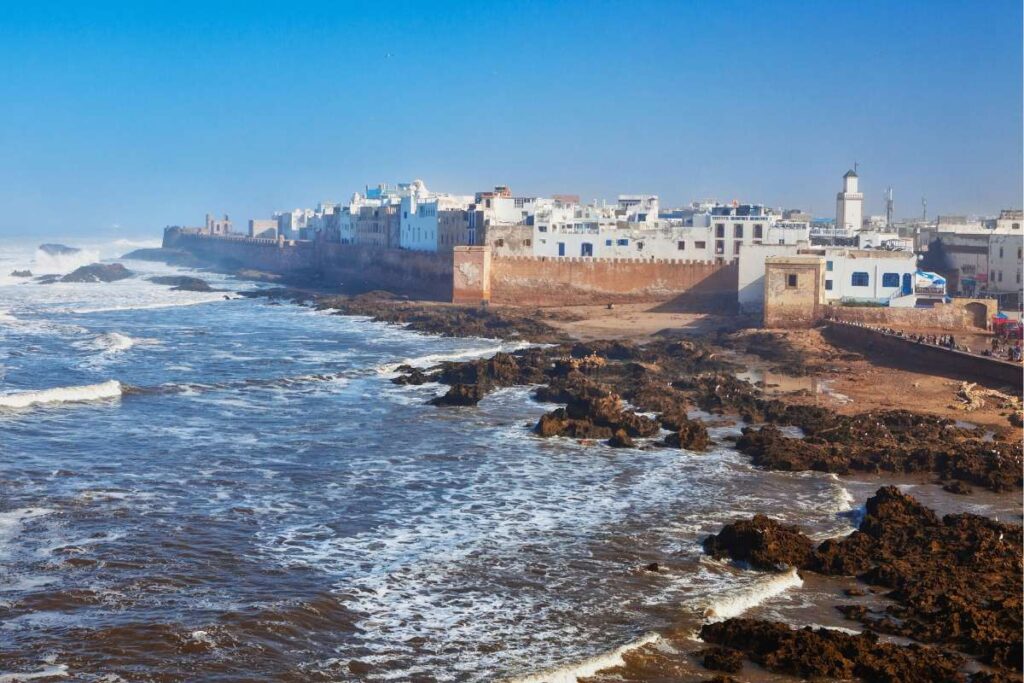
Essaouira sits on Morocco’s Atlantic coast, about three hours west of Marrakech by road. The drive itself tells you what’s coming. Red earth slowly flattens. Argan trees replace palm groves. The air shifts — cooler, saltier.
The ocean shapes everything here. Even in July, when Marrakech feels heavy, Essaouira rarely crosses 26°C. The trade winds that locals simply call chergui or “the wind” are constant companions. Some days they’re gentle. Some days they take over the beach entirely.
That wind is not a detail. Any honest Essaouira travel guide has to start with that wind — because it shapes everything else. It’s the city’s personality.
Essaouira vs Marrakech: Which Should You Choose?
In this Essaouira travel guide, the choice isn’t about better or worse — it’s about pace.
Marrakech is intensity. Sound, color, heat, movement. The medina is dense, the souks are immersive, and the energy rarely switches off. It’s a city that demands attention.
Essaouira moves differently. The streets are wider. The air is cooler. The Atlantic wind softens everything. You can walk without navigating constant noise. You can sit in a café without feeling pulled elsewhere.
If you want stimulation, scale, and sensory overload, choose Marrakech.
If you want atmosphere, ocean light, and space to breathe, choose Essaouira.
Many travelers do both — Marrakech for contrast, Essaouira for balance.
A Brief History of Essaouira
Modern Essaouira was built in the 18th century under Sultan Mohammed III, who wanted a proper Atlantic port — organized, strategic, and open to international trade. At the time, Morocco needed direct access to European markets without relying on older northern ports.
To achieve this, he commissioned the French engineer Théodore Cornut in the 1760s to design the city. Unlike older Moroccan medinas that evolved organically over centuries, Essaouira was planned from the start — with fortified ramparts, structured streets, and a layout designed for commerce and defense.
The old name, Mogador, still appears on maps and hotel signs. For centuries, this was a meeting point — Muslim, Jewish, Amazigh, and European merchants trading sugar, spices, textiles, and stories. The Jewish merchant community played a significant role in shaping the city’s international connections.
In 2001, the medina was recognized by UNESCO as a World Heritage Site. But even without the designation, the city’s coherence is obvious — nothing here feels accidental.
Top Things to Do in Essaouira
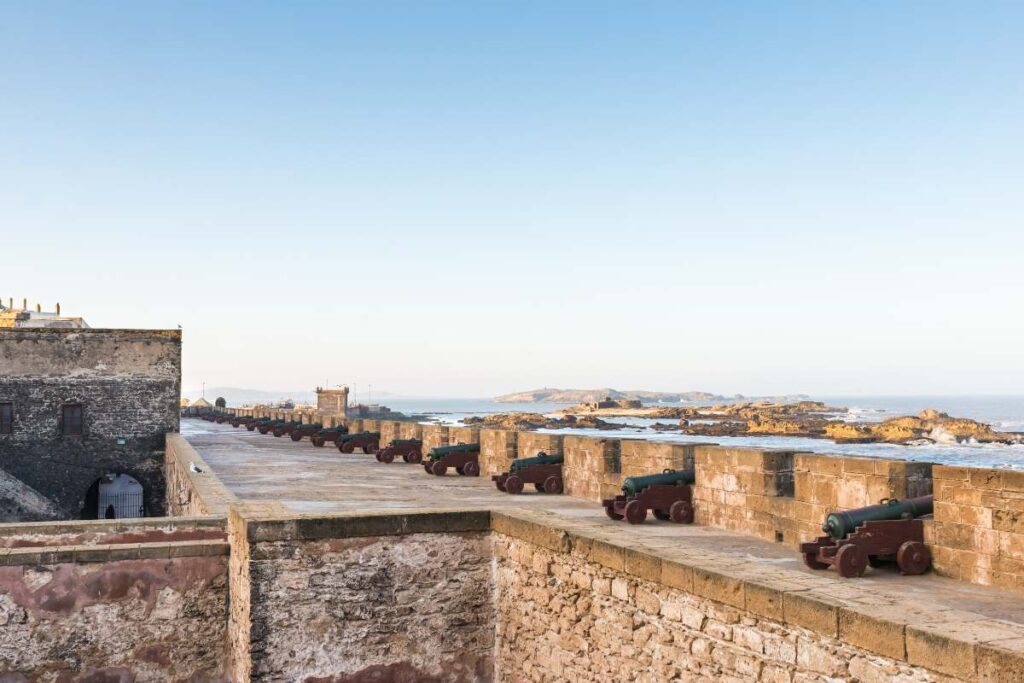
Start with the ocean-facing ramparts at Skala de la Ville. Stand by the cannons and watch the waves break against the rocks below. It’s always windy up there — that’s part of it.
These are the places I return to every time.
It’s one of the few places in Morocco where you can clearly see how military architecture and daily life still overlap.
Port of Essaouira and the Working Harbor Atmosphere
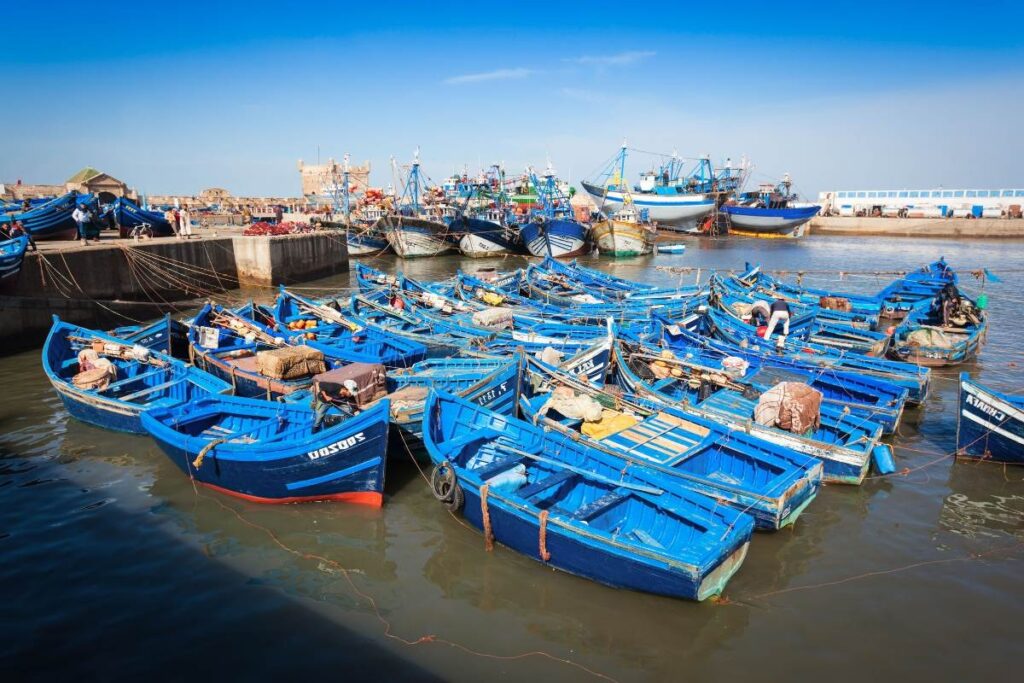
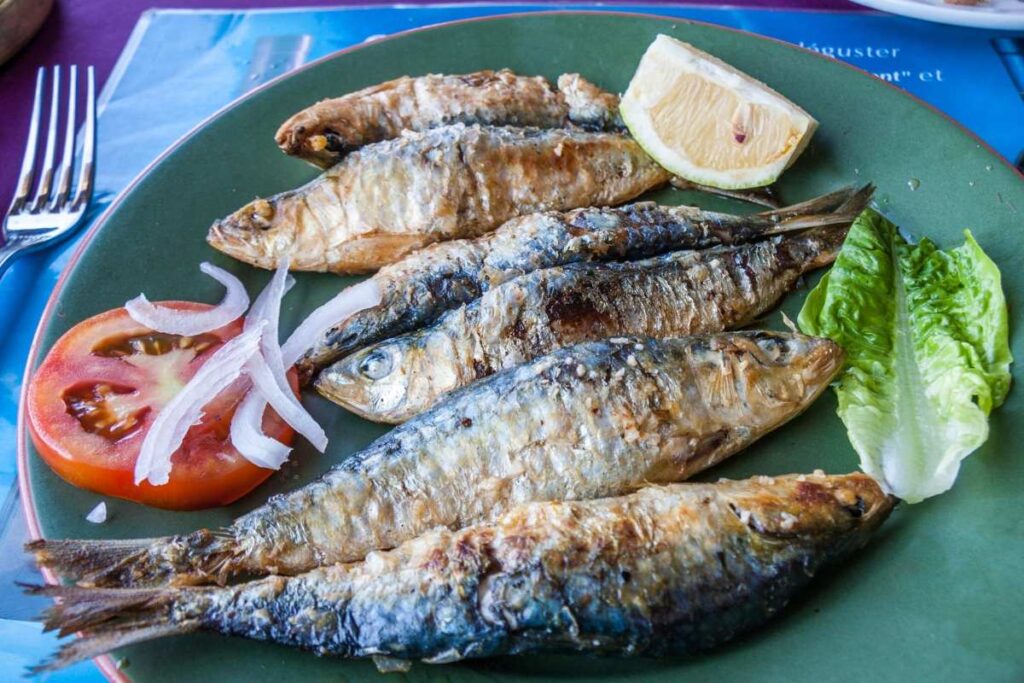
Walk down to the Port of Essaouira in the late afternoon. The blue wooden boats return one by one. Men untangle nets. Seagulls circle with unreasonable confidence. If you’re hungry, choose a fish from a crate and have it grilled on the spot with cumin and lemon.
Arrive early in the morning and the air smells sharply of salt and diesel. Crates of sardines hit the ground with a dull thud. It’s loud, practical, and entirely uncurated — a working port before it’s a photo opportunity.
Walking the Medina Streets
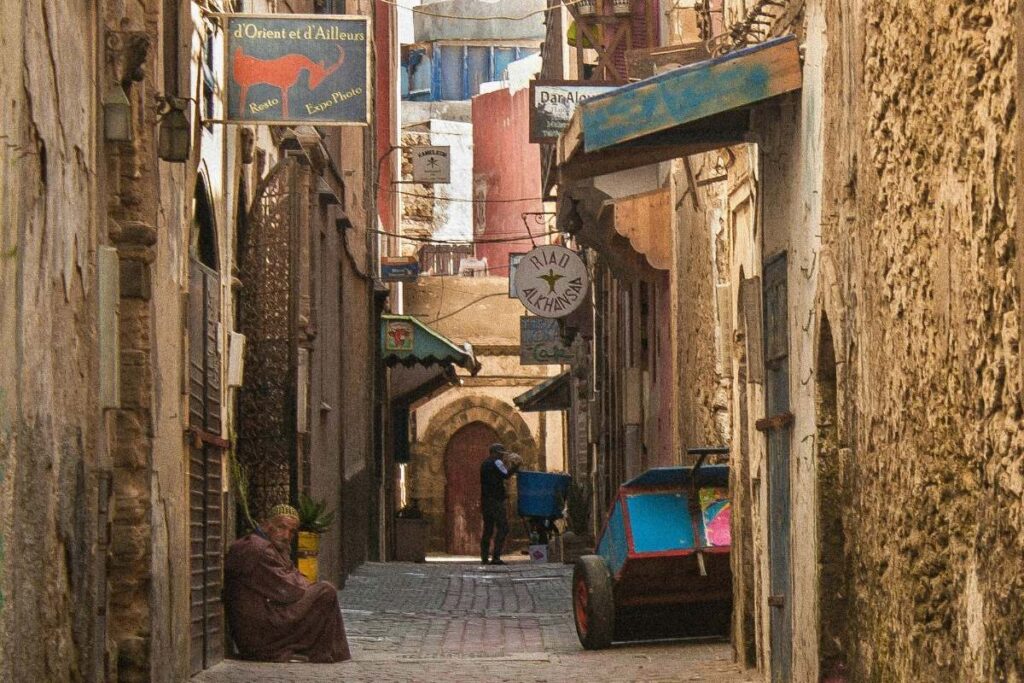
Inside the medina, take your time. Thuya wood workshops still carve small boxes by hand. Painters lean canvases against white walls. You won’t be chased into shops. A simple “la, shukran” is enough. Travelers coming from Marrakech often notice the difference immediately.
And then there’s the beach — long, open, sometimes wild. On windy days it belongs to kite surfers. On calmer evenings, it belongs to walkers and horses moving slowly along the waterline.
For a detailed breakdown, see our full guide to things to do in Essaouira.
Essaouira Medina and UNESCO World Heritage Status
The medina here is different. Streets are wider. You can see the sky. If you get lost, it doesn’t last long. The medina is also one of the easiest in Morocco to navigate, with straight streets and clear sightlines that make walking here far less confusing than in larger historic cities.
This 18th-century layout — preserved and recognized by UNESCO — blends Moroccan design with European military planning. Bastions protect the sea-facing side. Houses remain modest in height. Light reflects off whitewashed facades, softening everything.
Unlike larger medinas, this one feels lived-in without feeling overwhelmed. Children run errands. Shopkeepers sit outside without urgency. Visitors and residents share the same rhythm.
The old Jewish quarter, known as the Mellah, sits just behind the main streets. Its balconies and wooden shutters hint at the city’s once-thriving Jewish merchant community, which played a central role in connecting Morocco to Europe and West Africa.
Food & Seafood in Essaouira
Seafood here isn’t curated. It’s practical.
Sardines are king. Grilled whole, split open with a squeeze of lemon. Calamari fried lightly, not battered into submission. Sea bream cooked simply over charcoal.
But some of my favorite meals in Essaouira have been smaller moments:
A bowl of harira on a cold evening.
Mint tea on a windy terrace near Moulay Hassan square.
Fresh msemen from a street vendor in the morning.
The food reflects the city — straightforward, unpretentious, honest.
If food is central to your trip, our Morocco food guide covers regional specialties in more detail.
Where to Stay & Eat (Quick Picks)
You don’t need luxury here. You need the right atmosphere.
Where to Stay in Essaouira
Inside the medina is almost always the best choice. You’ll be walking distance from the port, ramparts, and beach — and mornings feel quieter before day visitors arrive.
- Riad Chbanate – Restored 18th-century house with carved ceilings and a calm rooftop terrace. Mid-range, intimate, and well located.
- Villa Maroc – One of the city’s original boutique riads, steps from the ramparts. Character over flash.
- Budget riads inside the medina typically range from €40–€80 per night, depending on season.
- Boutique stays usually sit between €100–€180, rising in peak summer.
If you prefer space and quiet, small guesthouses just outside the walls offer easier access and less wind exposure.
Where to Eat in Essaouira
Seafood near the port is the obvious starting point. Choose your fish, pay by weight, and expect to spend €6–€15 for a fresh, simple meal.
For something more refined:
- La Table by Madada – Modern seafood with subtle Moroccan influence.
- Taros – Rooftop terrace overlooking Place Moulay Hassan; good for sunset drinks.
But some of the best meals are smaller ones — harira in winter, mint tea on a windy terrace, warm msemen from a street griddle.
Like the city itself, eating here is straightforward, unpretentious, and quietly satisfying.
A comfortable mid-range daily budget in Essaouira typically falls between €60–€120 per person depending on season.
Gnawa & Artistic Identity
Essaouira has always attracted outsiders — musicians, painters, travelers who arrived for a weekend and stayed for years.
Music isn’t a side note in this Essaouira travel guide — it’s central to understanding the city’s atmosphere.
The city is closely tied to Gnawa music, a spiritual tradition rooted in West African heritage. Every summer, the Gnawa World Music Festival fills the squares with deep bass rhythms and call-and-response chants that echo off the walls late into the night.
Gnawa music isn’t just performance — it has spiritual roots tied to healing rituals and West African ancestry. The guembri’s deep bass rhythm isn’t meant to entertain; it’s meant to ground you.
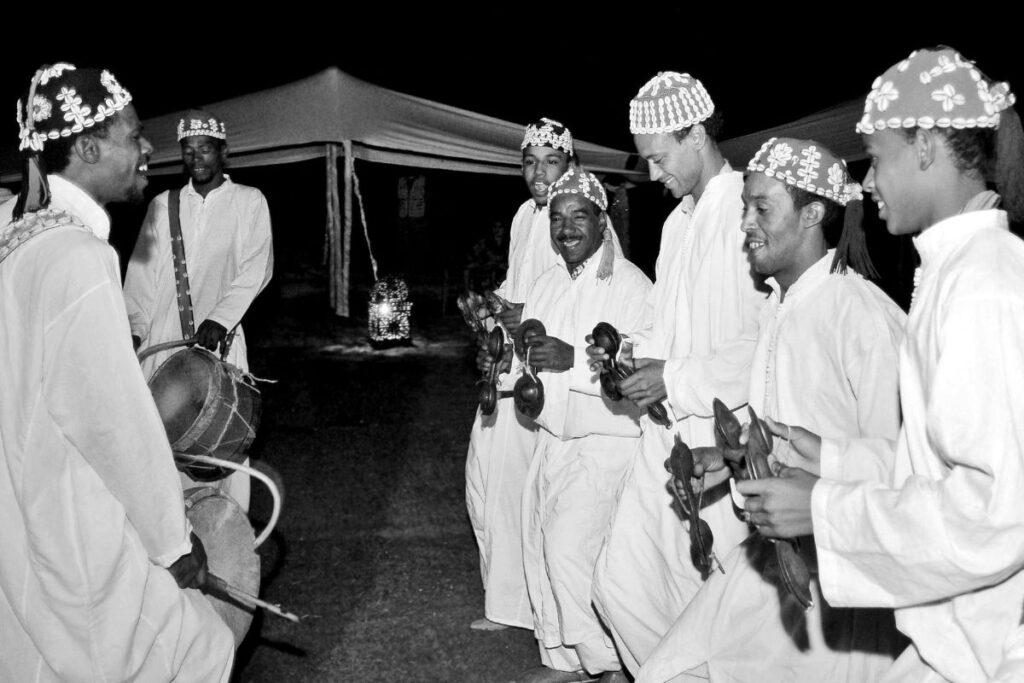
Even outside the festival, you’ll hear guembri strings drifting from doorways. The music isn’t performed for tourists; it’s part of daily life, woven into the city’s rhythm.
You can explore more about Morocco’s music traditions in our culture guide.
Best Tours in Essaouira
You don’t need a guide to navigate Essaouira — the medina is manageable and the rhythm is easy. But the right tour changes what you notice.
A guided walking tour through the medina brings structure to what might otherwise feel like pleasant wandering. Local guides explain the European military design, point out hidden synagogues in the Mellah, and decode architectural details you’d likely miss. The stories of Mogador’s merchant families make the straight streets feel layered rather than simple.
If food is part of how you understand a place, consider a food tour. These usually combine seafood tastings near the port with stops for harira, msemen, or pastries tucked inside quiet bakeries. It’s less about volume and more about context — how Atlantic trade shaped the local table.
Along the beach, surf and kitesurf lessons are widely available. Essaouira’s steady wind makes it one of Morocco’s best beginner-friendly surf spots. Instructors focus on fundamentals, and even first-timers can often stand up by the end of a session.
For a deeper historical perspective, specialized heritage tours explore the city’s Jewish quarter, old consulates, and fortified ramparts in greater detail.
For curated options and updated recommendations, see our full guide best tours in Essaouira.
Day Trips from Essaouira
If you have extra time, leave the walls for a few hours.
Sidi Kaouki is quieter than Essaouira’s main beach — wide, raw, often nearly empty outside summer.
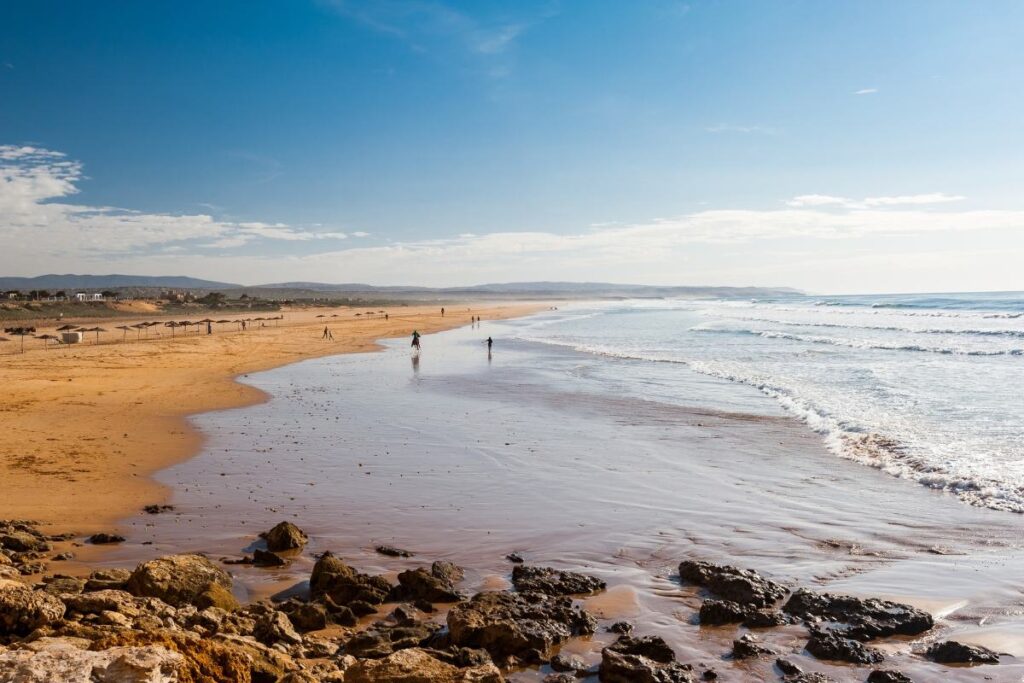
Diabat, just south of town, feels half-forgotten. Sand dunes, crumbling ruins, and stories linking it to Jimi Hendrix. It feels worlds away from the organized symmetry inside the medina walls.
Drive inland and you’ll see argan trees stretching across dry hills. In spring, goats sometimes climb them — yes, really.
How to Get There
From Marrakech, the road takes about three hours. Buses are reliable and affordable. Many travelers choose CTM or Supratours. Renting a car gives you freedom to stop along the way.
There’s also Essaouira Mogador Airport, with limited but convenient connections to some European cities.
Most people arrive by road. The shift from inland heat to coastal air is immediate.
Essaouira Weather by Season
Spring and autumn are the sweet spots — warm sun, manageable wind.
Summer stays cooler than inland Morocco, but it’s windier. Average summer temperatures hover between 22°C and 26°C — noticeably milder than Marrakech at the same time. Great for surfers. Less ideal if you’re imagining still, glassy water.
Winter is mild. Some rain, fewer visitors, softer light. I’ve always liked Essaouira in January. The city feels entirely its own.
Timing matters more than people expect when planning your visit.
For broader seasonal planning, see our guide on the best time to visit Morocco.
How Many Days in Essaouira? (Travel Guide Advice)
Two days gives you the essentials — medina walks, port visits, slow meals.
Three or four days lets you settle. Add a beach afternoon. Explore the countryside. Stop checking your watch.
Longer stays work well if you want a coastal base without distraction.
I once stayed five nights in January and barely planned anything. Mornings were for long beach walks. Afternoons drifted between cafés. By the third day, the wind felt familiar rather than intrusive. That’s when Essaouira makes sense.
For most readers of this Essaouira travel guide, slowing down is the real reason to come.
Who It’s For
Essaouira suits travelers who value atmosphere over agenda. It rewards people who are comfortable without constant stimulation.
It’s good for:
- First-time visitors to Morocco who want an easier introduction
- Couples
- Solo travelers
- Anyone needing a pause after Marrakech
It’s not ideal for nightlife seekers or luxury resort expectations. The charm here is subtler.
Getting Around
You’ll walk almost everywhere. The medina is compact. The beach is steps away. Petit taxis are inexpensive if you need one, but most days you won’t.
Essaouira is manageable — and that quiet manageability is precisely why people return.
This Essaouira travel guide is designed to help you plan realistically — not just admire the scenery.
Explore More Cities in Morocco
Planning a trip beyond Essaouira? Discover more destinations across Morocco:
Planning Your Trip to Essaouira
Essaouira isn’t a city you rush through. It’s a place that works slowly on you — in the sound of the Atlantic against the ramparts, in the rhythm of fishing boats returning at dusk, in the quiet ease of a medina where walking never feels like navigating.
Most travelers arrive thinking they’re adding a short coastal stop to their Morocco itinerary. Many leave wishing they had stayed longer. The city doesn’t overwhelm you with sights; it settles you into a different pace, one shaped by wind, ocean light, and everyday life that hasn’t been staged for visitors.
If your trip to Morocco needs contrast after the intensity of larger cities, or simply a few days where plans matter less than atmosphere, Essaouira usually becomes one of the most memorable stops on a Morocco itinerary.
To continue planning, explore Things to Do, Tours & Activities, and Day Trips & Excursions and build a journey at your own pace.
Final Thoughts: Is Essaouira Worth Visiting?
This Essaouira travel guide isn’t about ticking landmarks — it’s about understanding rhythm. The Atlantic wind, the measured pace of the medina, and the balance between working port and historic town all shape a city that rewards patience rather than speed.
For many Morocco itineraries, Essaouira becomes the place where travel finally slows down. After the density of imperial cities, the ocean air and manageable scale make it easier to wander, sit longer, and notice more.
If your trip needs contrast, fresh coastal light, and a destination that feels grounded rather than overwhelming, Essaouira almost always earns its place.
Frequently Asked Questions
Yes. Essaouira is absolutely worth visiting, especially if you want a coastal break from busier cities like Marrakech or Fes. It offers ocean views, a UNESCO-listed medina, fresh seafood, and a relaxed atmosphere that feels easy from the moment you arrive.
Essaouira is best known for its Atlantic coastline, historic ramparts, working fishing port, and strong Gnawa music heritage. The city is also famous for windsurfing and kitesurfing thanks to its steady trade winds.
Two days is enough to explore the medina, port, and beach. Three to four days allows time for slower meals, countryside visits, and nearby beaches like Sidi Kaouki. Longer stays work well if you prefer relaxed, unstructured travel.
Yes. Essaouira is one of the easiest Moroccan cities to navigate. The medina is organized, streets are wider than in many old towns, and the pace is calmer, making it ideal for first-time visitors.
Essaouira is about 190 kilometers (approximately 3 hours by road) from Marrakech. Buses run daily, and many travelers also choose private transfers or rental cars.
Essaouira is known for its wind, especially between May and August. The breeze keeps summer temperatures comfortable but can make beach days feel cooler. Outside peak wind season, conditions are milder but rarely completely still.
Yes, you can swim, but the Atlantic Ocean here is cool year-round. On windy days the sea can be rough, while calmer days are better suited for swimming or simply walking along the shoreline.
Essaouira is widely considered one of Morocco’s safest and most relaxed destinations. Like anywhere, normal precautions apply, but visitors generally find the atmosphere welcoming and low-pressure.
