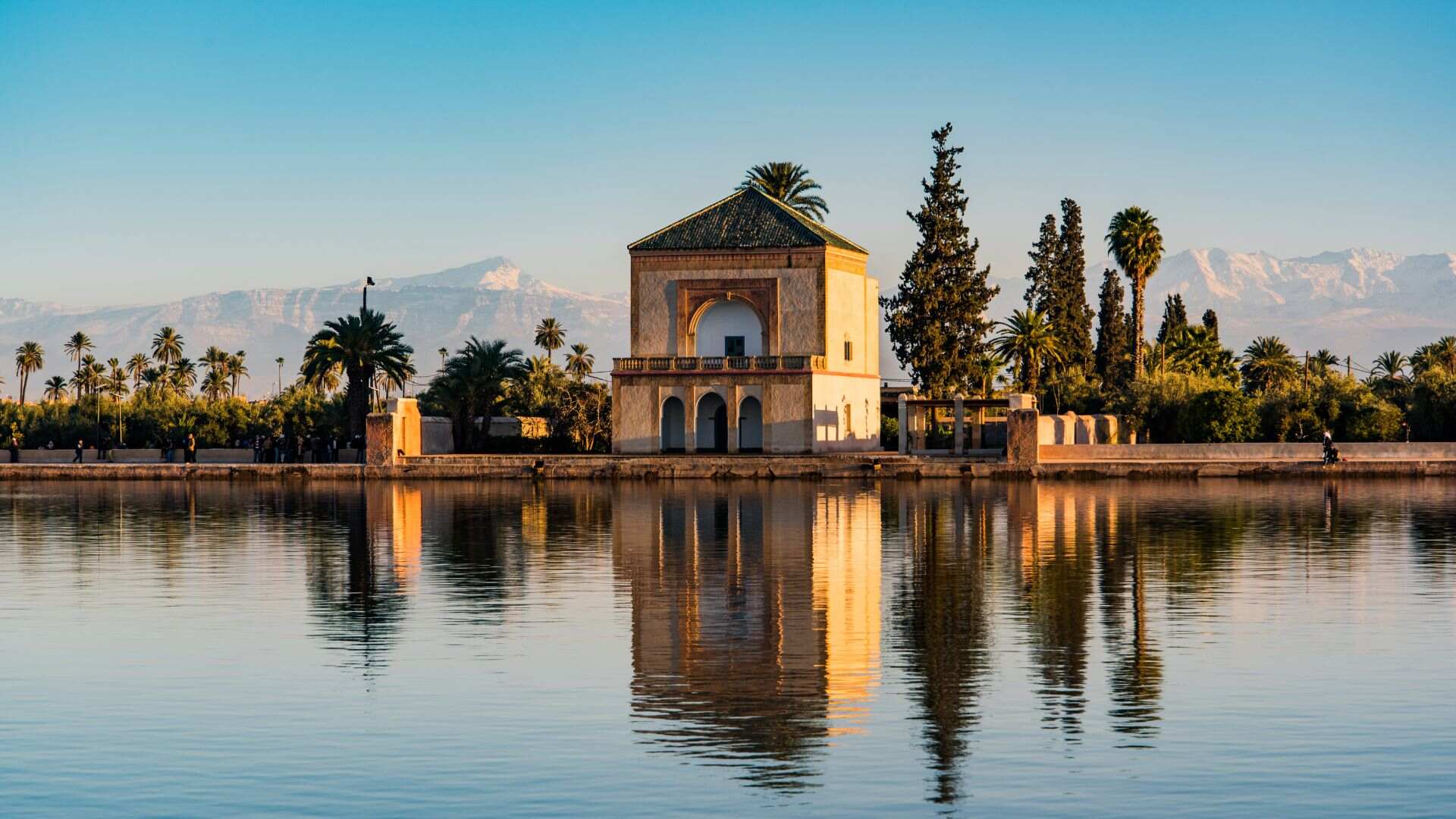
This Marrakech travel guide is written for travelers who want to understand the city, not just pass through it. Marrakech is intense, colorful, and deeply layered. Often called the Red City for its terracotta walls and buildings, it blends centuries of history with a pace of life that never really slows down.
Markets spill into narrow streets, courtyards hide behind modest doors, and daily life unfolds in public. Whether you’re here for a short break or using the city as a base to explore southern Morocco, Marrakech leaves a strong impression.
Marrakech Travel Snapshot
This Marrakech travel guide introduces Morocco’s most visited historic city, known for its lively medina, royal palaces, traditional markets, and easy access to mountains, desert landscapes, and coastal destinations.
Location: Central Morocco, near the Atlas Mountains
UNESCO Status: Medina listed as a UNESCO World Heritage Site
Known For: vibrant souks, historic palaces, riads, Jemaa el-Fna square
Best For: first-time Morocco visitors, culture-focused travelers, base for excursions
Mid-Range Budget: €55–€120 per person per day
Ideal Stay: 3–4 days including one nearby day trip
Best Time to Visit: spring and autumn for manageable temperatures
Difficulty Level: busy but visitor-friendly; medina navigation easier than Fes
Not Ideal If: you prefer quiet destinations or dislike crowded historic centers
On This Page:
Is Marrakech Worth Visiting?
Yes — Marrakech is one of Morocco’s most iconic and accessible destinations, combining historic architecture, vibrant markets, and a wide range of nearby landscapes within easy reach. For many travelers, it serves both as an introduction to Moroccan culture and as a base for exploring the Atlas Mountains, desert plateaus, and Atlantic coast.
While the city can feel intense at first, especially inside the busy medina, most visitors quickly find that its energy is part of the experience. With a mix of historic palaces, traditional riads, modern restaurants, and organized excursions, Marrakech offers one of the most balanced travel experiences in the country.
Travelers who allow at least a few days to explore beyond the main square often discover that Marrakech is not just visually impressive, but deeply layered and surprisingly easy to navigate once its rhythm becomes familiar.
Where Marrakech Is Located and Why It Matters
Marrakech is located in central Morocco, at the foothills of the Atlas Mountains. This position has shaped the city’s role for centuries. It sits at a crossroads between the desert, the mountains, and the coast, which is why it works so well as a starting point for travel.
From here, day trips lead easily to valleys, waterfalls, desert landscapes, and even the Atlantic coast. Few cities in Morocco offer this range within such short distances.
How to Get to Marrakech (Flights, Train & Bus)
Marrakech is one of Morocco’s easiest cities to reach thanks to its major international airport and strong domestic transport connections. Marrakech Menara Airport receives direct flights from many European cities as well as regular domestic routes from Casablanca, Tangier, Fes, and Agadir.
For travelers already inside Morocco, the train is often the most comfortable option. Modern ONCF rail services connect Marrakech with Casablanca, Rabat, and Tangier several times daily. Long-distance buses also operate nationwide and can reach destinations not served directly by rail.
If arriving late in the evening or staying inside the medina, arranging a hotel or riad pickup in advance is usually the easiest option. Vehicles cannot enter the historic old city itself, so most accommodations organize meeting points at nearby gates.
What to See and Do in This Marrakech Travel Guide
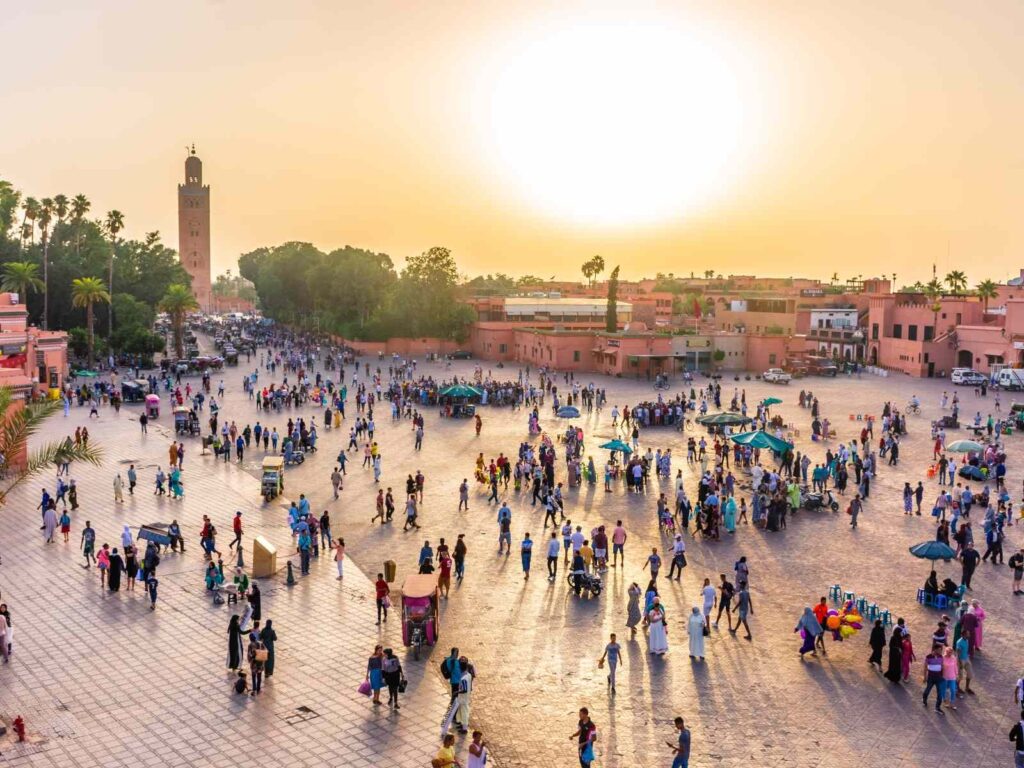
Marrakech rewards curiosity. The city is busy, sometimes overwhelming, but deeply engaging once you find your rhythm.
- Jemaa el-Fna changes character throughout the day, from a working square to a nightly gathering place
- The souks form a dense network of trades, organized by craft rather than chance
- Historic sites like the Bahia Palace reveal the city’s former royal life
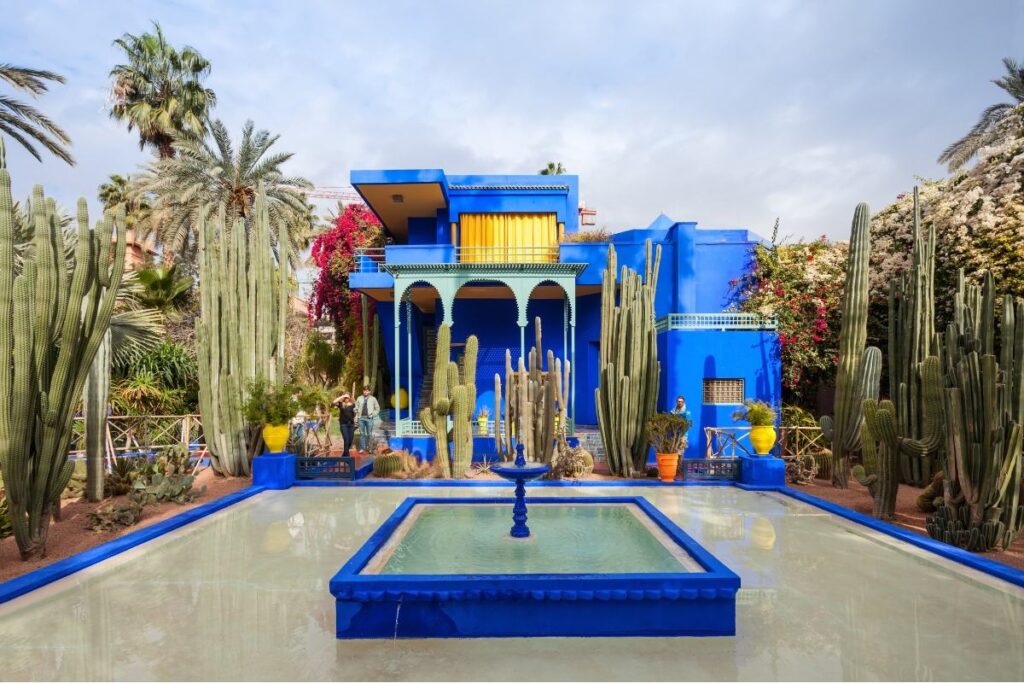
- The Majorelle Garden offers quiet and color away from the streets
- The old medina, a UNESCO World Heritage Site, remains the heart of daily life
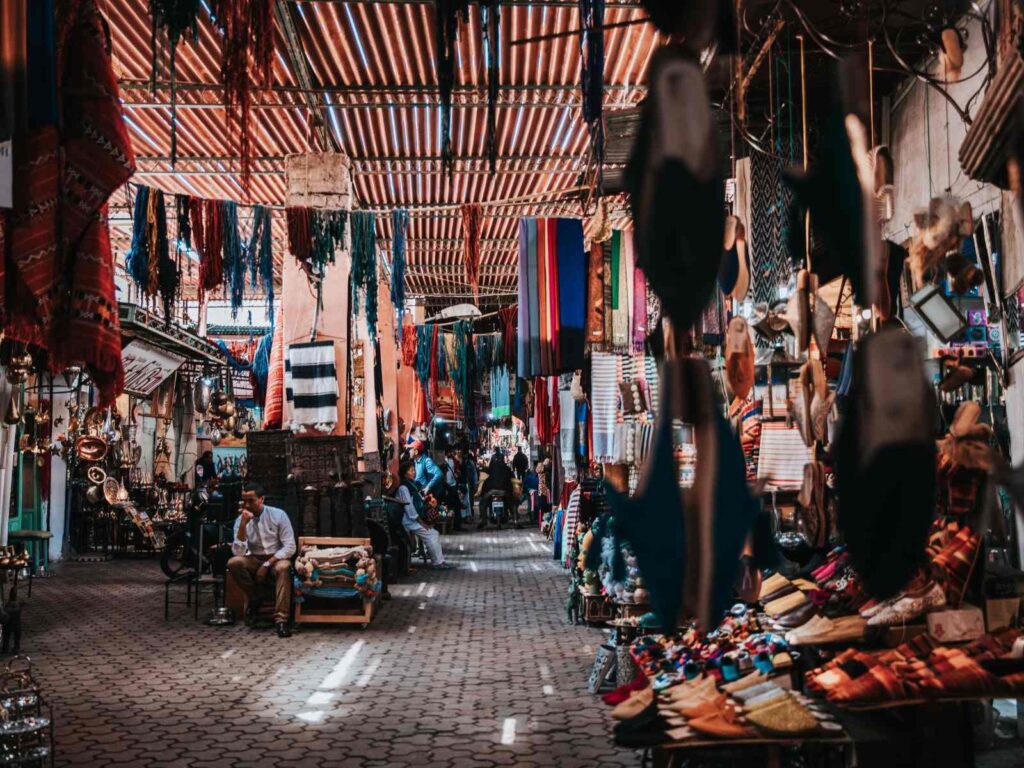
UNESCO details the historical importance of the medina on its World Heritage listing, which helps place what you’re seeing into context.
View Things to Do in Marrakech
Tours and Experiences in This Marrakech Travel Guide
Guided experiences help make sense of Marrakech, especially on a first visit. A good guide explains how neighborhoods work, why certain streets feel chaotic, and where history still shapes daily routines.
Food-focused experiences, walking tours, and small-group city explorations tend to work best. Platforms offer structured options that still leave room for discovery.
Day Trips from Marrakech Travel Guide Highlights
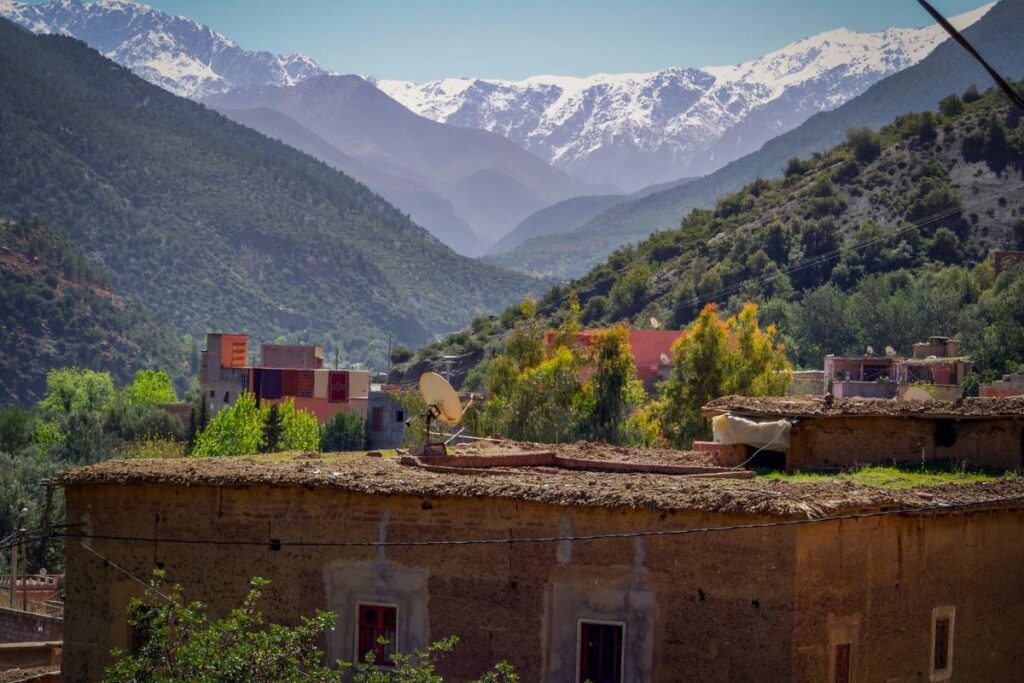
One reason this Marrakech travel guide works well for planning is the city’s access to nearby landscapes. Few places in Morocco offer so much variety within a day’s reach.
- The Atlas Mountains and Berber villages
- The rocky Agafay Desert, just outside the city
- The coastal town of Essaouira
- The Ouzoud Waterfalls, especially in spring
View Best Day Trips from Marrakech
Best Time to Visit Marrakech
Spring and autumn offer the most balanced conditions for visiting Marrakech. Days are warm, evenings are comfortable, and walking through the medina feels manageable.
Summer brings intense heat, while winter remains mild and popular for city walks and desert excursions.
How Many Days in Marrakech? (Ideal Length of Stay)
This Marrakech travel guide recommends at least three days. Two days cover the essentials. Four or five allow for day trips and a slower pace. Longer stays suit travelers who want to use the city as a regional base.
Getting Around Marrakech (Walking, Taxis & Transfers)
The medina is best explored on foot. Taxis are affordable and widely available outside the old city. Guided tours can save time and help with navigation during your first days.
Where to Stay in Marrakech (Medina vs New City)
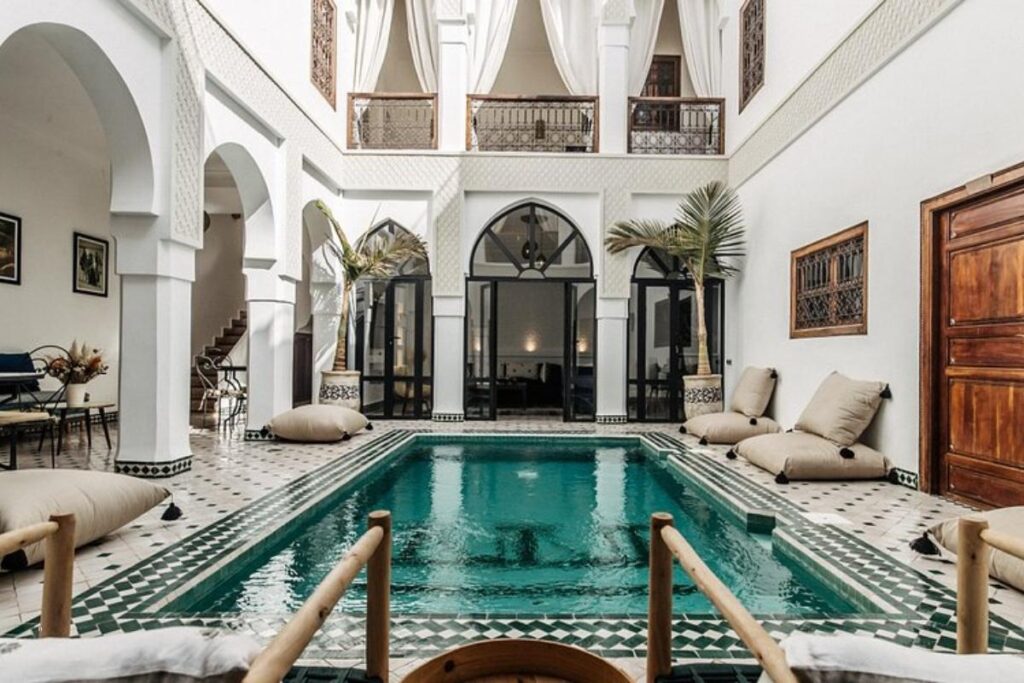
Accommodation ranges from traditional riads inside the medina to modern hotels and resort-style stays on the outskirts. Staying in the medina offers atmosphere, while newer areas provide space and quiet.
First-Time Visitor Tips (and Common Mistakes to Avoid) in Marrakech
Marrakech is visitor-friendly, but its energy can feel intense at first — especially inside the medina. The easiest way to enjoy the city is to set expectations early, move at a slower pace, and avoid a few first-visit mistakes that tend to make Marrakech feel harder than it really is.
Start with one “anchor area” on day one.
Begin around Jemaa el-Fna, the nearby souks, and one landmark (Bahia Palace or a garden). Once you understand the layout, wandering feels effortless instead of chaotic.
Don’t try to “win” the medina.
Marrakech rewards patience. Short loops, café breaks, and one or two planned stops per half-day create a smoother rhythm than an overloaded checklist.
Be firm with unofficial guiding offers.
If someone offers directions or insists on walking you somewhere, a calm “no thank you” and continuing to walk is normal. Use your riad, official guides, or clearly marked gates for help.
Make taxis simple before you get in.
Use petit taxis outside the medina, confirm the approximate fare first, and carry small cash. It keeps every ride easy and avoids awkward confusion.
Balance city time with breathing space.
Plan one quiet reset each day — a garden, a hammam, a rooftop lunch, or a calm neighborhood walk. Marrakech feels dramatically better when your itinerary includes recovery moments.
Avoid stacking excursions back-to-back.
Day trips are amazing, but two long excursions in a row can flatten your experience. Leave a “light day” in between for markets, museums, and slow meals.
Choose accommodation that matches your style.
Staying in the medina is atmospheric and walkable. Staying outside is quieter and easier for taxis. The “best” option is the one that fits how you like to travel.
Once you’ve had a full day to settle in, Marrakech becomes far easier to navigate — and far more enjoyable than its first impression might suggest.
Explore More Cities in Morocco
Planning a trip beyond Marrakech? Discover more destinations across Morocco:
Planning Your Visit with This Marrakech Travel Guide
Marrakech is not subtle, but it is deeply rewarding. This Marrakech travel guide helps you explore the city with insight, not just expectations. Start with this as your guide. Then, explore what the city has to offer. Discover daily experiences, guided tours, and the views outside its walls. This will help you create a rich, balanced, and relaxed itinerary.
Frequently Asked Questions
Yes. Marrakech is generally safe for visitors. Normal precautions are enough, especially in busy areas like the medina and Jemaa el-Fna.
Three days is ideal for the main sights. Four to five days allow time for day trips and a slower pace.
Not required, but a guide is helpful on a first visit to understand the medina and local history.
Spring and autumn offer the most comfortable weather. Summer is very hot, winter is mild.
The medina offers atmosphere and riads. Outside areas provide modern hotels and easier access.
The Moroccan dirham (MAD). Cash is widely used. Cards are accepted in hotels and restaurants.
Yes. Bargaining is normal in markets but not expected in restaurants or modern shops.
Yes. Popular day trips include the Atlas Mountains, Agafay Desert, Essaouira, and Ouzoud.
Yes. It is one of the easiest cities in Morocco for first-time travelers.
Comfortable clothing is best. Modest dress is appreciated in the medina and religious areas.
