If you really want to understand Morocco, start at the table. Traditional Moroccan food isn’t rushed, showy, or complicated for the sake of being complicated. It’s slow, generous, and deeply connected to daily life.
Meals stretch longer than you expect. Spices perfume the room before you even sit down. Someone always insists you take one more piece — “bssa7a” — eat well.
Influenced by Amazigh roots, Arab trade routes, Andalusian memories, African connections, and Mediterranean ingredients, Moroccan cuisine grew layer by layer. It never chose one identity. It kept them all.
This guide walks you through traditional Moroccan food — not just what to order, but how it fits into culture, hospitality, and everyday rhythm.
On This Page:
What Makes Moroccan Cuisine Unique?
Traditional Moroccan food never rushes flavor. Instead, it builds depth. It avoids heat and leans on time. As a result, dishes feel warm, not fiery.
Cooking here rewards patience. Meals simmer slowly. Flavors soften. Then they blend. Spices lead with aroma, not heat. Cumin, ginger, turmeric, saffron, and ras el hanout add character without overpowering the dish.
At the same time, sweet and savory meet. Prunes, apricots, almonds, and honey balance rich, slow-cooked meals. Hospitality shapes everything. Food is never only food. It is a welcome.
Moroccan cuisine reveals itself in layers. First warm. Then fragrant. Finally, comforting
Must-Try Traditional Moroccan Dishes
These aren’t “tourist dishes.” They’re what families cook, what people crave, and what locals proudly serve to guests.
Tagine
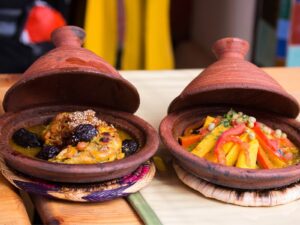
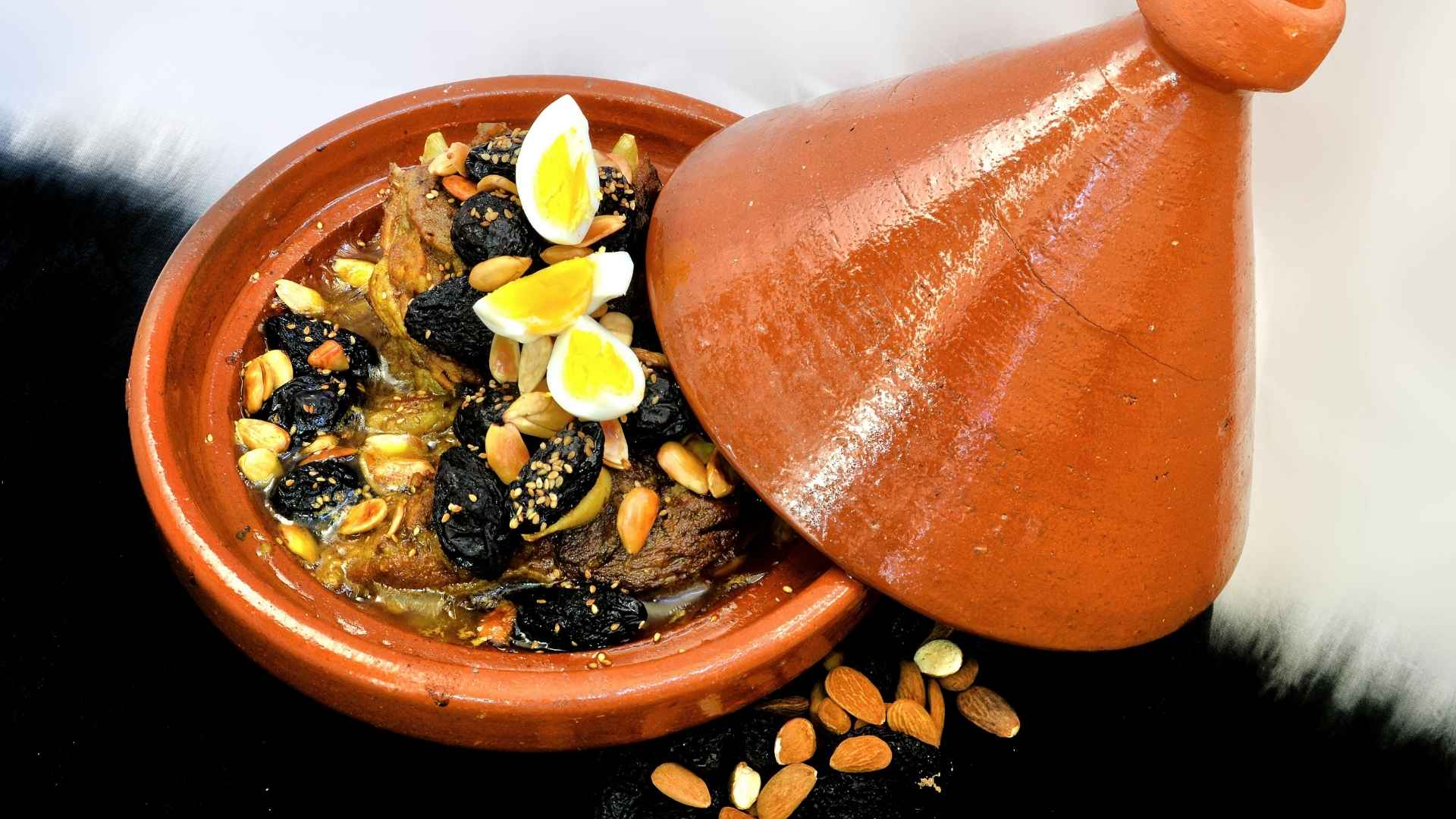
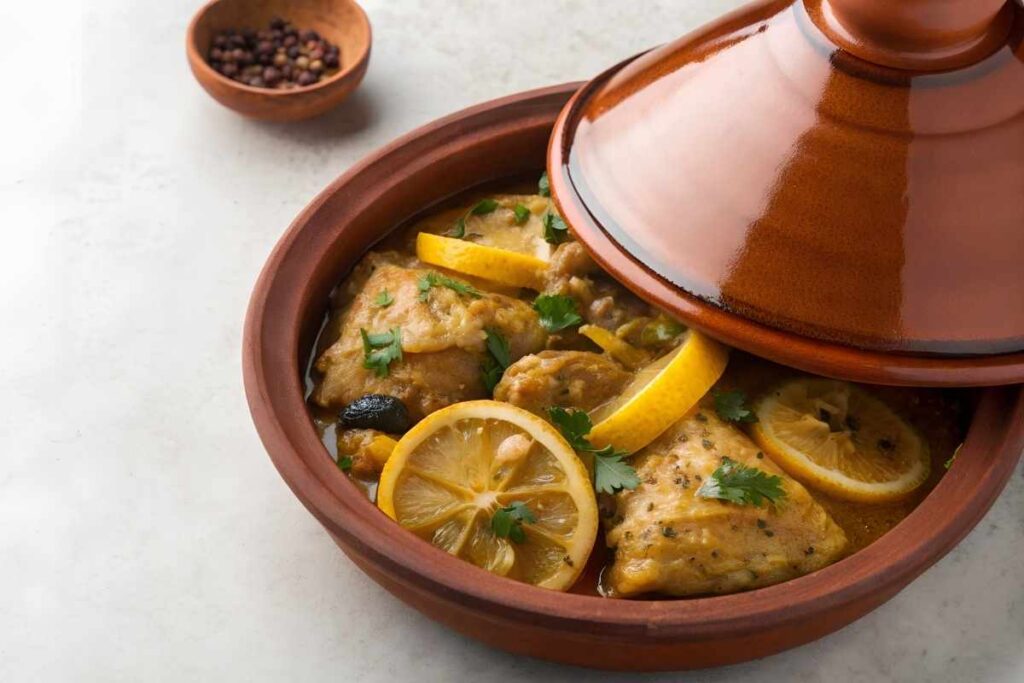
Tagine takes its name from the clay pot it cooks in — wide base, cone-shaped lid, steam rising slowly and circling back into the food.
You’ll see versions like:
- Chicken with preserved lemon and olives
- Lamb with prunes and toasted almonds
- Vegetable tagine made from whatever is in season
Served with bread, never rushed, often shared. It’s the taste of home.
Couscous
Often called the national dish of Morocco, couscous is less about the grain and more about the ritual around it.
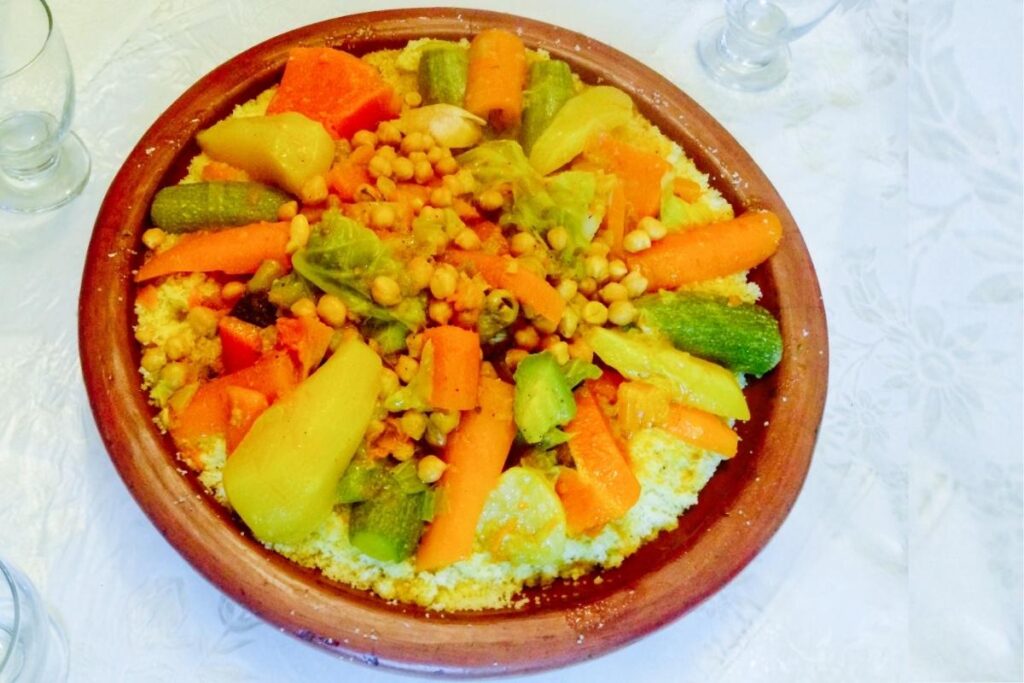
Steamed semolina forms the base. Vegetables rise in a generous mound. The meat is set gently on top, and broth is poured at the end.
Traditionally, families eat it on Fridays, after prayers — not because it’s a rule, but because it brings everyone to the same table.
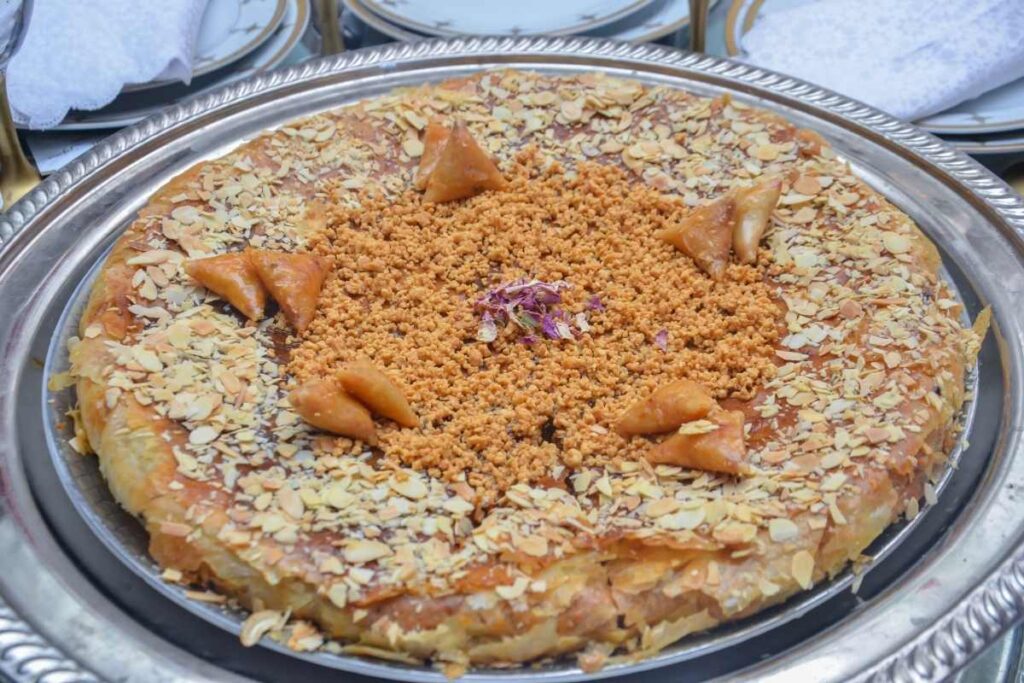
Pastilla (Bastilla)
Pastilla feels like a celebration.
Crisp pastry. Soft filling. A whisper of cinnamon and powdered sugar on top.
Originally made with pigeon, now often prepared with chicken, and sometimes seafood in coastal towns. Sweet and savory shouldn’t work together this well, but somehow, they do.
Harira
Harira is comfort in a bowl.
Tomatoes, lentils, chickpeas, herbs — sometimes enriched with meat. During Ramadan, it’s the first thing many families eat after sunset. The first spoonful feels like exhaling after a long day.
You’ll also find it in small cafés, usually served with dates or a simple pastry.
Rfissa
Rfissa isn’t everyday food. It’s food for moments.
Shredded flatbread layered with chicken and lentils, perfumed with fenugreek and spices. Often cooked to celebrate a birth — shared, laughed over, eaten slowly.
It tastes like family.
Tanjia
Tanjia is Marrakech’s most distinctive slow-cooked dish, and one of Morocco’s most authentic culinary traditions. Meat, garlic, preserved lemon, cumin, saffron, and olive oil are sealed inside a clay pot, then cooked slowly for hours — traditionally in the warm embers of a hammam furnace rather than a kitchen oven.
The result is incredibly tender meat and deep, concentrated flavor. Unlike tagine, tanjia is rarely rushed or adapted for tourists. It remains a dish tied closely to local life, patience, and Marrakech’s everyday rhythm.
Street traditional Moroccan food: Where Daily Life Meets Flavor
Moroccan street food isn’t flashy. It’s practical, quick, and tied to routine.
Msemen & Baghrir
Mornings begin early at street stalls. Vendors flip msemen on hot plates. Batter spreads for baghrir, then bubbles into tiny holes as it cooks.
Msemen comes first. Flaky. Buttery. Folded again and again into thin layers. It’s crisp on the outside and soft inside. Baghrir follows. Light. Spongy. Known as the “thousand-hole” pancake. Honey sinks in. Butter melts on contact.
Nothing fancy. Nothing rushed. Just simple food, done right — and always better with mint tea.
Brochettes
Near markets, smoke drifts above small grills.
Skewers of lamb, beef, or chicken, sprinkled with cumin and salt, handed over with bread. No decoration. Just flavor.
Maakouda
Maakouda are simple potato fritters, crisp outside and soft inside, often sold at market stalls or small neighborhood snack shops. Lightly spiced and fried fresh, they’re usually served in sandwiches with bread, harissa, and olives, or eaten alone as a quick bite.
They’re inexpensive, filling, and deeply woven into everyday Moroccan street life — the kind of food locals grab without thinking twice.
Moroccan Sfenj
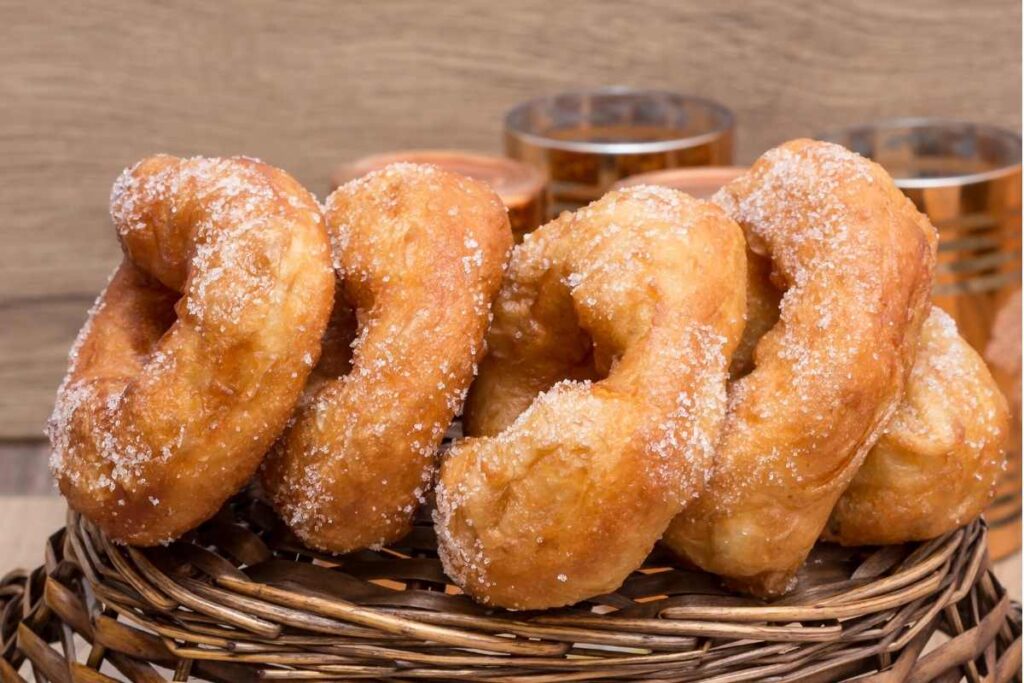
Sfenj is the doughnut cousin you didn’t know you needed.
Light, chewy, fried fresh. Locals grab them on the way to work, plain or dusted with sugar.
Early mornings smell like sfenj oil and coffee.
Bread and Everyday Eating
Khobz (Bread) sits at the center of the table.
Bread is passed freely around the table, shared without counting, reinforcing the communal spirit of the meal.
It’s a community on the table.
Moroccan Sweets and Desserts
Desserts usually appear on special occasions — weddings, holidays, and family gatherings.
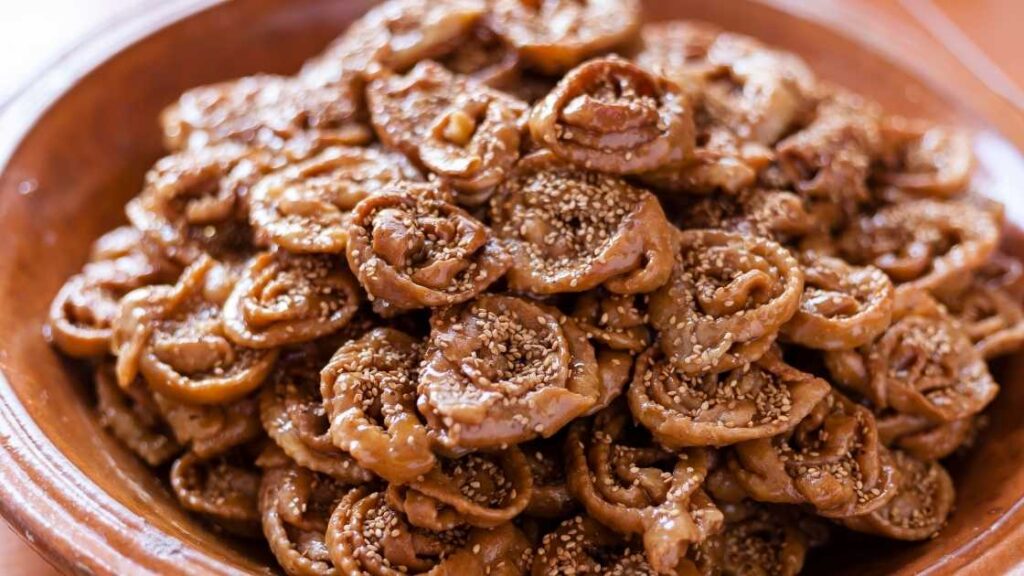
Chebakia
Flower-shaped pastry, fried, dipped in honey, perfumed with orange blossom water. Sweet, sticky, eaten especially during Ramadan.
Kaab el Ghazal
“Gazelle horns,” filled with almond paste, are soft and delicate. Served with mint tea when guests arrive.
Moroccan Mint Tea Culture
Mint tea isn’t just a drink. It’s a language.
It starts with green tea, fresh mint, and generous sugar. Then comes the pour. High. Steady. Foam rising in the glass. The rhythm matters. So does the pause. Tea arrives with conversation, not urgency.
Because of that, refusing can feel like refusing the moment itself. So take at least a sip. Slow down. Let the sweetness linger.
Regional Specialties Across Morocco
Traditional Moroccan food changes the way the landscape does — gradually, then all at once. In Marrakech, flavors lean bold and sunlit, with tagines sharpened by preserved lemons and spices that linger without overwhelming. Tanjia, slow-cooked and traditionally buried in the embers of a hammam furnace, feels inseparable from the city’s rhythm and heat.
In Fes, cooking turns more precise and ceremonial. Recipes carry the weight of history, nowhere more clearly than in pastilla, a dish refined over centuries, balancing sweet and savory with careful restraint. It’s food that reflects the city itself: layered, patient, and quietly confident.
Along the Atlantic in Essaouira, meals are simpler and closer to the source. Grilled fish arrives still tasting of the sea, while sardines stuffed with herbs and spices speak to daily life shaped by tides and wind. Nothing feels rushed here, especially at the table.
In Casablanca, tradition and change sit side by side. Fresh seafood remains a constant, but it’s joined by modern interpretations of Moroccan classics and influences from far beyond the country’s borders. The city eats the way it lives, forward-looking, varied, and always moving.
Different cities, different flavors, but the same instinct runs through them all: food is meant to be shared, slowly and generously.
Where to Try Traditional Moroccan Food
Traditional Moroccan food isn’t hard to find. In fact, it often finds you. Start with small local restaurants. They cook a few dishes well and serve them daily. As a result, the food stays consistent and honest.
Next, watch the street. Busy food stalls matter. Smoke rises. Orders move fast. Locals wait without checking menus. That usually means the flavors are right.
Meanwhile, riads offer a different experience. Meals feel personal and unhurried. Recipes come from family kitchens, not trends. Because of that, the food often tells a clearer story.
Cooking classes and guided food tours add context. You see how dishes are built. You taste as you learn. In the end, the rule is simple: follow the crowds, trust the smells, and choose places that stay busy without trying too hard.
Is Traditional Moroccan Food Safe for Travelers?
Yes, in most cases. Traditional Moroccan food is generally safe, especially when you eat where locals do. Choose busy places. Let the dishes cook fully. Drink bottled water. If your stomach is sensitive, skip raw salads at first.
Most travelers eat well, feel fine, and often eat more than they planned.
Eating With Respect: Simple Dining Etiquette
In Morocco, small gestures matter at the table. Start by washing your hands before eating. It shows care and awareness. Then, eat from the section of the plate closest to you. This keeps the meal comfortable for everyone. When possible, use your right hand. It’s a simple habit, but it carries meaning.
At the same time, tipping matters when the service feels good. It’s noticed and appreciated. Most of all, slow down. Meals aren’t rushed here. Let the food arrive in its own time, and let the moment last a little longer.
If you want to taste these dishes during your trip, explore Morocco’s major cities where local cuisine, street food, and traditional restaurants are part of everyday life.
Explore Moroccan Cities for Authentic Food Experiences
Final Thoughts: Taste Morocco, Don’t Just Visit It
Traditional Moroccan food tells stories — of families, migration, faith, patience, and generosity.
A tagine is simmering quietly. Tea is being poured from high above the glass. Bread being passed never counted.
Eat locally. Ask questions. Accept invitations. You’ll leave knowing far more about Morocco than any guidebook could explain.
Frequently Asked Questions
Traditional Moroccan food is based on slow cooking, layered spices, and shared meals. It blends Arab, Amazigh, Andalusian, and Mediterranean influences. Most dishes focus on balance rather than heat.
Tagine, couscous, pastilla, harira, msemen, baghrir, and tanjia are essential. Each dish reflects a region, a season, or a moment of daily life. Trying them across different cities adds context.
Moroccan food is flavorful, not spicy. Cumin, ginger, turmeric, saffron, and ras el hanout add warmth and depth. Chili heat is rare and usually optional.
Yes, in most cases. Eat at busy places. Choose freshly cooked food. Drink bottled water. Travelers usually eat well and rarely have issues.
Yes. Many dishes rely on vegetables, legumes, bread, and olive oil. Vegetable tagines, lentils, chickpeas, and salads are widely available.
Breakfast is simple. Common foods include msemen, baghrir, khobz, olive oil, honey, and mint tea. Meals are light but filling.
Mint tea represents hospitality. It marks welcomes, conversations, and pauses in the day. Refusing it can feel impolite, so most visitors accept at least one glass.
Yes, often. People usually eat from a shared plate using the right hand. Eating from the section closest to you is polite and expected.
Coastal cities focus on seafood. Imperial cities preserve historic recipes. Mountain regions cook hearty, slow meals. Each region reflects its climate and history.