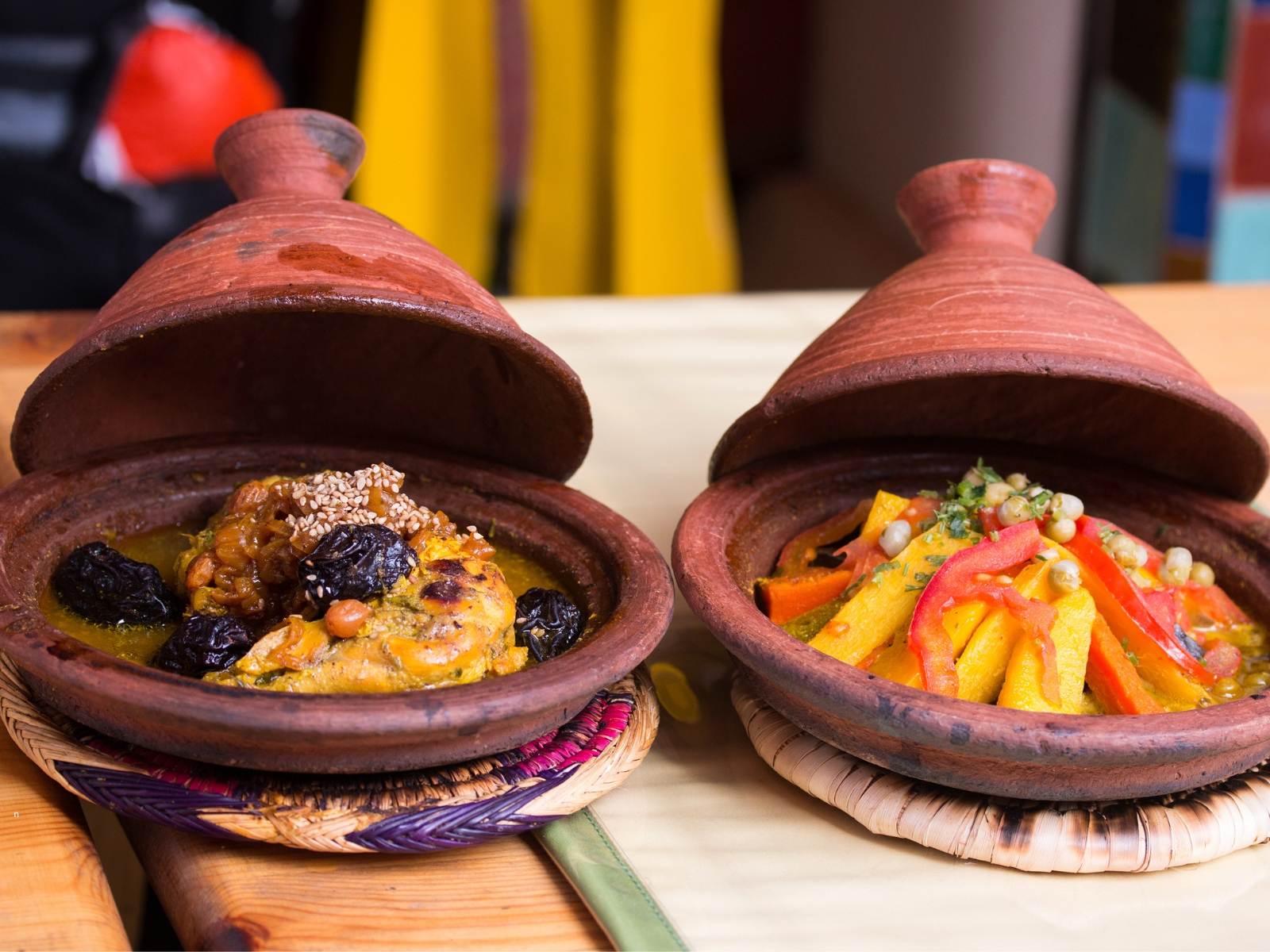
Wondering what to eat in Morocco? Start with tanjia in Marrakech, pastilla in Fes, grilled fish on the coast, and msemen or baghrir for breakfast. Add a vegetable tagine, a bowl of harira and a pastry with mint tea, and you have a useful first-trip shortlist.
This guide helps you choose meals around your itinerary, with city-by-city suggestions and questions to ask before ordering. For fuller descriptions and food history, see our guide to traditional Moroccan dishes and ingredients.
Jump to: Quick food guide · City-by-city choices · Breakfast and meals · Street food · Vegetarian and vegan food · Prices and ordering · FAQs
What to eat in Morocco at a glance
The best food to eat in Morocco depends on where you are, what sounds good and any ingredients you need to avoid. Use this shortlist to choose a meal rather than trying to tick off every dish.
Swipe sideways to see all four columns.
| Food | What to expect | Where or when to try it | What to check |
|---|---|---|---|
| Tanjia | Slowly cooked lamb or veal | A main meal in Marrakech | Meat, portion size and availability |
| Pastilla, also spelled bastilla | Crisp filled pastry; poultry versions often combine sweet and savory flavors | A sit-down meal in Fes or elsewhere | Filling, almonds, eggs and wheat |
| Grilled sardines or other fish | A straightforward coastal main | Essaouira or Agadir, for lunch or dinner | Whole fish or fillet, price by weight or portion |
| Tagine, also spelled tajine | A saucy dish with meat, fish or vegetables | A main meal across Morocco | Stock, butter, nuts and sides |
| Couscous | Semolina grains served with vegetables and broth, sometimes meat | Lunch; especially associated with Friday | Wheat, broth ingredients and serving size |
| Msemen or baghrir | Layered flatbread or soft, hole-speckled pancakes | Breakfast or a tea stop | Butter, honey and other toppings |
| Harira | Tomato-and-pulse soup, with varying additions | A lighter meal or evening bowl | Meat, flour and pasta |
| Amlou | Almond, argan-oil and honey spread | Breakfast in Agadir and the Souss region | Nuts and honey |
These are useful regional associations, not boundaries. You can find many of the same dishes in several cities, and recipes vary between kitchens.
What to eat in Morocco by city
Marrakech: tanjia, grills and street-food choices
If you choose one distinctive main meal in Marrakech, make it tanjia. Traditionally cooked slowly in a terracotta jar, it is closely associated with the city. Tanjia and tagine are different dishes, despite their similar names: a tanjia is usually a meat-centered preparation, while tagines come in many meat, fish and vegetable versions. The Moroccan National Tourism Office’s food guide describes tanjia’s Marrakech connection and traditional preparation.
Look for tanjia on the menu of a Moroccan restaurant or ask your accommodation which kitchens prepare it. Check availability before building your day around it, especially if you want a particular meat or serving size.
For breakfast, choose freshly cooked msemen with a topping you like. For a smaller evening meal, look for harira or a grill plate. Jemaa el-Fna has evening food stalls, but compare menus and cooking conditions before choosing where to sit.
A simple meal plan: msemen in the morning, tanjia for your main meal, then a small snack if you are hungry later.
Ask before ordering: “Is this tanjia a portion for one or a dish to share, and is bread included?”
Fit your food stops around the sights with our guide to planning your Marrakech visit.
Fes: pastilla and a planned sit-down meal
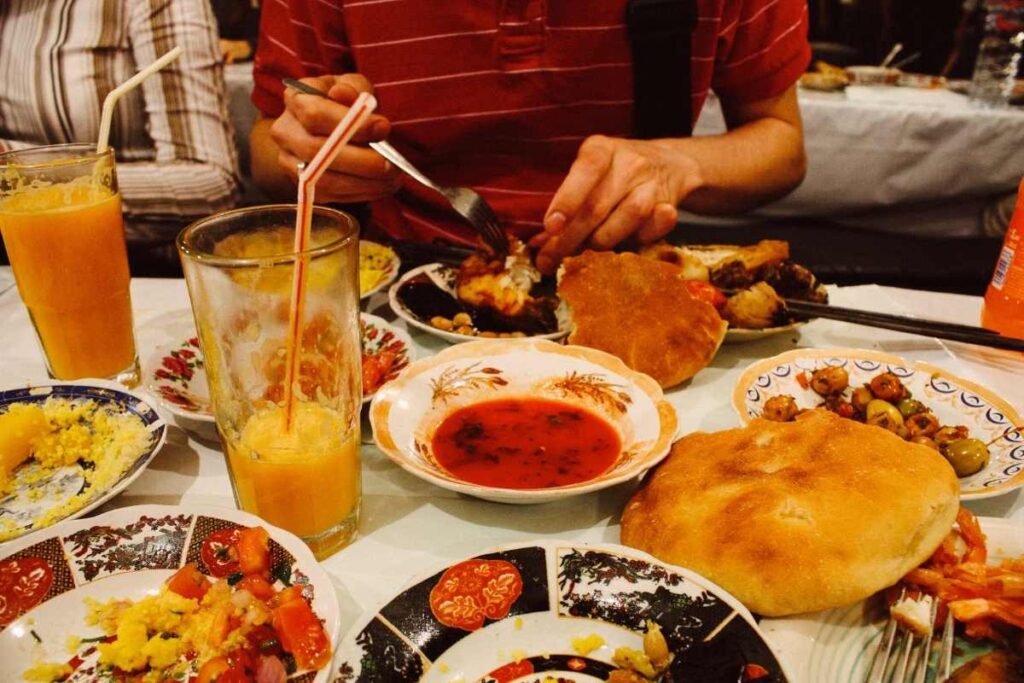
Fes, also spelled Fez, is a good stop to put pastilla on your itinerary. The thin, crisp pastry can hold different fillings. A poultry-and-almond version gives you the sweet-savory combination many travelers associate with the dish; a seafood version is a different meal, so read beyond the name.
Choose a Moroccan restaurant or a riad that offers meals, then ask what the kitchen is making that day. A menu listing is a starting point, particularly for dishes that take longer to prepare. Confirm whether pastilla is available by the portion, served whole, or requires advance notice.
For another meal, try couscous or a tagine rather than ordering several substantial dishes at once. If you encounter rfissa, chicken and lentils served over shredded bread, ask about availability and portion size. It is eaten beyond Fes and should not be treated as a specialty exclusive to this city.
A simple meal plan: a bread-based breakfast, pastilla as the main attraction at lunch or dinner, and a smaller soup or vegetable dish for the other meal.
Ask before ordering: “What is in today’s pastilla, and do I need to order it ahead?”
Use our Fes travel guide to plan the rest of your day.
Essaouira: grilled fish and clear pricing
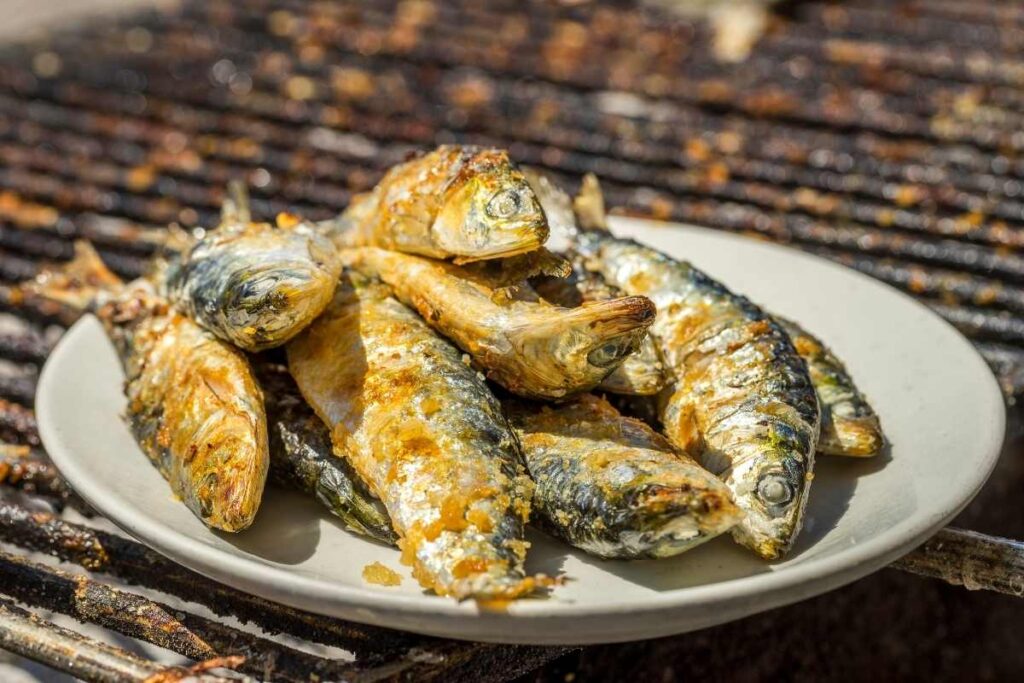
In Essaouira, give one meal to grilled sardines or another fish on the day’s menu. The coast is a natural place to shift away from the meat dishes you may have been eating inland. The national tourism office’s gastronomy brochure specifically highlights sardines and other fish in Essaouira.
Choose a seafood restaurant or fish grill with clear ordering terms. Before agreeing to a fish, establish whether the price is for a plate, a whole fish or a weight. Ask to see the weight and total if it is sold that way. A large shared fish can be a very different purchase from an individual sardine plate.
Check what comes with it: bread, vegetables, sauces and drinks may be separate. A waterfront setting does not establish when a fish was caught or how it was stored.
A simple meal plan: a light breakfast, grilled fish for lunch, and a vegetable tagine or soup later.
Ask before ordering: “What is the total price for this fish, including cooking and the sides we have chosen?”
Find more trip ideas in our Essaouira travel guide.
Casablanca: choose your meal before choosing the setting
For Casablanca, build a shortlist around a Moroccan breakfast, a tagine or couscous, and a seafood meal if it appeals. You do not need a dish unique to the city to eat well here.
Start by deciding what you want: a quick bakery-and-café stop, a substantial lunch, or a longer restaurant dinner. Msemen or sfenj, a fried ring of dough, make useful breakfast or snack choices when available. At a Moroccan restaurant, compare the tagine options and ask what is included rather than assuming every main comes with the same sides.
If Friday lunch fits your itinerary, ask whether the kitchen serves couscous that day. If you prefer fish, apply the same portion and weight checks as in Essaouira. These are meal suggestions, not claims that a particular venue currently serves them.
A simple meal plan: breakfast bread and a hot drink, couscous or tagine for lunch, then a lighter dinner.
Ask before ordering: “Is this a single main course or a set menu, and which items are included?”
Use our Casablanca travel guide to place meals around your sightseeing.
Chefchaouen: bissara, bread and goat’s cheese
In Chefchaouen, look for bissara, a thick dried-bean or split-pea soup, for a warming breakfast or light meal. Bread turns it into a more substantial stop. It belongs to a wider northern food tradition, rather than to Chefchaouen alone.
Another local food to know is jben, fresh goat’s cheese. The Slow Food Foundation’s account of Chefchaouen jben describes both traditional raw-milk production and a pasteurized version. If you want to try it, check which you are being served. Vegetarians who avoid animal rennet should ask about that too; cheese is not automatically suitable for every vegetarian diet.
Look for breakfast cafés or ask your accommodation about these options. For a main meal, a vegetable or meat tagine gives you a straightforward choice without needing to invent a city-specific dish.
A simple meal plan: bissara with bread in the morning, a tagine later, and tea between walks.
Ask before ordering: “Is the cheese made with pasteurized milk, and what rennet is used?” If that cannot be established, choose another option.
Plan your walks and stops with our Chefchaouen travel guide.
Agadir: seafood and a Souss-style breakfast
In Agadir, combine a fish meal with bread and amlou at breakfast. Amlou brings a regional ingredient into an otherwise simple morning: the usual mixture contains almonds, argan oil and honey. The Moroccan National Tourism Office’s gastronomy overview connects it with Agadir and the south.
Ask for amlou on the side so you can try a little first. It is unsuitable for someone with an almond allergy, and the usual honey-containing version is not vegan. Do not assume a different jar or restaurant recipe has the same ingredients.
For lunch or dinner, choose grilled fish or another seafood preparation you enjoy. Check the fish, cooking method and price basis before ordering, especially with a mixed platter. A longer list of seafood is not necessarily a better fit than a clearly described individual plate.
A simple meal plan: bread with amlou at breakfast, grilled fish for your main meal, and soup or vegetables for a smaller second meal.
Ask before ordering: “Which fish are included in this plate, and is the price per person?”
See our Agadir travel guide for the rest of your visit.
What to eat for breakfast, lunch and an evening snack
Breakfast breads and accompaniments
A Moroccan breakfast can be a good way to try several foods without committing to a heavy main meal. Look for msemen, the layered griddled flatbread, or baghrir, the soft semolina pancakes recognizable by their many small holes. These are different textures, so order one of each to share if portions allow.
Taste of Maroc’s msemen guide and baghrir guide explain the common preparations. At the table, the useful question is what goes into your serving: butter, honey, cheese, jam or amlou may arrive with it or be added separately.
Ask what a breakfast set includes before adding extras. If your accommodation already provides breakfast, check its menu before paying for a second meal elsewhere.
A main meal and Friday couscous
Choose one dish you particularly want to try and make that the center of lunch or dinner. Tanjia, pastilla, couscous and a fish platter can each be substantial, depending on the portion.
Friday is traditionally associated with couscous, but restaurant availability varies. Ask the chosen kitchen when it serves it and whether a reservation or advance order is needed. The tradition does not mean every restaurant offers it every Friday, or that you cannot find it on other days.
For a different substantial meal, look for rfissa when available. Its chicken, lentils, bread and broth make it worth planning around rather than treating it as a small side. Taste of Maroc’s rfissa guide describes the dish and its ingredients.
Tea, pastries and small bites
For an afternoon pause, try mint tea with one pastry rather than ordering a large assortment immediately. If you prefer less sugar, ask before the tea is prepared.
Chebakia is a sticky sesame-and-honey sweet, often associated with Ramadan. Its ingredients matter for allergies and vegan diets; this chebakia guide shows why it should not be treated as simply fried bread.
Sfenj is another option for a small stop. Have it freshly cooked when available and choose any coating or topping deliberately. Household routines and café menus vary, so treat these as ideas for your trip rather than a fixed daily Moroccan menu.
Street food in Morocco: choosing what to order
Street food in Morocco can be an opportunity to try a small portion or watch something being prepared. Before ordering, decide whether you want a snack or a full meal. Bread, a sweet or a bowl of soup may be enough between activities; a grill plate can become your main meal.
Check portions, prices and extras
At a stall or counter, make the order specific:
- Name the item and number of portions.
- Ask whether the displayed price is per piece, per plate or by weight.
- Confirm any cooking charge and the cost of bread, sides or drinks.
- Agree on the total before food is prepared when the price is not clearly fixed.
A busy stall can tell you that people are buying there. It cannot establish safe water, refrigeration or food handling.
Take food and water precautions
The CDC’s traveler food and drink guidance advises avoiding street vendors. If you choose to eat street food, it recommends the same precautions as elsewhere, including food that is thoroughly cooked and served steaming hot.
Wash your hands before eating. Avoid raw or undercooked meat and seafood, unpasteurized dairy, and prepared raw produce when safe handling is uncertain. Choose factory-sealed drinks or safely treated water when water quality is unknown, and skip ice unless its water source is safe. These steps reduce risk; they do not guarantee that a meal is safe.
Vegetarian and vegan eating in Morocco
Vegetable dishes and the broth question
Vegetarian food in Morocco can include vegetable tagines, couscous with vegetables, bissara and cooked vegetable dishes. The name on a menu does not tell you everything about the preparation.
Ask whether vegetables, grains or soup were cooked with meat, meat stock or animal fat. Removing a piece of meat from an already cooked dish does not change its broth. Harira in particular needs an ingredient check rather than an assumption based on its tomato-and-pulse appearance.
A clear question is more useful than relying only on a label: “Can you prepare this without meat, fish, meat stock or animal fat?”
Butter, honey, eggs and cheese
For vegan food in Morocco, extend that check to butter, milk, eggs, cheese and honey. Breakfast breads may be prepared with butter or served with butter and honey even when they look plain. Amlou usually contains honey. Pastry fillings and glazes also need checking.
For allergies or celiac disease, discuss the specific ingredient and cross-contact with the kitchen. Couscous is commonly wheat semolina, and bread, pancakes, pastry and some soups contain wheat. Nuts and sesame appear in several sweets and spreads. This guide cannot establish that any individual kitchen can accommodate an allergy safely.
If communication is difficult, use a reliable translation of your dietary requirements and choose somewhere that can answer clearly.
Food prices and ordering: what to check before paying
Morocco food prices are most useful when they describe the same thing: a particular dish, portion and dining setting. A breakfast set, a shared fish platter and a restaurant menu are not directly comparable.
Check current menus for the cities you are visiting and work in Moroccan dirhams, or MAD. Before deciding whether a meal fits your budget, confirm:
- Whether the amount is per person, plate, piece or weight.
- What is included and which extras are optional.
- Whether a shared dish is enough for your group.
- Which payment methods the venue accepts.
Keep broader costs, such as accommodation and transport, separate when planning your daily budget. Our practical Morocco travel tips can help with the rest of the trip.
At a shared meal, follow your host’s lead and ask if you are unsure how something is served. For more context, read about Moroccan customs and hospitality.
Should you book a food tour or cooking class?
Choose a food tour if you want help navigating several tastings, asking questions and understanding what you are eating. Choose a cooking class if you would rather spend longer preparing a meal and learning techniques you can use at home.
Before booking either, check the actual dishes, group size, duration and dietary arrangements. Ask whether food and drinks are included, how much walking is involved, and whether a market visit is part of the experience. A tour or class is optional; the city suggestions above also work for independent meals.
Want to explore the food with a guide? Compare Marrakech food tours and cooking classes in our Marrakech tours guide.
Frequently asked questions
What should I eat on my first day in Morocco?
Try msemen at breakfast, a tagine for your main meal and a small pastry with tea later. If your first stop is Marrakech or the coast, swap the main for tanjia or grilled fish. Choose portions and ingredients that fit your appetite and diet.
Which foods should I try in Marrakech, Fes and Essaouira?
Start with tanjia in Marrakech, pastilla in Fes and grilled sardines or other fish in Essaouira. These are useful regional choices, not foods restricted to those cities.
Is Moroccan food spicy?
Many dishes emphasize aromatic spices rather than strong chili heat, but recipes and sauces vary. Ask about the particular dish and request hot sauces separately if you prefer a milder meal.
Can vegetarians and vegans eat well in Morocco?
Vegetable tagines, bean soups and other plant-based dishes offer possibilities. Confirm stock and animal fats for vegetarian meals, then check butter, dairy, eggs and honey for vegan ones. A vegetable-based name is not a guarantee.
What do people eat for breakfast in Morocco?
Examples include bread, msemen, baghrir, spreads and hot drinks. Bissara and cheese are other possibilities in some settings. Breakfast varies by household, region and café, so check what your accommodation or chosen breakfast stop offers.
Is street food safe in Morocco?
No guide can guarantee that an individual stall is safe. Follow the precautions above, including the CDC’s caution about street vendors, and do not treat a crowd as proof of hygiene.
How much should I budget for food in Morocco?
Use current menus in your actual destinations rather than a single countrywide daily figure. Include drinks and extras, check whether breakfast is already covered, and distinguish individual prices from shared dishes or fish sold by weight.
Do I need to order couscous or special dishes in advance?
Ask the restaurant or your accommodation. Couscous has a Friday tradition, while dishes such as pastilla or tanjia may depend on the kitchen’s schedule. There is no single advance-order rule that applies everywhere.
Choose three food stops for your next city
You do not need a long checklist to decide what to eat in Morocco. Pick one regional main meal, one breakfast and one snack for each stop. Check ingredients and portions before ordering, leave room for something you discover along the way, and use the city guides above to fit meals into your plans.