This Casablanca travel guide is written from lived experience. I grew up moving between Moroccan cities, and Casablanca was never the postcard favorite. It didn’t need to be. This is a city you understand slowly, through morning commutes, long coffees, Atlantic light, and conversations that stretch past sunset. Casablanca isn’t trying to impress you. It’s too busy living.
This guide to Casablanca isn’t about ticking boxes. It’s about helping you read the city as it is—layered, practical, sometimes chaotic, often generous, and quietly fascinating.
You can browse all destinations in our complete collection of Morocco city guides to help plan your wider itinerary.
This Casablanca travel guide covers the essential neighborhoods, experiences, logistics, and practical tips needed to plan your visit.
Casablanca Travel Snapshot
This Casablanca travel guide highlights the city’s modern identity, coastal setting, and practical role as Morocco’s economic gateway.
Best For: urban culture, Art Deco architecture, Atlantic coastline walks, and understanding modern Moroccan city life
Ideal Stay: 1–2 days for highlights, or 2–3 days for a slower architectural and food-focused visit
Must-See: Hassan II Mosque at sunset and a walk along the Corniche promenade
City Vibe: energetic, coastal, contemporary, and business-driven with strong café culture
Location: Atlantic coast of western Morocco, about one hour south of Rabat and home to the country’s main international airport
Mid-Range Budget: €60–€140 per person per day depending on hotel area, dining choices, and transport use
Best Time to Visit: spring and autumn for comfortable walking weather, though the Atlantic climate keeps temperatures moderate year-round
Not Ideal If: you want a traditional imperial medina, desert scenery, or a purely tourist-focused historic destination
On This Page:
Getting Oriented: Casablanca Travel Guide Basics
Casablanca sits on the Atlantic, facing outward. It’s Morocco’s largest city and its economic heart, but it doesn’t feel ceremonial like Rabat or theatrical like Marrakech. Life here moves fast. Offices open early, cafés fill by mid-morning, and traffic never really rests.
If you arrive by train, you’ll step straight into the rhythm of the city. If you land at Mohammed V Airport, the train ride into town already tells you something important: Casablanca is wide, spread out, and built for movement. Neighborhoods don’t blend into each other gently. They change tone block by block.
Casablanca is connected and functional. The ONCF train from Mohammed V International Airport reaches Casa Voyageurs station in about 30–40 minutes. The city’s modern tramway system links major districts, including the city center and Ain Diab. Petit taxis operate throughout the day; ensure the meter is running. Traffic can be heavy during peak hours, so allow extra time when crossing the city.
The tramway is the easiest option for visitors staying in the center, while taxis are best for short direct trips.
You can check timetables and fares directly on the Moroccan national railway (ONCF) website before arrival.
Any good Casablanca travel guide should begin with understanding how the city moves.
Why This Casablanca Travel Guide Recommends Staying
People often ask whether Casablanca is “worth visiting.” I usually answer with another question: do you want to see Morocco as it actually lives today?
Casablanca is where people work, argue, plan, build, and dream. It’s where French-era buildings sit beside glass towers, where old medina streets lead into business districts, where fishermen cast lines beneath one of the largest mosques in the world. You don’t come here for fantasy. You come for context.
Experiencing the City, Not Just Seeing It
If you want a structured overview before exploring, browse our full list of things to do in Casablanca to plan your time efficiently.
Hassan II Mosque: Scale and Symbolism
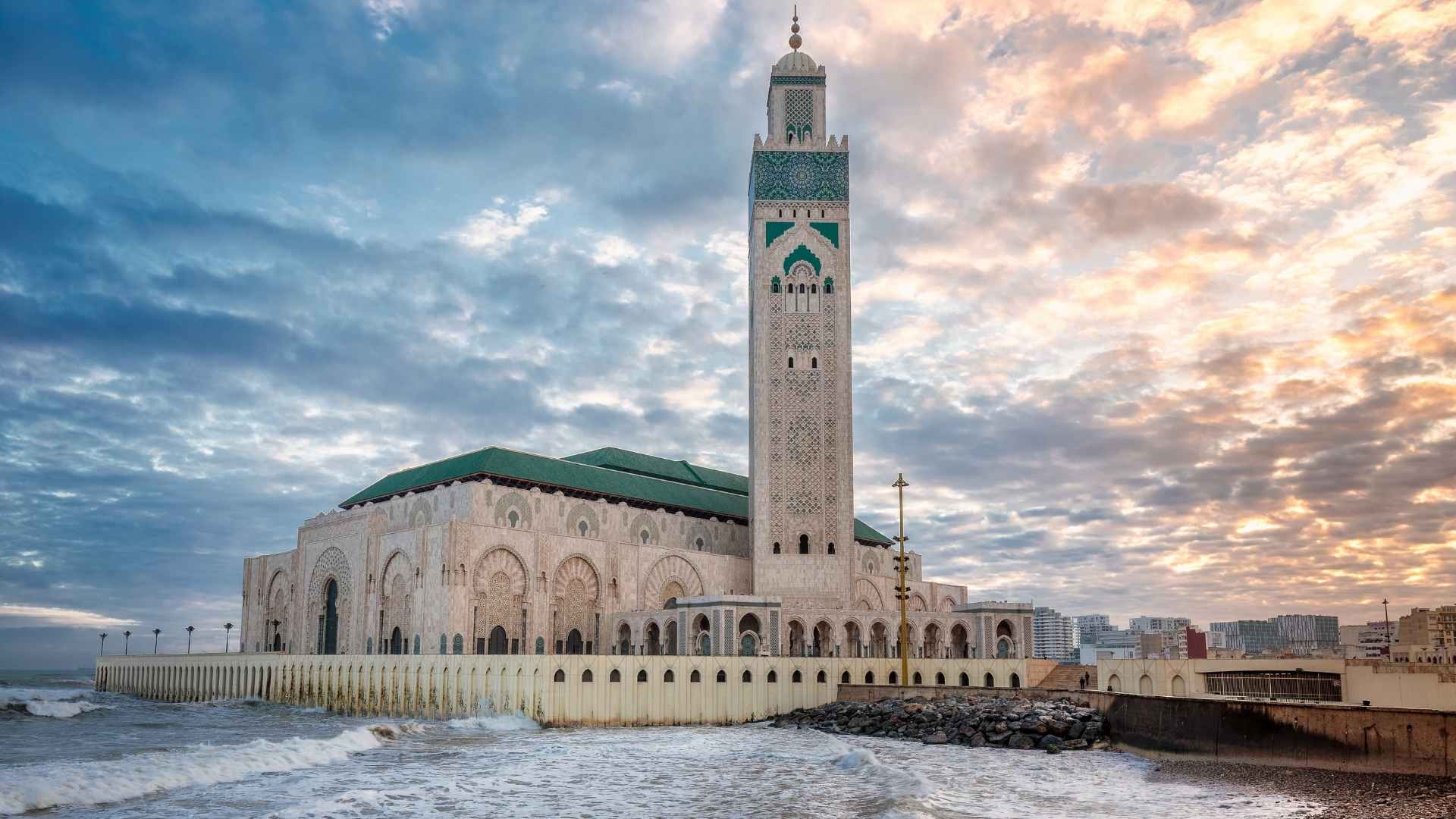
The Hassan II Mosque rises directly from the ocean, and no photo prepares you for how it feels in person. Walk there in the late afternoon, when the light softens and families gather along the promenade. You’ll hear waves hitting the rocks below the prayer hall, and suddenly the scale of the place makes sense.
The mosque was completed in 1993, commissioned by King Hassan II to mark his 60th birthday. Its 210-meter minaret is the tallest in Africa, visible from miles out at sea. Nearly half of the structure stands over the Atlantic on a platform built above the rocks — a symbolic gesture, referencing a Qur’anic verse describing God’s throne upon water.
Arrive just before sunset. The limestone shifts from cream to gold as the light lowers, and the sound of waves echoes beneath the prayer hall floor. It’s not just monumental — it feels elemental.
Non-Muslim visitors can enter on guided tours held several times daily, except during prayer times. Booking in advance is recommended during peak seasons.
For updated schedules and ticket details, consult the official mosque visitor information before planning your visit.
The Corniche: Casablanca at Leisure
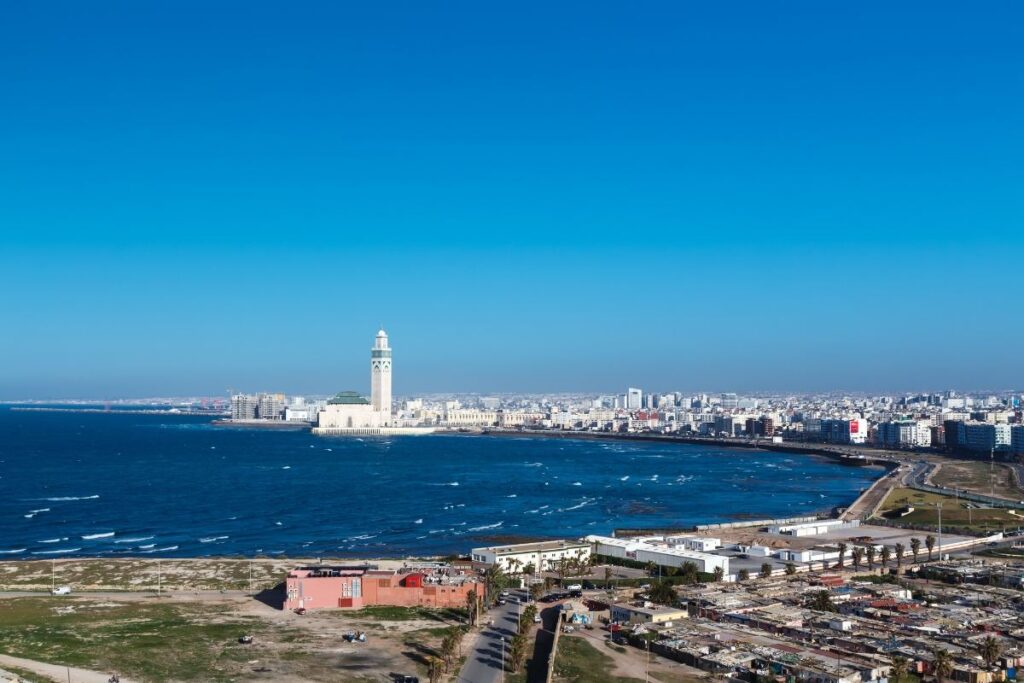
From there, the Corniche stretches south, a long ribbon of cafés, beach clubs, and walking paths. Locals come here to breathe. Some jog. Others sit for hours over coffee, watching the Atlantic do what it’s always done.
The Corniche developed significantly in the late 20th century as Casablanca expanded westward toward the ocean. Today, it connects public beaches, private beach clubs, and wide pedestrian paths that come alive in the evenings.
Late afternoon is best. You’ll smell salt in the air, hear the steady rhythm of Atlantic waves, and pass families sharing sunflower seeds along the promenade. If you prefer quieter stretches, walk beyond Ain Diab’s busiest cafés toward the less crowded southern end.
Petit taxis are the easiest way to reach the Corniche from the city center. Agree on using the meter before departure.
This Casablanca travel guide encourages you to experience the coastline slowly rather than rushing between landmarks.
Habous Quarter: Designed Tradition
Built in the 1930s during the French Protectorate, the Habous Quarter (also called the New Medina) was designed to combine traditional Moroccan architecture with modern urban planning. Its arcaded streets, carved wooden doors, and whitewashed walls reflect this deliberate fusion.
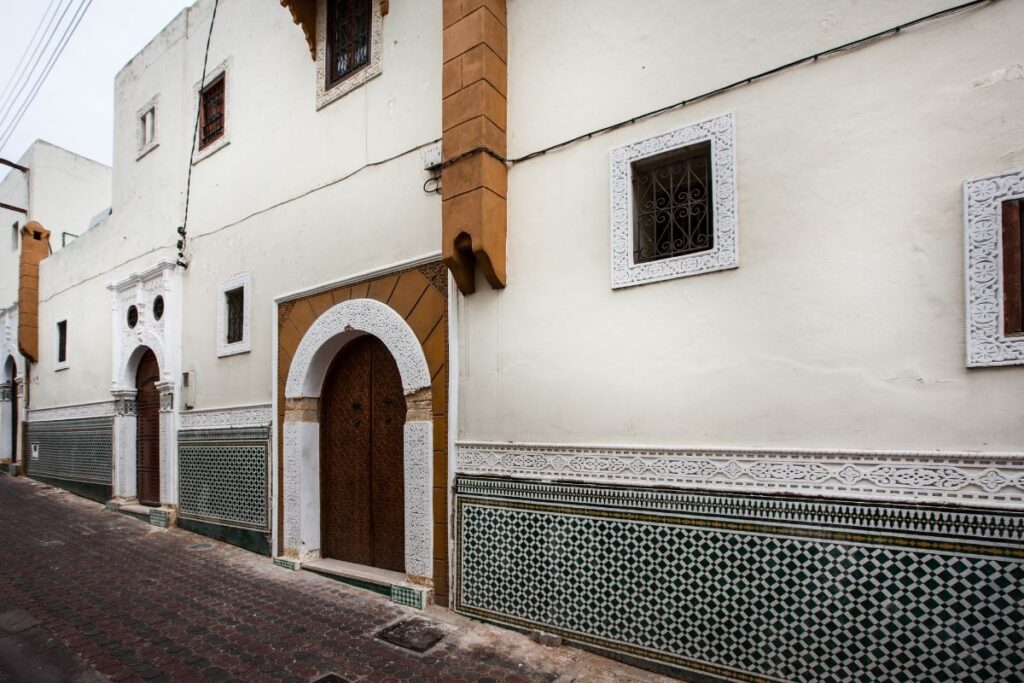
Step into one of the traditional bakeries and you’ll catch the scent of warm msemen and almond pastries. Bookshops selling religious texts sit beside olive vendors and spice merchants — a quieter, more ordered contrast to older medinas elsewhere in Morocco.
The area is easily reached by tramway (Place Nations Unies stop, then a short taxi ride), making it one of the most accessible heritage zones in the city.
The old medina, by contrast, is compact and unpolished. It doesn’t try to charm you. Vendors go about their business. Residents pass through quickly. If you walk respectfully and without expectation, it reveals itself in small moments rather than grand sights.
Old Medina: Everyday Casablanca
Parts of the old medina date back to before the 1755 Lisbon earthquake, though much was rebuilt afterward. Unlike the grand imperial medinas of Fes or Marrakech, Casablanca’s remains modest — more residential than theatrical.
Narrow lanes carry the smell of grilled sardines and fresh bread in the early afternoon. Laundry hangs above alleyways. Children run past with schoolbags. It’s less about monuments and more about observing daily life.
Plan for about 30–45 minutes of exploration. Visit during daylight hours for the best experience and stay aware of your surroundings. The area is generally safe by day but not essential to visit after dark, as this is a lived-in neighborhood rather than a curated attraction.
Seeing Casablanca With a Local Eye: A City Guide Perspective
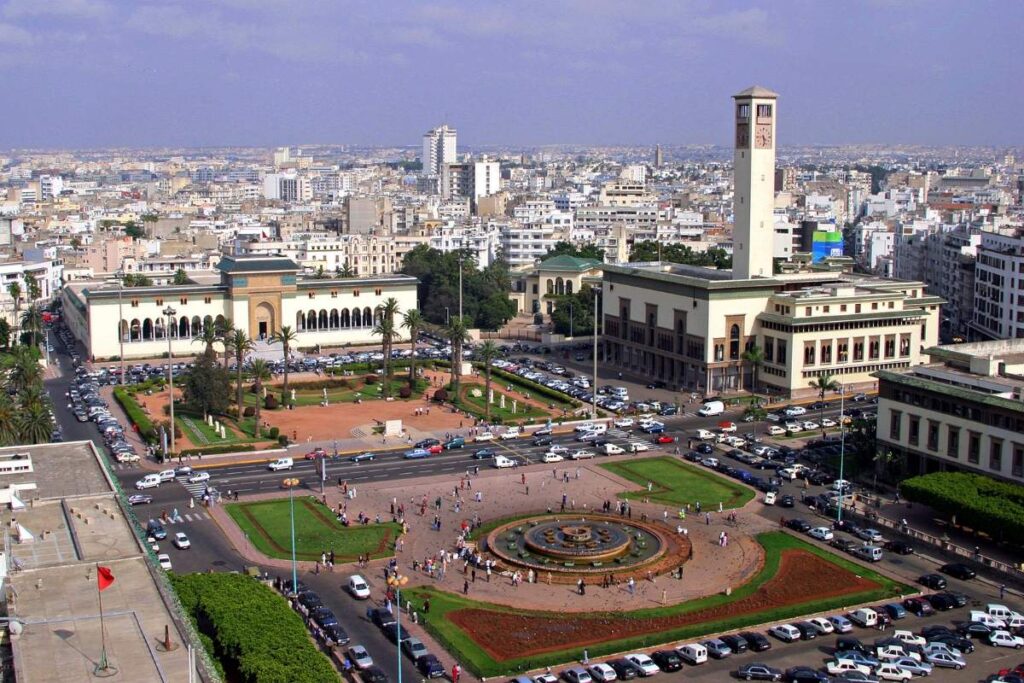
A guided visit makes a difference here. Casablanca doesn’t explain itself easily. A local guide helps you read the architecture, understand why neighborhoods developed the way they did, and notice details you’d otherwise miss—like Art Deco facades hidden behind signage, or the way public squares were designed to manage crowds and climate.
Walking tours work best in the center, while driving tours help connect the city’s scattered highlights into something coherent. Food-focused experiences, especially, open doors. Sitting down to eat with context changes how the city tastes.
For curated walking, cultural, and food experiences, explore our guide to the best tours in Casablanca.
Many guided walks begin around Place Mohammed V, where 1920s Art Deco buildings reflect the city’s French colonial planning. It’s one of the easiest places to understand Casablanca’s architectural identity.
Eating in Casablanca: A Guide to Local Flavors
This is where Casablanca quietly excels. The city has Morocco’s best seafood, not because it tries to, but because the ocean is right there. Grilled fish lunches near the port are simple and honest. No performance. Just freshness and smoke.
To understand regional specialties across the country, read our guide to traditional Moroccan food before you explore local menus.
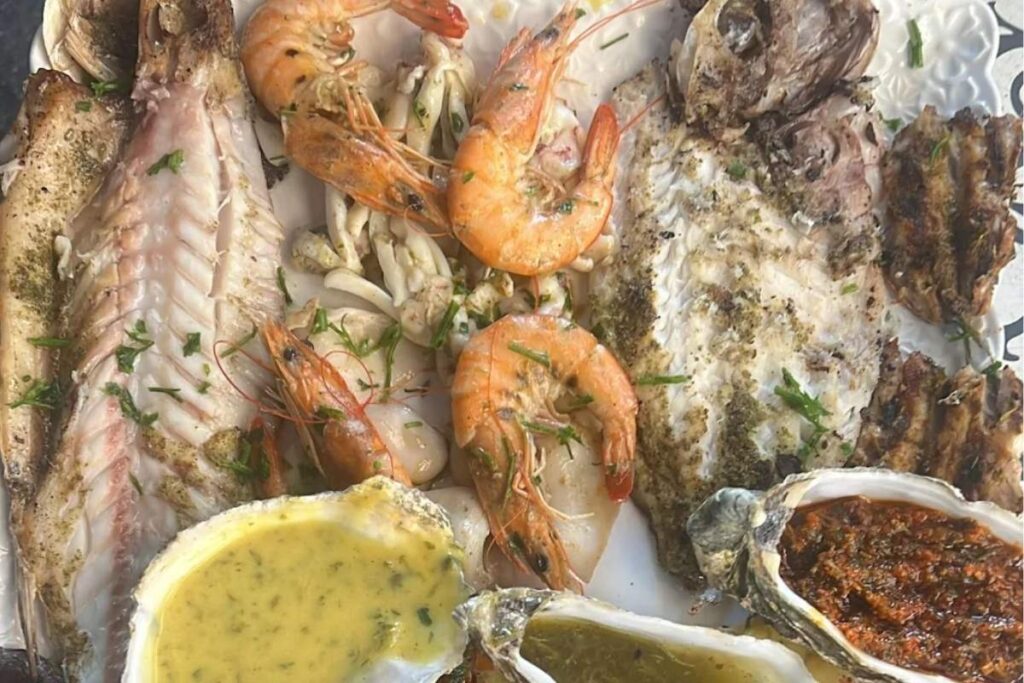
Traditional Moroccan food is everywhere, but it’s often adapted to the city’s pace. Tagines arrive faster. Portions are generous. Bakeries are serious business, and cafés are social institutions. A single coffee can last an hour if the conversation is good.
You don’t need a checklist. Follow where locals eat at lunchtime, especially outside tourist zones. That’s where Casablanca reveals its confidence.
No Casablanca travel guide would be complete without highlighting the city’s relationship with the Atlantic and its seafood culture.
Where to Stay in Casablanca – Travel Guide Advice
Where you stay shapes your experience more here than in smaller cities. The city center keeps you close to landmarks, cafés, and transport. The Corniche suits travelers who want space, sea air, and evenings by the water. Staying near the medina offers atmosphere but less quiet.
Casablanca rewards proximity. Long distances and traffic can drain your energy if you’re not positioned well.
Typical Costs in Casablanca
Casablanca is generally slightly more expensive than Morocco’s smaller cities, but it remains affordable by European or North American standards. The city’s business focus means prices vary widely depending on neighborhood and travel style.
Budget hotels and simple guesthouses usually start around €35–50 per night, while comfortable mid-range hotels typically fall between €70 and €130. International luxury properties and seafront hotels can exceed €180+ during peak seasons.
Meals are flexible in price as well. A casual local lunch might cost €4–8, while a full restaurant dinner in the city center often ranges from €12–20 per person. Seafood restaurants near the coast can be slightly higher depending on the catch.
Public transport is inexpensive. Tram rides cost only a few dirhams, and most city taxi journeys remain affordable, though traffic can increase journey times during rush hour.
Overall, Casablanca rewards smart location choices more than strict budgeting. Staying centrally often saves both time and transport costs.
Understanding these typical expenses helps travelers use this Casablanca travel guide to plan a realistic daily budget.
When to Visit Casablanca
The Atlantic keeps temperatures moderate year-round. Summers are warm but rarely extreme. Winters are mild, with occasional rain that gives the city a softer, reflective mood.
Average summer temperatures range between 22–28°C (72–82°F), moderated by Atlantic winds. Winter days remain mild, often around 17–20°C (63–68°F). Rainfall is most common between November and February, though rarely disruptive for long.
Spring and autumn feel best for walking and exploring. The city doesn’t revolve around festivals, but it changes tone with the seasons—busier in summer, calmer outside peak travel months.
For a broader seasonal breakdown across destinations, see our full guide to the best time to visit Morocco.
Practical Notes From Experience
Casablanca is safe, but it’s a real city. Pay attention, move with purpose, and don’t assume tourist rules apply everywhere. Dress as you like, but notice how locals adapt their clothing to context. You’ll blend in more by observing than by imitating.
If safety is on your mind, our detailed guide on whether Morocco is safe for travelers explains what to expect across the country.
A well-planned Casablanca travel guide balances atmosphere with logistics.
Most nationalities can enter Morocco visa-free for short stays, but always verify current entry requirements before departure. Casablanca itself does not require special permits for sightseeing, including mosque visits, provided you join official guided tours where required.
For broader travel updates and national guidance, refer to the official Morocco tourism portal.
Fridays are quieter for administrative services but busier around mosques. If you plan indoor visits, confirm opening hours in advance, as schedules may shift during Ramadan.
Two days is enough to understand the city. One day is possible, but rushed. Casablanca works best when you give it breathing room.
Suggested Casablanca Travel Guide Itinerary
One Day in Casablanca – Travel Guide Highlights
Begin at the Hassan II Mosque early in the morning before crowds build. Walk along the Corniche afterward, then head toward Place Mohammed V to explore Casablanca’s Art Deco core. In the afternoon, visit the Habous Quarter for pastries and bookshops. End the day with fresh seafood near the port.
Two Days in Casablanca
With two days, slow the pace. Spend your second morning exploring the old medina and central markets. Take time for a guided architectural walk around Place Mohammed V. In the evening, return to the Corniche at sunset or enjoy a long café stop in the city center. Casablanca reveals more when you don’t rush it.
Beyond the City
Casablanca is also a starting point. Many travelers use Casablanca as a base for exploring Morocco’s Atlantic coast and nearby historic cities.
If you’re planning excursions, see our recommended best day trips from Casablanca for easy coastal and historic destinations. Rabat feels composed and historic. El Jadida carries traces of Portuguese influence. Oualidia offers lagoons and oysters. These places make sense once you’ve seen Casablanca’s scale and energy.
How to Get to Casablanca
Casablanca is Morocco’s main international gateway, and for many travelers it’s the first city they experience on arrival. Mohammed V International Airport sits about 30 kilometers south of the city and connects directly with Europe, North America, the Middle East, and major African hubs.
The simplest way into the city is the airport train, which runs regularly to Casa Voyageurs station in around 30 to 40 minutes. It’s reliable, inexpensive, and avoids the unpredictability of road traffic. Taxis and private transfers are also available outside the terminal if you prefer a direct hotel drop-off, especially after late-night arrivals.
Casablanca is also Morocco’s central rail hub. High-speed Al Boraq trains link the city with Rabat and Tangier, while standard ONCF services connect Fes, Marrakech, and other major destinations. If you are traveling across Morocco by train, chances are your route will pass through Casablanca.
Arriving by road is equally straightforward. Modern highways connect Casablanca with Marrakech, Rabat, and the Atlantic coast, making private transfers and rental cars practical options for travelers planning a wider itinerary.
For most visitors, Casablanca isn’t just another stop — it’s the country’s primary doorway.
If Casablanca is part of a wider Morocco trip, explore our complete Morocco travel guides to plan your route.
Planning Your Casablanca Visit
Planning a trip to Casablanca works best when you approach the city with the right expectations. Unlike Morocco’s imperial destinations built around historic medinas, Casablanca functions first as a living economic capital. That means distances are larger, neighborhoods are more spread out, and choosing the right location and pace makes a bigger difference here than in most Moroccan cities.
Most visitors arrive through Mohammed V International Airport or by train from other major cities such as Rabat, Tangier, or Marrakech. Because Casablanca is Morocco’s primary transport hub, it often becomes either the first stop or the final chapter of a wider itinerary. For many travelers, the smartest plan is to schedule Casablanca at the beginning or end of the trip, when logistics are simplest.
One to two days is usually enough to experience the city’s essential highlights, including the Hassan II Mosque, the Corniche coastline, and the Habous Quarter. Travelers interested in architecture, food culture, or guided city walks may prefer a slightly longer stay to explore at a slower pace without crossing the city repeatedly.
When organizing your schedule, prioritize staying in a central district or near the Corniche to reduce travel time. Casablanca’s traffic can slow movement between districts, especially during morning and evening rush hours. Planning your sightseeing by geographic area rather than by attraction list helps avoid unnecessary back-and-forth travel across the city.
Casablanca rewards visitors who treat it less as a checklist destination and more as a place to observe daily Moroccan urban life. Allow time for long café stops, seaside walks, and unplanned neighborhood exploration — these slower moments often define the experience far more than rushing between landmarks.
This Casablanca travel guide is designed to help you organize your time realistically while understanding how the city actually works.
Explore More Cities in Morocco
Planning a trip beyond Casablanca? Discover more destinations across Morocco:
Final Thoughts: Understanding Casablanca
This Casablanca travel guide encourages you to see the city as a chapter, not a headline. It adds depth to a Morocco itinerary and grounds the experience in everyday life. Spend time walking without a plan, sit longer than necessary in cafés, and listen more than you photograph.
If you approach Casablanca patiently, the city gives something back — quietly, honestly, and without trying to impress. That’s when this Casablanca travel guide truly makes sense.
Frequently Asked Questions
Casablanca is worth visiting for its modern Moroccan culture, Atlantic coastline, and the iconic Hassan II Mosque. While many travelers stop briefly because of the international airport, the city offers strong architecture, seafood dining, and local café life. One day covers the highlights, but two days gives a fuller experience.
Yes. Casablanca is generally safe for visitors, especially in central districts, business areas, and around major attractions such as the Hassan II Mosque and the Corniche. Like any large international city, petty theft can occur in crowded places, so keep valuables secure and avoid poorly lit streets late at night. Violent crime affecting tourists is extremely rare, and most travelers experience the city without issues.
Most travelers spend around €40–60 per day on a budget and €90–150 for mid-range comfort, including accommodation, meals, taxis, and entry fees. Casablanca offers a wide price range: local cafés and simple lunches are inexpensive, while seafront restaurants and international hotels cost more. Staying in a central district often reduces daily transport costs.
Casablanca can feel slightly more expensive than cities like Fes or Meknes because it is Morocco’s economic and business center. However, it remains affordable compared to most European or North American cities. Transport, cafés, and local restaurants are still reasonably priced, and travelers can easily control expenses by choosing central accommodation and eating where locals dine.
Tap water in major Moroccan cities is treated and officially safe, but many travelers prefer bottled or filtered water to avoid minor stomach discomfort while adjusting to a new environment. Bottled water is inexpensive and widely available in supermarkets, kiosks, and restaurants throughout Casablanca and the rest of Morocco.
Morocco is culturally moderate but generally conservative in traditional neighborhoods. Women are not required to cover their hair, but modest clothing is recommended for comfort and cultural respect — for example loose trousers, midi skirts, covered shoulders, and avoiding very revealing tops. Coastal districts and modern areas of Casablanca are more relaxed, but dressing modestly in markets and residential areas usually reduces unwanted attention.
Citizens of the EU, UK, USA, Canada, Australia, and many other countries can enter Morocco visa-free for stays of up to 90 days. Your passport should be valid for at least six months beyond your arrival date and have at least one blank page. Always confirm current requirements with your nearest Moroccan embassy before travel, as entry rules can occasionally change.
Arabic and Amazigh (Berber) are Morocco’s official languages, while French is widely used in administration, transport, and business — especially in Casablanca. English is increasingly common in hotels, restaurants, tourist areas, and among younger Moroccans. Visitors can usually travel comfortably with English alone, though learning simple phrases such as “Shukran” (thank you) is appreciated.
Yes. Wi-Fi is available in most hotels, apartments, cafés, and restaurants in Casablanca, and mobile 4G coverage is strong throughout the city. Prepaid SIM cards with generous data packages are inexpensive and easy to purchase at airports or official telecom stores. Coverage may drop only in remote rural or desert regions outside major cities.
One full day is enough to see Casablanca’s main highlights, including the Hassan II Mosque, the Corniche, and the Habous Quarter. However, two days allows a more relaxed pace, time for seafood dining, architectural walks, and experiencing the city’s café culture. Casablanca rewards travelers who slow down rather than rushing between sights.
Casablanca can be visited year-round thanks to its Atlantic coastal climate. Spring (March–May) and autumn (September–November) offer the most comfortable temperatures for walking and sightseeing. Summers are warm but moderated by ocean winds, while winters remain mild with occasional rain and fewer tourists.
