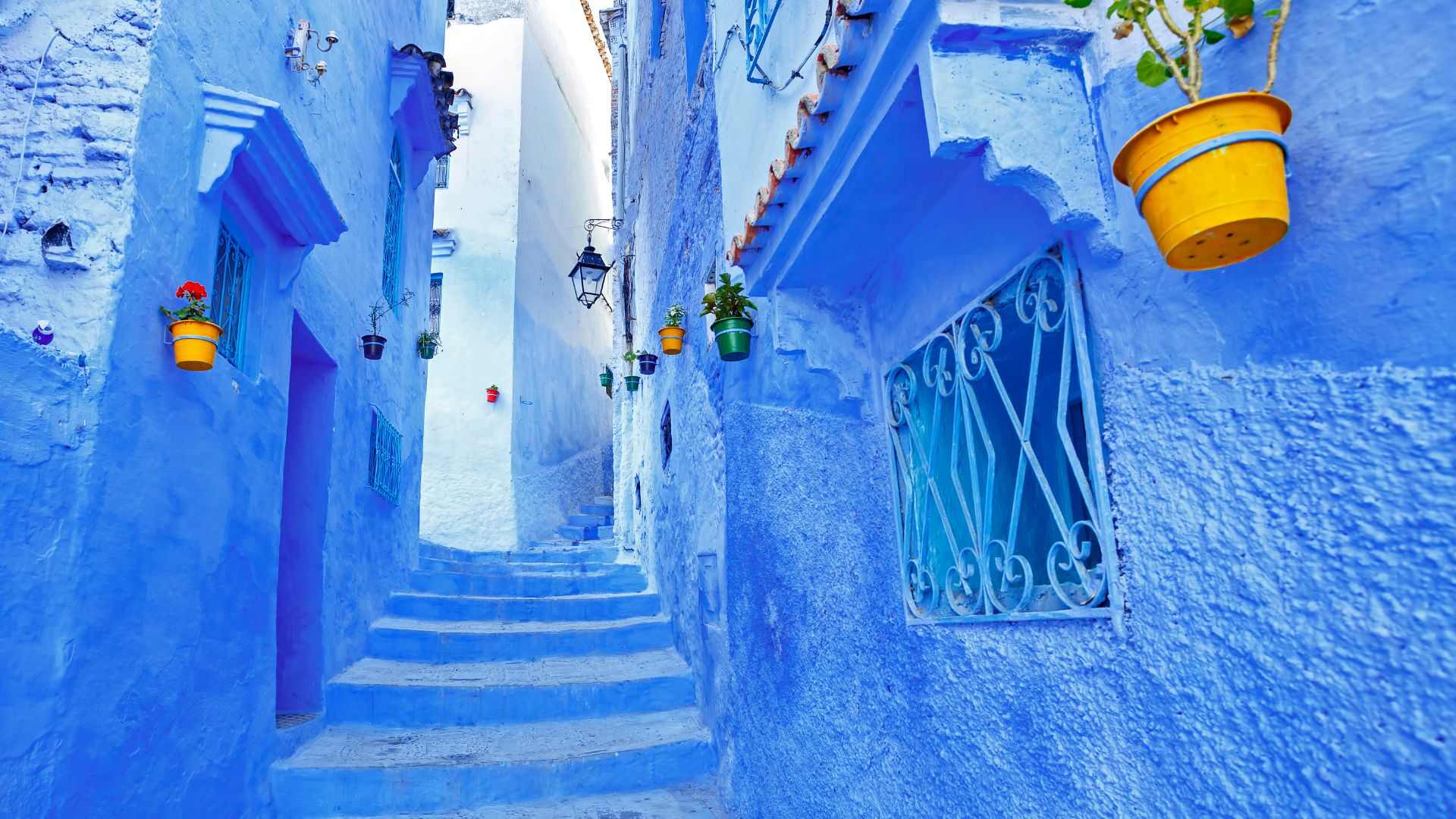
This Chefchaouen travel guide is for travelers who don’t want to rush Morocco. Chefchaouen is not loud. It doesn’t compete for your attention. Instead, it invites you to slow down. Tucked into the Rif Mountains in the north, the city feels human in scale and gentle in rhythm. Doors stay open. Cats nap on blue steps. Conversations drift from cafés into the street.
People call it the Blue Pearl, but that nickname only tells half the story. Yes, the blue streets are beautiful. More importantly, Chefchaouen feels calm in a country known for intensity. If Marrakech energizes you and Fes challenges you, Chefchaouen lets you breathe.
Whether you’re passing through for a day or staying a few nights, this Chefchaouen travel guide will help you understand what the city offers, when to come, and how to experience it well.
Chefchaouen Travel Snapshot
This Chefchaouen travel guide introduces Morocco’s famous blue mountain town, known for its calm atmosphere, compact walkable medina, and scenic Rif Mountain setting.
Location: Northern Morocco in the Rif Mountains, between Tangier and Fes
Status: Small historic mountain city with a UNESCO-recognized cultural landscape and preserved medina
Known For: blue-painted streets, relaxed pace, mountain views, photography-friendly medina
Best For: slow travel, couples, photographers, and peaceful Morocco itineraries
Mid-Range Budget: €45–€90 per person per day depending on riad choice and dining style
Ideal Stay: 2 nights for a relaxed visit with sunset viewpoints and quiet mornings
Best Time to Visit: spring and autumn for mild temperatures, though the mountain climate stays comfortable most of the year
Not Ideal If: you want major monuments, nightlife, or fast-paced city sightseeing
Written for travelers who value observation, atmosphere, and pace over checklists.
On This Page:
Is Chefchaouen Worth Visiting?
Yes — Chefchaouen is worth visiting for most travelers. Known for its blue-painted medina, relaxed mountain setting, and easy walkability, it offers one of the calmest travel experiences in Morocco. While smaller than Marrakech or Fes, spending two nights here allows you to enjoy quiet mornings, sunset viewpoints, and the slower rhythm that makes the city memorable.
Where Chefchaouen Is — and Why It Feels Different
Chefchaouen sits in northern Morocco, between Tangier and Fes, surrounded by the folds of the Rif Mountains in northern Morocco. That geography matters.
Northern Morocco’s mountain geography strongly shapes the region’s climate and settlement patterns, as described by Morocco’s official tourism resources.
The mountains soften the climate. Summers stay more comfortable than inland cities. Evenings cool down quickly. More importantly, the terrain shapes daily life. Streets curve instead of sprawl. Views open suddenly between houses. Nothing feels rushed because it physically can’t be.
As a result, Chefchaouen developed differently from imperial cities. There are no grand palaces or massive squares. Instead, there is balance. For travelers, that balance is the main attraction.
Exploring the Medina, One Turn at a Time
The medina is small, but it rewards patience. Chefchaouen’s medina is one of the easiest to navigate in Morocco, compact enough to walk comfortably while still offering endless small alleys to discover. You don’t experience it by following a route. You experience it by wandering.
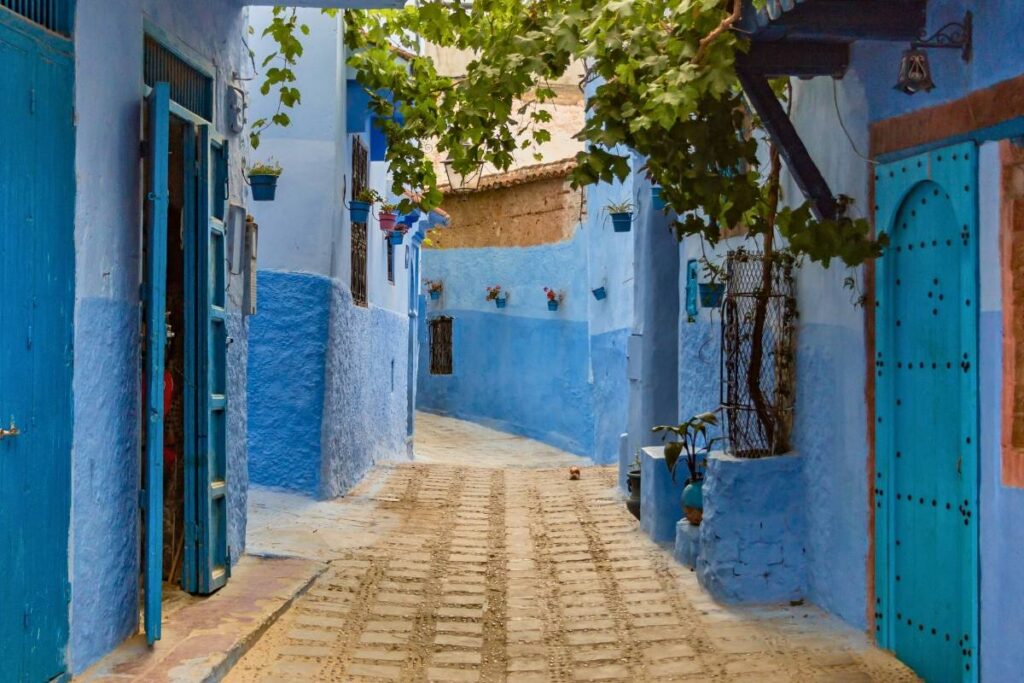
In the early morning, shopkeepers hose down the stone streets. The blue walls look soft, almost faded. Later, the light sharpens. Doorways glow. Laundry lines stretch across alleys. You might hear a hammer tapping inside a workshop or the call to prayer echoing gently between hills.
Unlike larger medinas, getting lost here feels pleasant rather than stressful. The entire old town can be crossed on foot in under 20 minutes. Even when you lose your sense of direction, you’re never far from a familiar square.
If you want structure, a local walking tour adds historical context. If not, let curiosity lead. Both approaches work in Chefchaouen.
You can find suggested routes and experiences in our Things to Do in Chefchaouen guide.
Ras El Maa and the Sound of Water
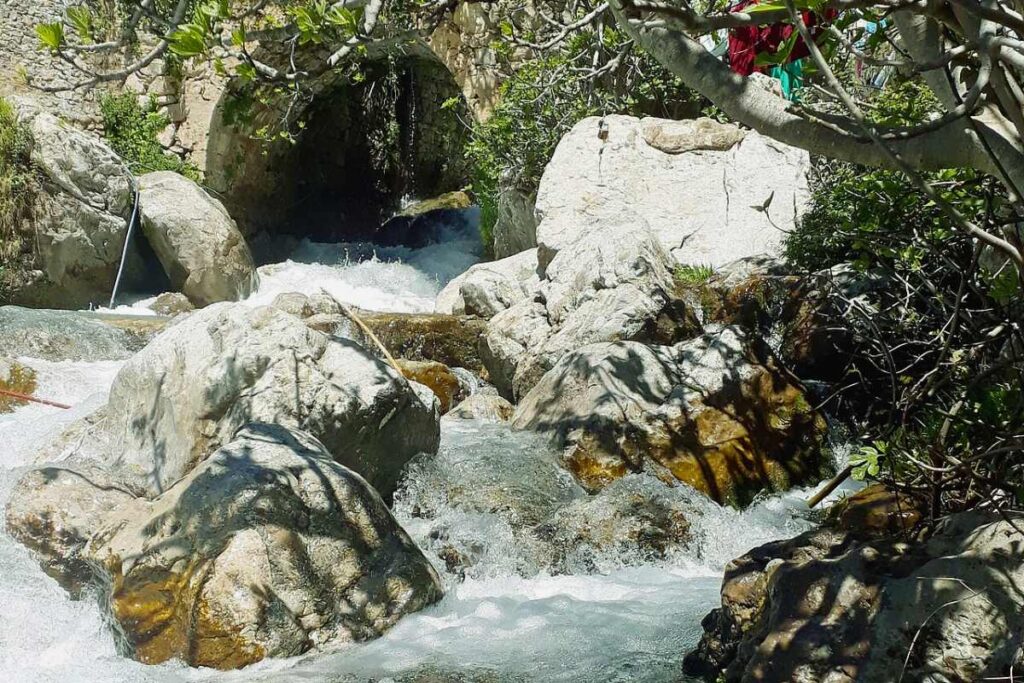
Just beyond the edge of the medina, Ras El Maa marks a small but important transition. Here, the city meets nature. Women rinse laundry in the stream. Kids climb rocks. Travelers pause, unsure whether to keep walking or sit longer.
This is not a dramatic attraction. That’s exactly why it matters. Ras El Maa shows how closely daily life in Chefchaouen connects to its surroundings. Stay a while. Watch how locals use the space. You’ll understand the city better than you would from any viewpoint.
Sunset at the Spanish Mosque
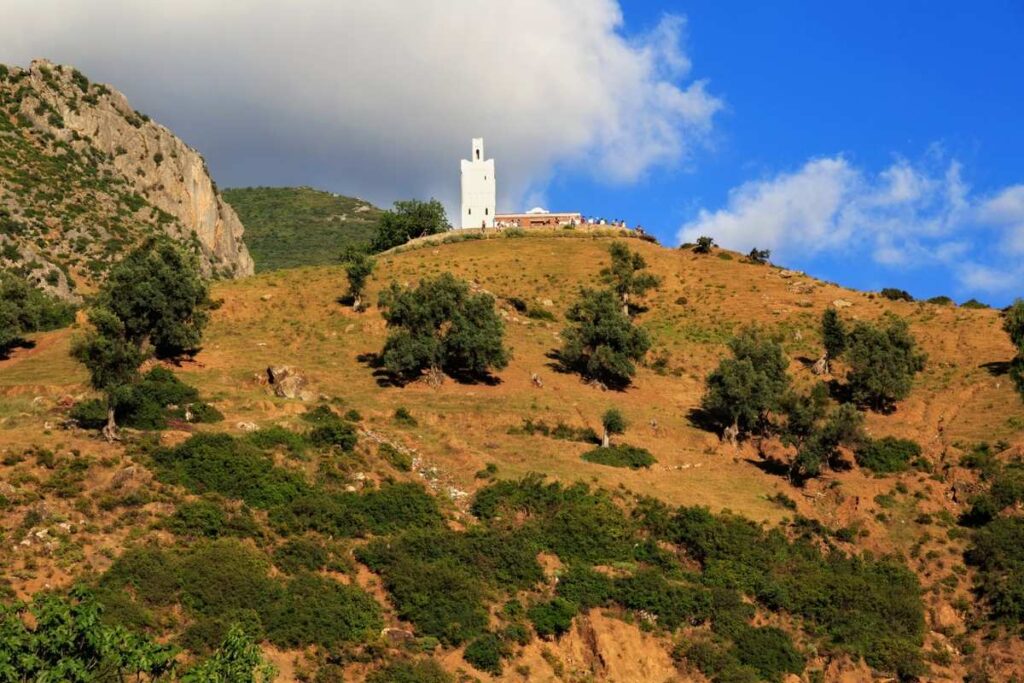
Late afternoon, walk uphill toward the Spanish Mosque. The path is gentle but steady. As you climb, the medina spreads out behind you, a mosaic of blue and white.
By sunset, the city quiets. The call to prayer rises. The mountains darken first, then the sky. From here, Chefchaouen looks small, contained, and peaceful.
This moment alone earns Chefchaouen its place in many itineraries.
Food in Chefchaouen: Simple and Honest
Chefchaouen’s food scene doesn’t chase trends. It leans traditional and comforting.
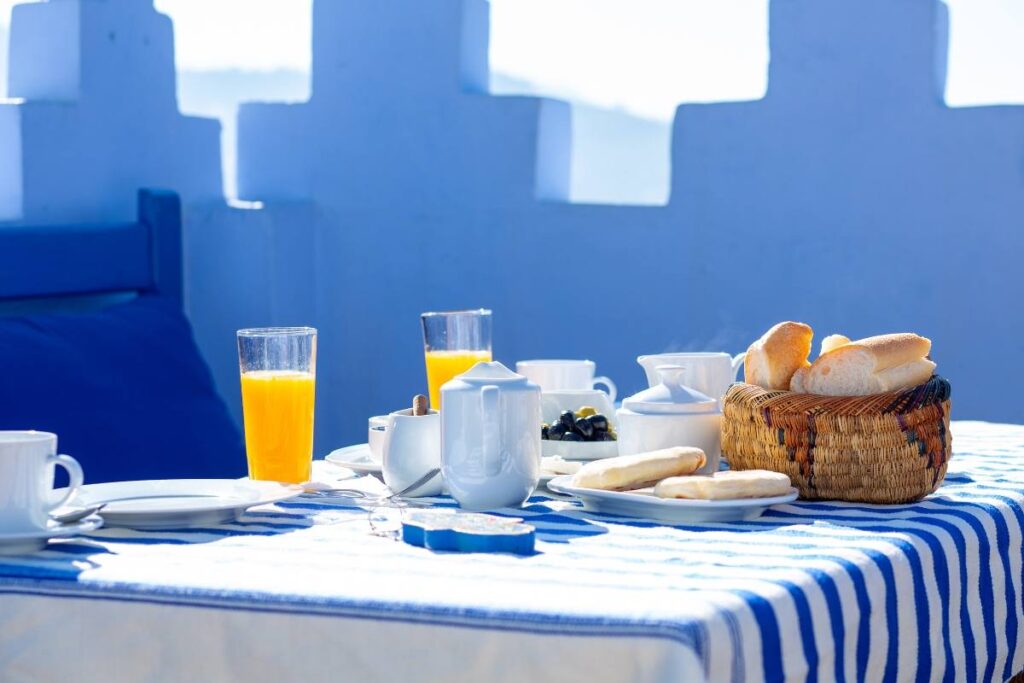
Expect slow-cooked tagines, fresh bread, olives, and seasonal vegetables. Goat cheese from the Rif appears often, sometimes served warm with honey. In the evenings, cafés fill with locals sharing mint tea and conversation rather than menus.
If you want something refined, you’ll find it. If you prefer simple food done well, you’ll be happier here.
Food tours exist, but many travelers enjoy discovering places on their own. Either way, eating in Chefchaouen feels relaxed, not performative.
Beyond individual dishes, Chefchaouen reflects the wider Rif regional cuisine, which leans rustic, seasonal, and rooted in mountain farming traditions. Fresh goat cheese from nearby villages is one of the area’s specialties, often served with local olive oil, warm bread, or a drizzle of honey. Simple vegetable tagines, lentil soups, and grilled meats dominate menus, shaped more by availability than culinary trends.
Equally important is the café culture. Terrace cafés overlooking the medina or mountain slopes invite long, unhurried pauses rather than quick meals. Many visitors remember Chefchaouen less for specific restaurants and more for slow breakfasts, mint tea at sunset, and evenings spent watching the blue streets fade into shadow.
What to Buy in Chefchaouen: Local Crafts and Souvenirs
Shopping in Chefchaouen feels quieter and more relaxed than in Morocco’s larger cities. The medina specializes in regional handicrafts rather than mass-produced tourist items, and many small workshops still sell directly from family-run shops.
Woven wool blankets from the Rif Mountains are among the most distinctive local products, often made in natural colors or soft striped patterns. Handcrafted leather bags, painted ceramics, and woven baskets also appear throughout the medina. Goat cheese and local honey from nearby mountain villages are popular edible souvenirs when transport allows.
Unlike busier markets in Marrakech or Fes, bargaining here tends to be gentler and less aggressive. Take time to browse slowly, compare shops, and choose pieces you genuinely like — Chefchaouen rewards patience even when shopping.
Experiences and Guided Visits in Chefchaouen
Chefchaouen works beautifully without a guide. Still, guided experiences can deepen your understanding.
A local guide explains the city’s Andalusian roots and why blue became its defining color. Nature walks introduce the Rif Mountains beyond the medina. Short hikes lead to quiet villages where tourism hasn’t reshaped daily life.
If you’re short on time or curious about context, explore our Best Tours in Chefchaouen for well-paced options.
Recommended Tours in Chefchaouen
Many visitors choose to book a short guided experience in Chefchaouen to better understand the medina’s history, discover quieter viewpoints, or explore nearby natural landscapes such as the Akchour waterfalls. Guided tours are not essential for enjoying the city, but they can save time, simplify logistics, and provide helpful local context — especially for first-time visitors who want a clearer introduction before exploring independently.
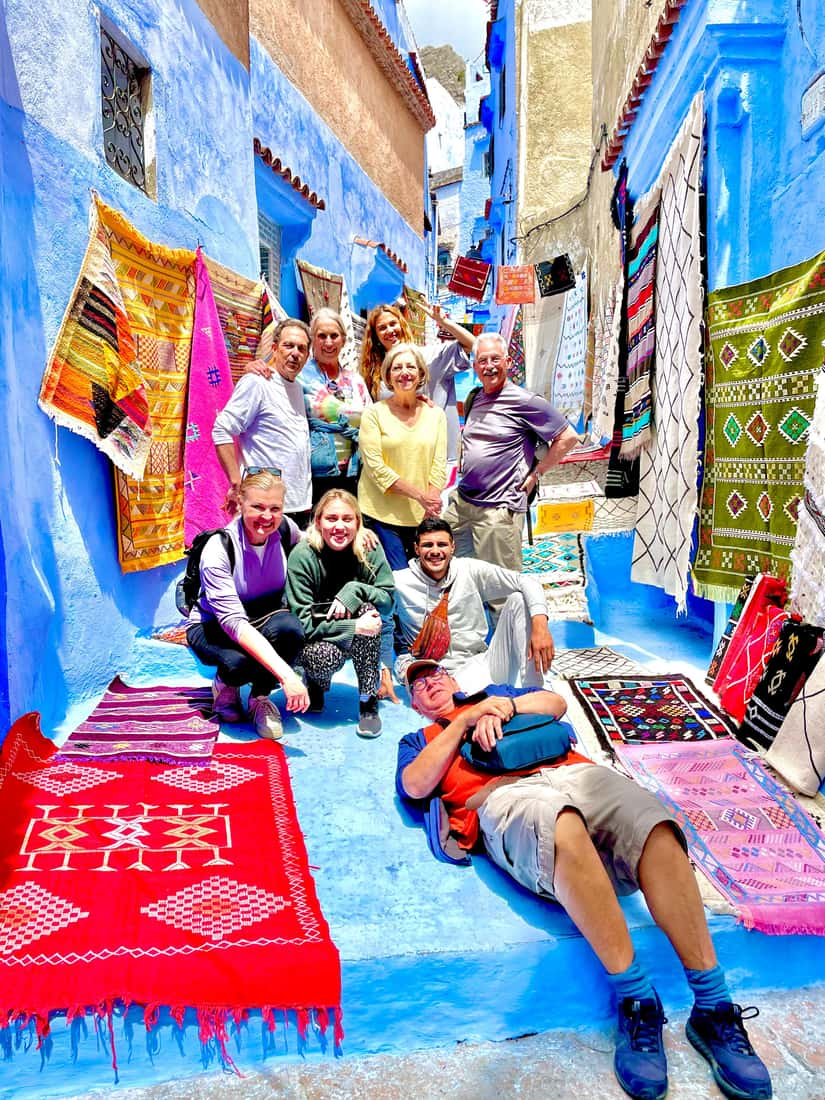
Chefchaouen Guided Walking Tour
Discover Chefchaouen on a guided city walk with mint tea, visiting the Kasbah, Spanish Mosque, local markets, and...
Details & Booking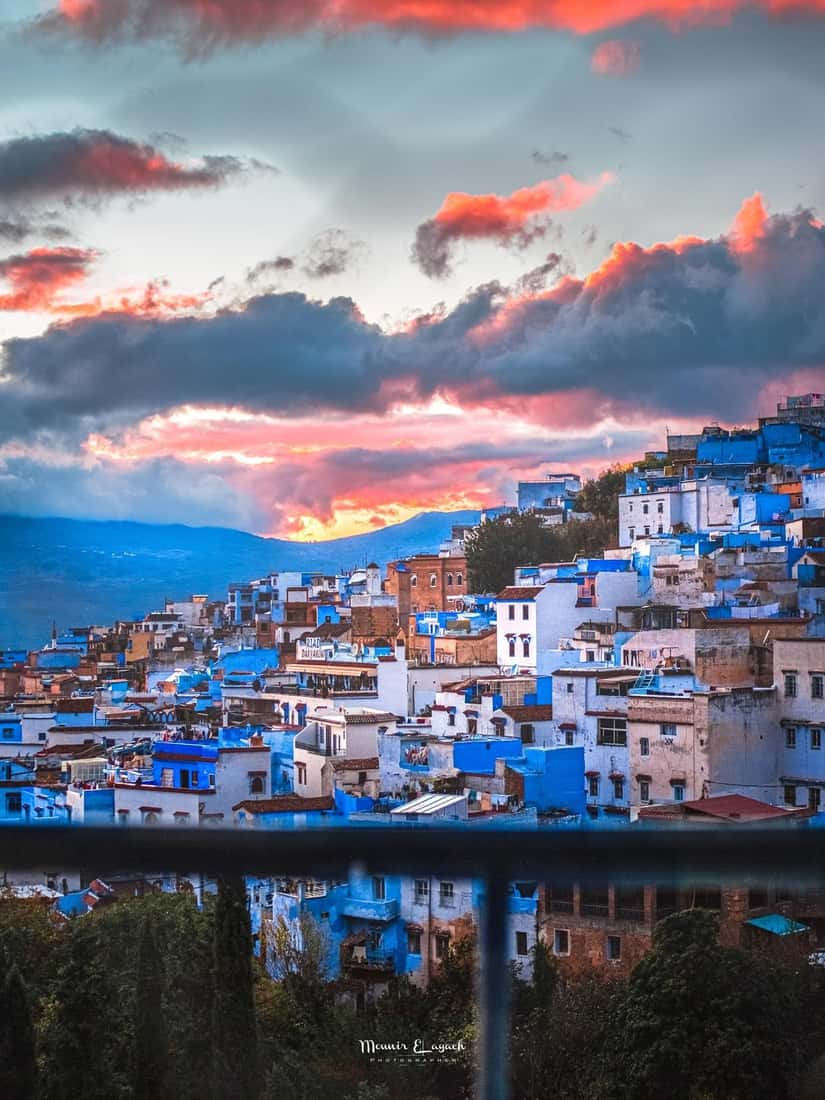
Chefchaouen Cultural & History Tour
Step into Chefchaouen’s past on a cultural and history tour, exploring the Kasbah, Spanish Mosque, local markets, and...
Details & BookingDay Trips to Chefchaouen (and From It)
Many travelers visit Chefchaouen as a day trip from Fes or Tangier. That works, but it limits what you feel. The city changes after sunset.
If you do come for a day, arrive early and leave late. The drive itself, winding through the Rif, becomes part of the experience.
If you stay longer, short trips into the surrounding countryside reveal another side of northern Morocco. Forests, small farms, and mountain roads offer contrast to the blue streets.
Popular Day Trips to Chefchaouen From Fes and Nearby Cities
Because Chefchaouen sits in the Rif Mountains without a train connection, many travelers visit on an organized day trip from nearby cities such as Fes or Tangier. These guided excursions typically include transport, a structured visit inside the blue medina, and time to explore the main viewpoints before returning the same evening.
While staying overnight offers a more relaxed experience, a well-planned day trip can still provide a clear introduction to the city’s atmosphere, history, and mountain setting — especially for travelers with limited time in northern Morocco.
Travelers can usually choose between shared group tours for budget-friendly transport or private day trips for a more flexible schedule.
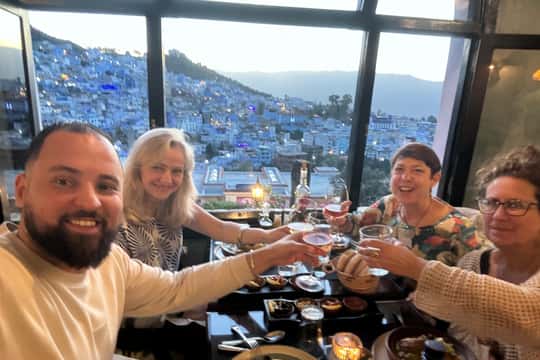
Private - Day Trip to the Blue City of Chefchaouen
Escape to the stunning “Blue City” of Chefchaouen on this private day trip from Fes. Nestled in the...
Details & Booking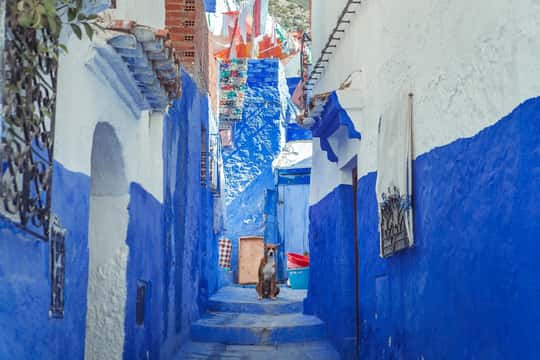
Chefchaouen Day Trip from Fez (Shared Group Tour)
Discover the enchanting “Blue Pearl” of the Rif Mountains on an enjoyable day trip from Fez. The Chefchaouen...
Details & BookingBest Time to Visit Chefchaouen, Morocco
This Chefchaouen travel guide recommends spring and autumn for most travelers.
From March to May, the hills turn green and temperatures stay mild. September through November offers clear skies and fewer crowds. Summer remains manageable, especially compared to Marrakech or Fes, thanks to the altitude. Winter brings cool evenings and quiet streets, which some travelers love.
Season matters less here than pace. Chefchaouen always feels calmer than most Moroccan cities.
For a broader view, see our Best Time to Visit Morocco guide.
For official travel information and regional updates, you can also check the official Morocco tourism website.
How Many Days to Spend in Chefchaouen?
Two nights is ideal for most travelers. One day shows you the surface, two days reveal the rhythm, and three days let you fully settle into the city’s pace.
Staying two nights gives you a full day without arrival or departure pressure and time to experience Chefchaouen early in the morning and after sunset, when the medina feels most peaceful.
Longer stays suit hikers, photographers, and anyone recovering from faster cities. Chefchaouen doesn’t demand time — it rewards it.
Where to Stay in Chefchaouen – Travel Guide Accommodation Advice
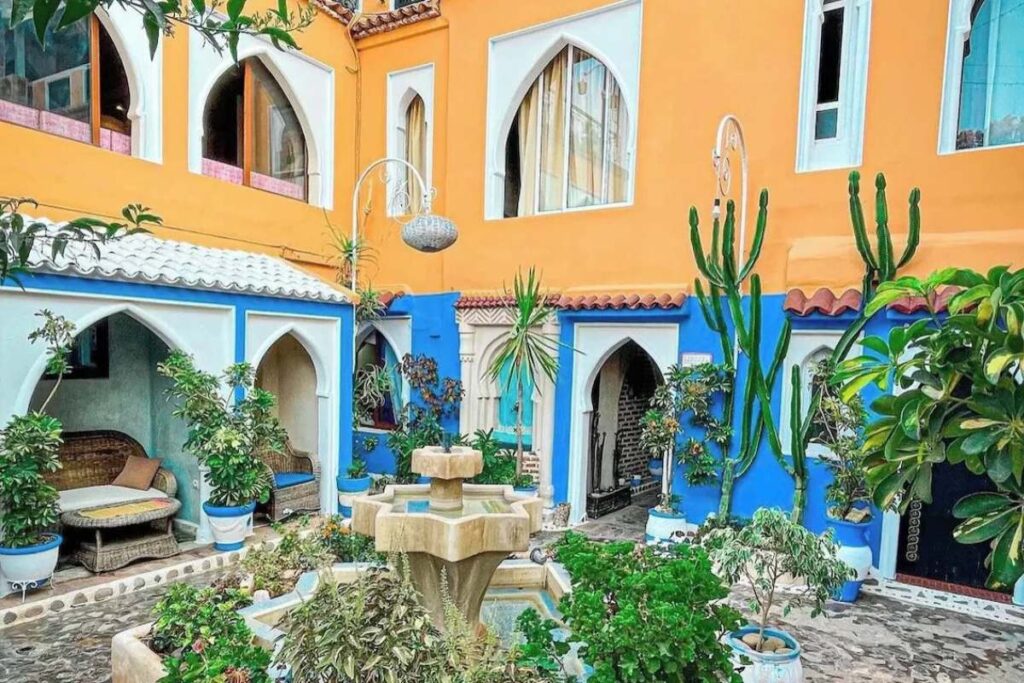
Accommodation here feels personal. Many riads are small, family-run, and built into the hillside. Some offer terraces with views over the medina. Others sit quietly near the edge of town.
Choose location over luxury. In Chefchaouen, atmosphere matters more than amenities.
Chefchaouen Travel Guide: Practical Tips for Visiting
Comfortable shoes matter. Streets slope and steps appear unexpectedly. Early mornings and late afternoons offer the best light and fewer people. When taking photos, especially of residents, ask or keep distance. Chefchaouen feels peaceful because people respect one another’s space.
If safety is a concern, read our guide on Is Morocco Safe? for context and reassurance.
How to Get to Chefchaouen – Travel Guide Transport Tips
Chefchaouen doesn’t have a train station, and that isolation is part of what preserves its atmosphere. Reaching the city always involves a road journey through the Rif Mountains, but the routes are straightforward and well traveled.
Most visitors arrive by bus from Fes or Tangier. From Fes, the journey typically takes around four hours. From Tangier, expect roughly two and a half to three hours depending on traffic and stops. Comfortable intercity buses run daily, and booking a morning departure gives you the most usable time after arrival.
If you prefer flexibility, private transfers and rental cars are also common. Driving allows you to stop at viewpoints along the mountain roads, which gradually shift from plains into green hills and winding passes before the blue city finally appears below.
Whichever route you choose, plan to arrive during daylight if possible. The final approach into Chefchaouen is scenic, and seeing the city emerge against the mountains is part of the experience.
Bus schedules and transport options can be checked in advance through Morocco’s national transport providers or major booking platforms before traveling.
Planning Your Chefchaouen Visit
Planning a trip using this Chefchaouen travel guide is mostly about pacing. Unlike Morocco’s larger cities, the blue mountain town rewards slow exploration and minimal daily structure. Because distances are short and the medina is compact, most visitors spend their time walking rather than organizing transport between attractions.
Arriving earlier in the day helps you settle into your accommodation and explore the medina before evening crowds. Staying inside or just beside the old town usually provides the best experience, allowing you to enjoy quiet mornings, sunset viewpoints, and relaxed dinners without needing taxis.
Two nights is ideal for most travelers. This gives you one full day for wandering the medina, visiting Ras El Maa and the Spanish Mosque viewpoint, and another morning to experience the city before day-trip visitors arrive. Travelers passing through in a single day can still see the highlights, but overnight stays reveal Chefchaouen’s calmer rhythm.
Chefchaouen works best when treated as a pause within a wider Morocco itinerary rather than a destination filled with scheduled attractions. Allow time for terrace cafés, unplanned walks, and simply watching the city change with the light — these moments often define the visit far more than any checklist.
Explore More Cities in Morocco
Planning a trip beyond Chefchaouen? Discover more destinations across Morocco:
Final Thoughts: Is Chefchaouen Worth Visiting?
This Chefchaouen travel guide exists for one reason: to say yes, but with the right expectations.
This Chefchaouen travel guide shows that the city is not about ticking boxes. It’s about slowing down, noticing details, and letting a place unfold naturally. Its beauty is quiet. Its charm grows over time. In a country full of movement and contrast, Chefchaouen offers pause.
If that sounds like what you’re looking for, the blue city will stay with you long after you leave.
To continue planning, explore Things to Do, Tours & Activities, and Day Trips & Excursions and build a journey that moves at your pace.
For many travelers, Chefchaouen becomes one of the most memorable stops on a Morocco itinerary.
Frequently Asked Questions
Yes — if you value atmosphere over attractions. Chefchaouen is not about landmarks or busy itineraries. It rewards travelers who enjoy slow walks, quiet mornings, and observing daily life in a beautiful setting.
One day is enough to see the highlights, but two nights are ideal. Staying longer allows you to experience the city early in the morning and after sunset, when Chefchaouen feels most peaceful.
There are several explanations. Some link the blue color to Jewish traditions, others to practical reasons like cooling homes or repelling insects. Today, the blue has become part of the city’s identity and is carefully maintained by residents.
Chefchaouen is considered one of the safest and calmest cities in Morocco. Violent crime is rare, and the medina feels relaxed compared to larger cities. As anywhere, basic awareness and respect are recommended.
Yes, Chefchaouen can be visited as a day trip from Fes or Tangier, but it limits the experience. The city changes noticeably after sunset, and an overnight stay allows you to enjoy its quieter rhythm.
Chefchaouen receives many visitors, but it does not feel overwhelming. Tourism is present but integrated into daily life. Compared to cities like Marrakech or Fes, the atmosphere remains calm and unhurried.
Early morning and late afternoon are the best times to explore. The light is softer, temperatures are comfortable, and the medina is quieter, making walks and photography more enjoyable.
