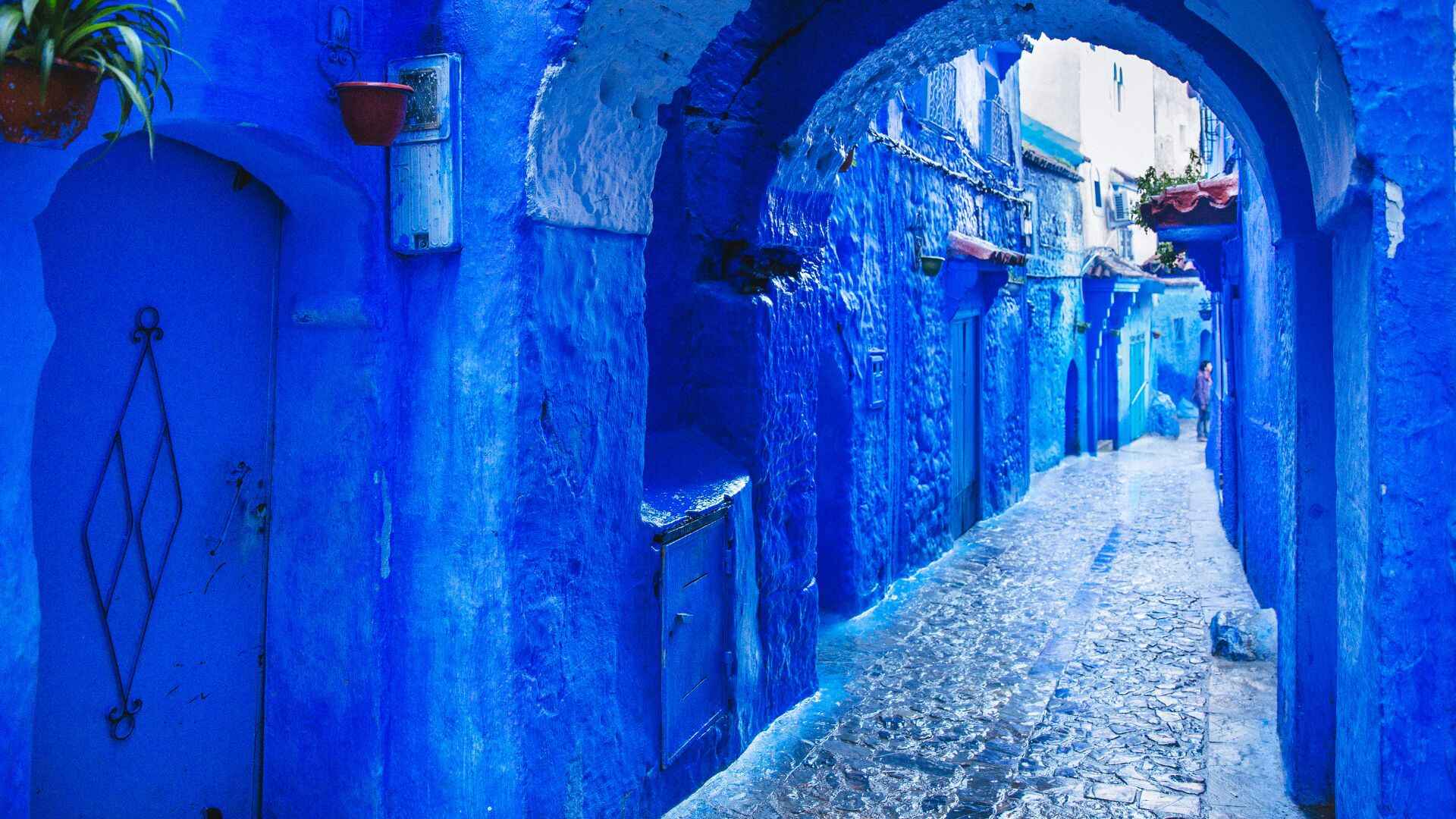
Start in Outa el Hammam, the main square in Chefchaouen’s blue medina. From there, you can walk a loop through the painted lanes, visit the Kasbah and see the Grand Mosque’s octagonal minaret. With a full day, continue east to Ras El Ma and decide whether to climb to the Spanish Mosque for the view.
The best things to do in Chefchaouen depend on how much time you have in town. A few hours are enough for the square and nearby lanes. A full day gives you time for the Kasbah, a proper lunch and the hill walk. An overnight lets you take photos in the morning or linger over dinner. If you want a substantial hike at Akchour, set aside a separate day.
Best things to do in Chefchaouen at a glance
| Attraction or experience | Main appeal | Time to allow | Free or paid | Walking demands | Planning note |
|---|---|---|---|---|---|
| Blue medina | Painted lanes and doorways | 60–120 min | Free public lanes | Slopes, steps and uneven stone | Walk one loop and leave room for people to pass. |
| Outa el Hammam and Grand Mosque exterior | Main square and octagonal minaret | 20–40 min | Free outdoors | Lower effort with a suitable approach | See the active mosque from the square. |
| Kasbah Museum and garden | Rif history and courtyard | 45–75 min | Paid admission | Uneven surfaces and tower stairs | Check museum, garden and tower access. |
| Ras El Ma | Spring and small cascades | 20–45 min on site | Free public area | Wet stone and changes in level | About 10–15 min from the main square. |
| Spanish Mosque viewpoint | Panorama over town and the Rif | 75–120 min round outing | Free exterior viewpoint | Uphill stone and dirt path | Start at the Ras El Ma footbridge and plan the descent. |
| Craft shops and Bab Souk | Weaving, woodwork and browsing | 30–60 min | Free to browse | Steps vary by route and shop | Ask where items were made. |
| Café or Rif lunch | A break and a taste of local food | 45–75 min | Pay for what you order | Ground-level venues can reduce steps | A good break in heat or rain. |
These are planning estimates. The viewpoint estimate includes the climb, time at the top and descent. The Ras El Ma estimate in the table is for the spring itself. Add time for your approach to the medina, particularly if you arrive at the bus station or have an arranged pickup.
Walk the blue medina and central sights
Blue lanes and public photo stops
Start at Outa el Hammam, then take a short loop through the lanes around El Haouta if your time and footing allow. Return to the main square for the Kasbah. A loop makes it easier to stop for photos without retracing several uphill stretches. The lanes can be narrow, and short flights of steps sometimes connect streets that look close together on a map.
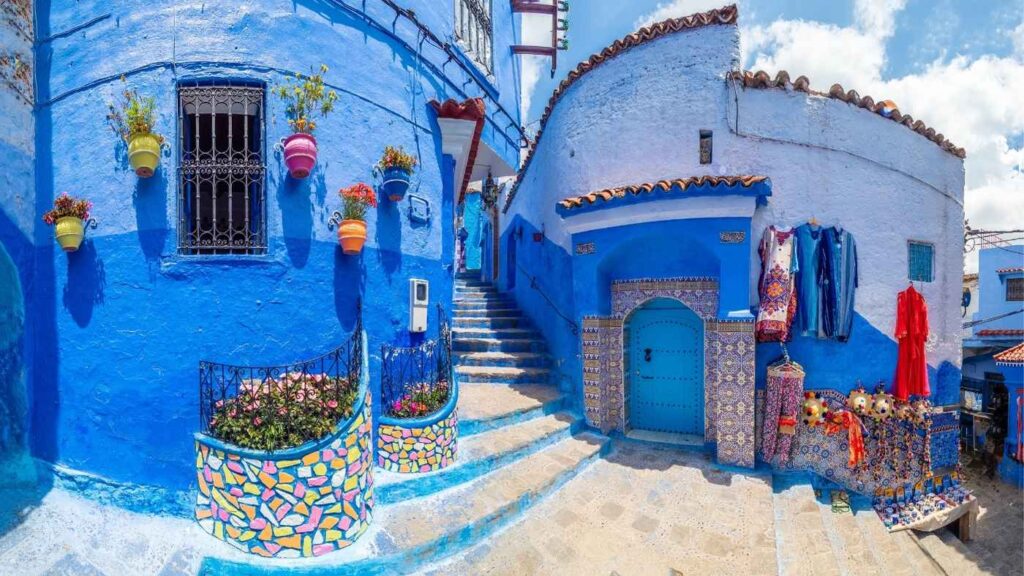
Photograph a blue stairway or doorway from a public lane, then give other people room to pass. Ask before taking portraits, especially of children, and before photographing inside a shop or courtyard. Some staged doorways or courtyards charge for photos. Confirm the price and what it includes before entering. Earlier or later light can soften the shadows, though busy lanes can stay busy at either time.
You may also hear Chefchaouen called Chaouen. There are several stories about why its buildings became blue, including accounts linked to Jewish heritage. The town’s blue-painted streets are well documented. Their origin is less certain. National tourism medina guide · Local history and heritage
Outa el Hammam and the Grand Mosque exterior
Outa el Hammam is the easiest landmark for organizing the central part of your walk. The Kasbah entrance and the Grand Mosque sit beside the square. Look for the mosque’s octagonal minaret, then take a café break or continue into the Kasbah. Allow about 20–40 minutes for the square and exterior stop before adding a museum visit.
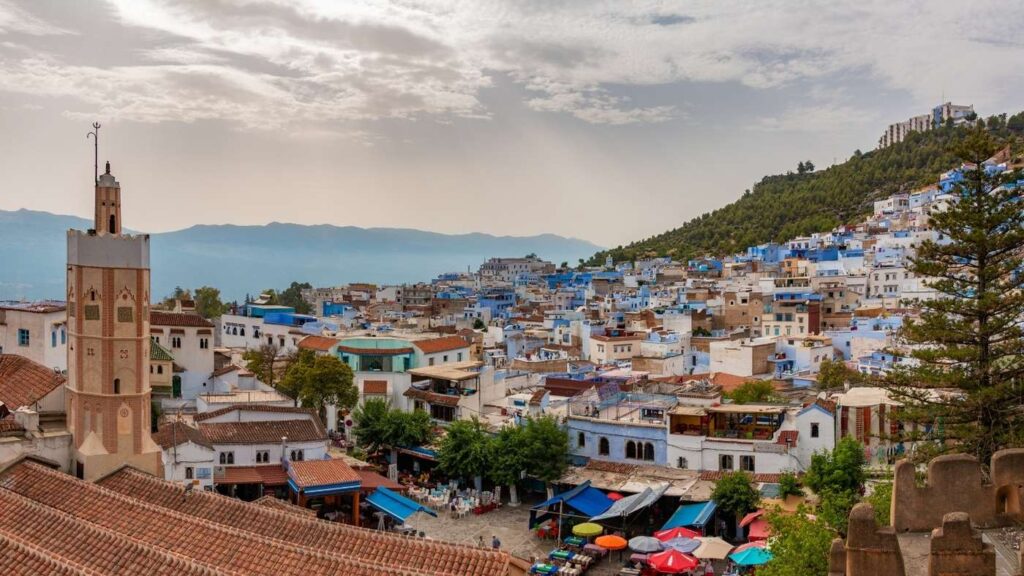
The Grand Mosque is an active place of worship. Plan to see it from outside and follow posted restrictions. If you’re visiting with a tour group, use the guide’s agreed meeting point for your return. Grand Mosque visitor guidance
Kasbah Museum, garden and tower
The Kasbah gives the blue lanes some historical context. Inside the walls, the museum displays objects such as textiles and photographs, and the courtyard garden offers a break from the streets. Allow 45–75 minutes. The tower has a narrow staircase. If you prefer fewer steps, ask at the gate what you can reach in the courtyard and museum.
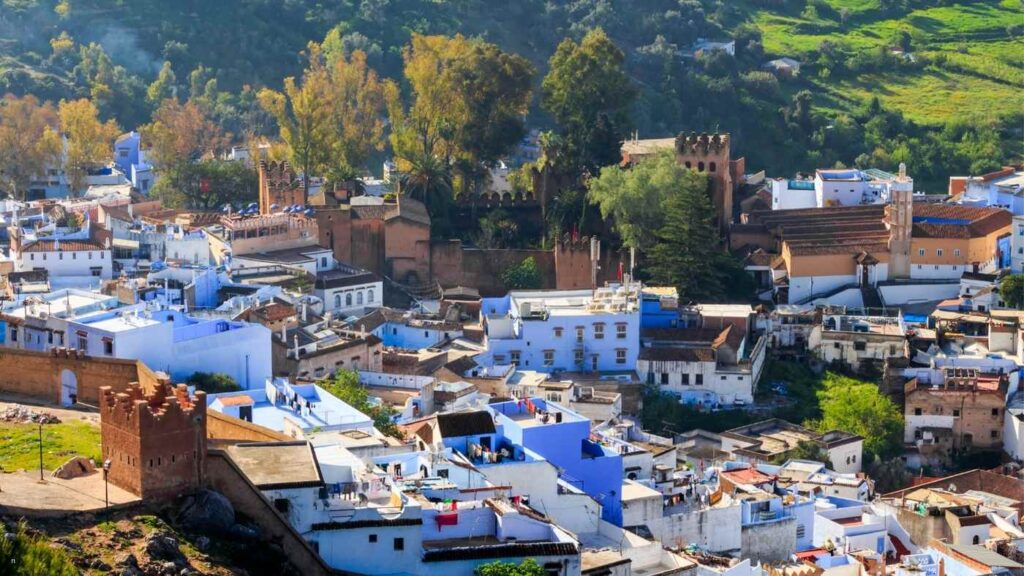
Morocco’s Culture Ministry listed 80 MAD per nonresident adult and 40 MAD per nonresident child aged 7–13 when checked on 13 November 2026. Check current opening hours and last entry at the gate, and ask separately about access to the museum, garden and tower. Culture Ministry tickets · Kasbah and tower access notes
Ras El Ma and the Spanish Mosque viewpoint
Ras El Ma at the eastern edge of the medina
From Outa el Hammam, allow about 10–15 minutes on foot to Ras El Ma, the spring near Bab El Onsar. Spend 20–45 minutes by the water and the small cascades. The flow varies, and stone near the water can be slippery. The wash area is part of daily life, so give people using it space.
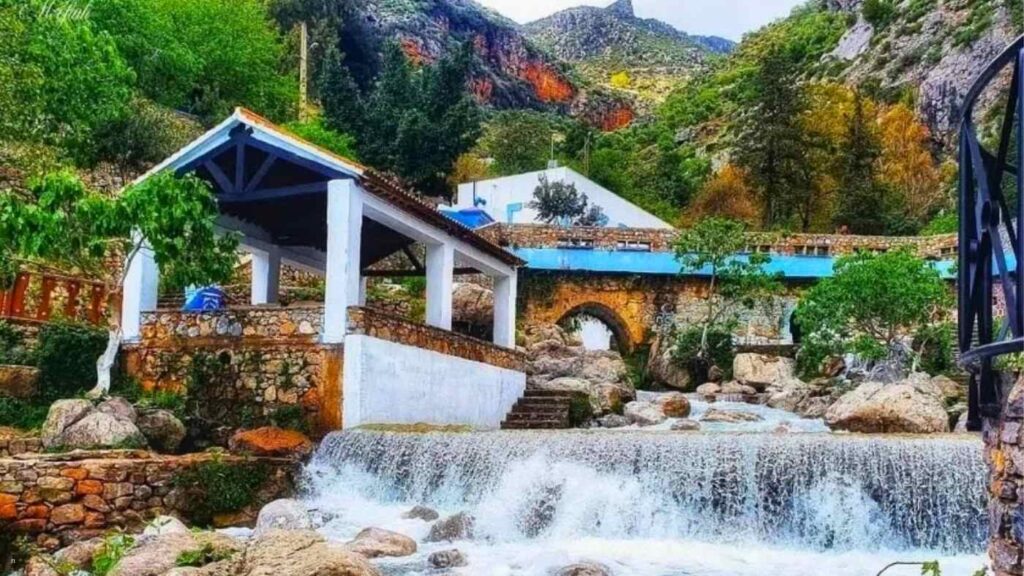
Ras El Ma is in Chefchaouen and works as a short stop on a town walk. The longer waterfall hikes at Akchour begin outside town and require separate transport. Ras El Ma visitor notes
Walk to the Spanish Mosque from the Ras El Ma footbridge
Start at the Ras El Ma footbridge and allow 20–40 minutes uphill to the Spanish Mosque, with about 20–30 minutes to come down. The path is exposed in places and includes uneven stone and dirt. The reward is the view back across the blue medina, the rooftops and the surrounding Rif hills. Plan on the free exterior viewpoint. Visitor access inside the mosque is unconfirmed.
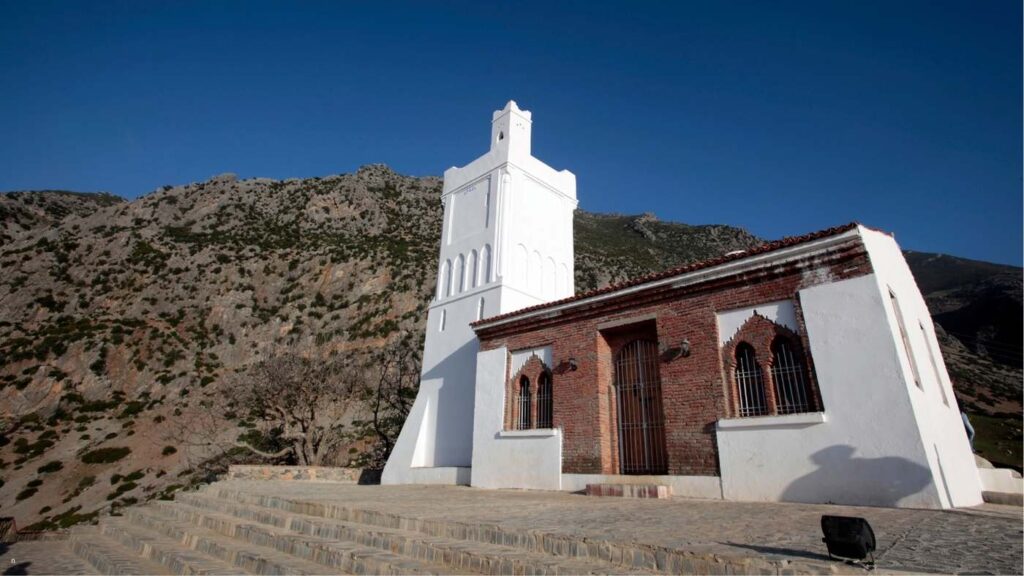
For sunset, check the time for your visit date and go up early enough to see the route in daylight. Leave time to descend while you can see the footing. If you stay into twilight, bring a light and follow the same route back. Choose a daylight visit or a lower town stop if rain makes the path slick or you’re uncertain about the downhill walk. Spanish Mosque route · Walk and descent notes
Food, crafts and lower-effort things to do
What to eat and shop for
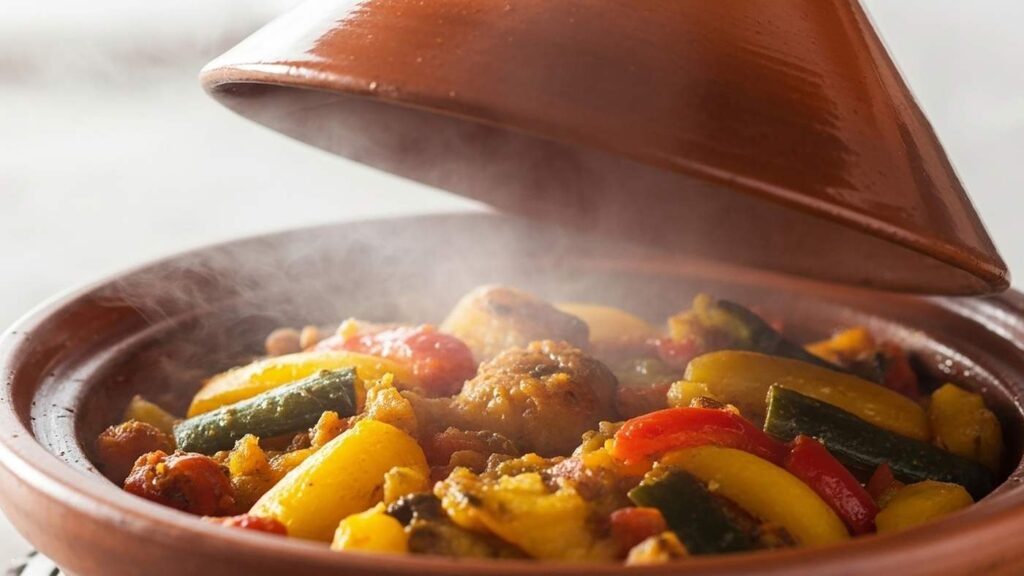
Plan a lunch break near the square before heading east. Try a tagine with bread, or look for local goat jben, a fresh cheese associated with the region. Take 45–75 minutes if you want a sit-down meal. Browse weaving and woodwork around Bab Souk if you have time, and ask sellers where items were made. Chefchaouen goat jben · What to eat in Morocco
Chefchaouen with kids or in the rain
The square, a short loop and a ground-level café make a flexible plan for families or anyone who wants fewer steps. Ask your accommodation which gate a vehicle can reach and which approach has the fewest stairs. The medina is compact, but uneven paving and narrow steps can make a stroller or wheelchair difficult on some routes.
In rain, try the Kasbah Museum if it’s open, browse crafts and take a café break. Wet stone makes the hill path and some lanes harder to walk. In hot weather, do the longer walk early and stop for lunch during the warmest part of the day. Morocco weather alerts
An evening in Chefchaouen
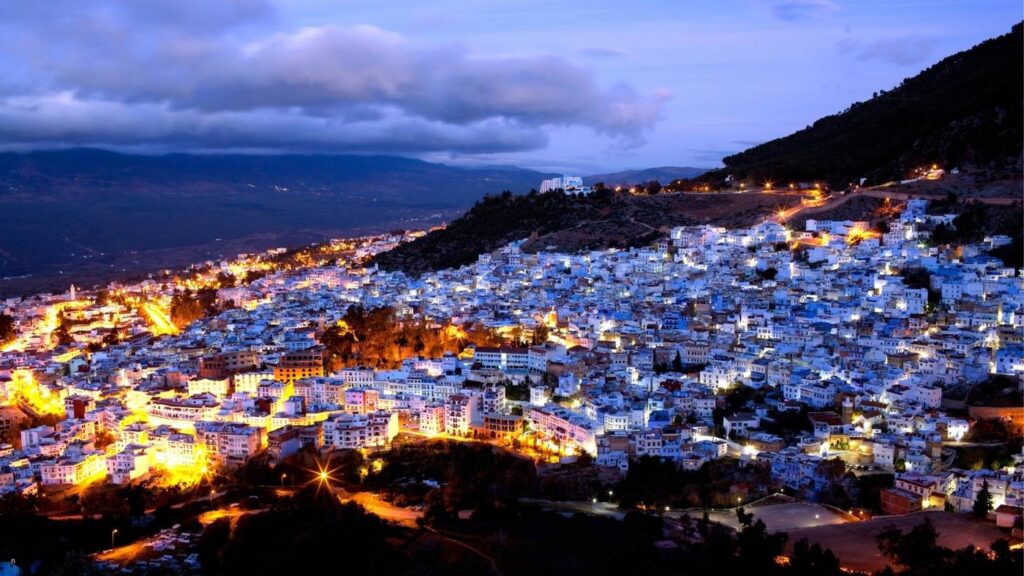
Have dinner near the square or your accommodation, stop for mint tea and take a short walk on the lit central streets if you feel like staying out. If you went to the hill for sunset, leave enough time to get back before dinner. An overnight also gives you the option to photograph the lanes the next morning.
How to spend one or two days in Chefchaouen
Two to four hours after arrival
Start near your agreed meeting point. See Outa el Hammam and the Grand Mosque exterior, then walk one short medina loop. With closer to three or four hours, add either the Kasbah or Ras El Ma. If you have about two hours, stay around the square and nearby lanes. Leave 30–60 minutes for a snack, regrouping and the walk back. Use the time your driver or guide gives you in town when choosing your route.
One full day based in town
Walk the blue lanes and El Haouta in the morning, then return to the square for the Kasbah if it’s open. Have lunch nearby. In the afternoon, walk east to Ras El Ma and decide whether to take the hill path. The full viewpoint outing needs 75–120 minutes from the footbridge, so allow enough time to get back to your accommodation afterward. If the hill doesn’t suit your group, spend longer at the spring or return to the medina for tea.
Two days with an overnight stay
Use the first day for the town route. On day two, go out early for photos, browse crafts or revisit the viewpoint in daylight. If weather and departure time allow, use the second day for a selected Akchour hike. Choose the shorter route if you need to catch a bus later. A full Grande Cascade hike fits best on a day with no tight onward departure.
You can follow the town walks independently. A local guide can add history or help you choose a route with fewer stairs. For arrival and accommodation, see the Chefchaouen travel guide. To compare guided options, see guided walks and hikes in Chefchaouen. If you’re visiting from another city, check the travel time in the Tangier or Fes day-trip guide before deciding how much you can fit in.
Akchour as an optional outing from Chefchaouen
Akchour lies in the Talassemtane area, about 40–60 minutes each way by road from Chefchaouen. Ask your driver where they’ll drop you and arrange the ride back before you start walking. Shared grand taxis may wait to fill. From the parking area, walk to the dam, where the routes divide. The falls and God’s Bridge are on separate branches. Choose one for most visits. Talassemtane and Akchour overview · Akchour route and taxi guide
Lower falls and Grande Cascade
The lower falls are about 4 km return and take roughly two hours on foot. Allow around half a day once you add the road journeys. The shorter route still has uneven rock and can be wet near the river. Turn around earlier if conditions or the pace of your group call for it.
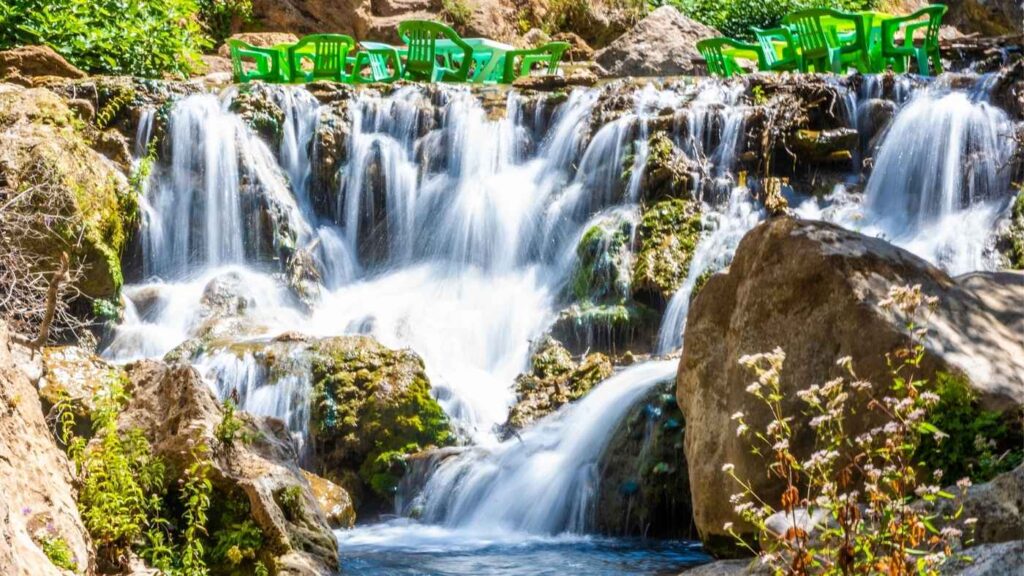
The Grande Cascade continues beyond the first falls. Depending on where you start, allow roughly 11–13 km return, 4–6 hours of walking and 6–8 hours for the outing with well-timed transfers. The trail gets rougher farther up. Take enough water, shoes with grip and time to return in daylight. The amount of water at the falls varies. Local trail guide · Recorded Grande Cascade route
God’s Bridge via the upper viewpoint
Ask for the upper viewpoint route if you want to see God’s Bridge, a natural rock arch above the Oued Farda gorge. The short approach is about 4 km return from the parking area. Allow 1½–2½ hours on the route, including time at the viewpoint. It’s uphill and exposed in places. Confirm the path locally and keep clear of unprotected edges. Longer forest routes and the riverbed approach have different timings. The riverbed also involves water crossings. God’s Bridge route options
Before any hike, check local trail access, recent upstream rain and the weather forecast. Postpone a gorge walk after heavy rain or during a flood warning. Ask locally about current conditions at the pools before considering a swim. River levels and footing change, and a short route can still be difficult for some walkers. Morocco weather alerts · Flood and open-water advice
Continuing north? Tétouan can work as a return outing if both transport legs leave enough time in its medina. For a short Chefchaouen stay, Tangier generally fits better as an onward stop. Check coach departures and station transfers for your date. CTM coach search
Plan Your Chefchaouen Visit
Planning your visit to Chefchaouen? These guides help you organize your trip:
Frequently asked questions
Is Chefchaouen worth visiting for a few hours?
Yes, especially if it fits your route through northern Morocco. A few hours give you time for the square and blue lanes. If getting there takes most of your day, an overnight gives you more time in town and lets you walk at a slower pace.
How many days do you need in Chefchaouen?
One full day covers the main town sights. Stay overnight if you want an evening meal, early photos or time to explore without a fixed pickup. Give Akchour a separate half-day or full day depending on the trail.
Can you visit Chefchaouen without a guide?
Yes. Start at Outa el Hammam, explore nearby lanes and continue to Ras El Ma. A guide can add historical context or help choose an approach with fewer stairs. Ask locally if you need a specific level of access.
What can you do for free in Chefchaouen?
Walk the public medina lanes, visit Outa el Hammam, see the Grand Mosque from outside, and stop at Ras El Ma or the Spanish Mosque viewpoint. Kasbah admission, meals, transport and some private photo settings cost extra.
Are the Kasbah Museum and tower open?
The Kasbah has official ticketing. Confirm the museum, garden, tower and last entry separately at the gate, especially if the climb is part of your plan.
How long is the walk to the Spanish Mosque?
Allow 20–40 minutes uphill from the Ras El Ma footbridge and 20–30 minutes to descend, plus time at the top. The walk from the main square adds another leg.
What can families do in Chefchaouen when it rains?
Try the Kasbah Museum if it’s open, browse nearby craft shops or take a café break around the square. Keep walks short on slippery stone and save the hill path for better conditions.
Are Akchour waterfalls and God’s Bridge the same hike?
They share the parking and dam approach, then follow different branches. Choose the lower falls for a shorter valley walk, the Grande Cascade for a full hiking day or the upper God’s Bridge route for the arch viewpoint. Confirm your chosen trail locally.