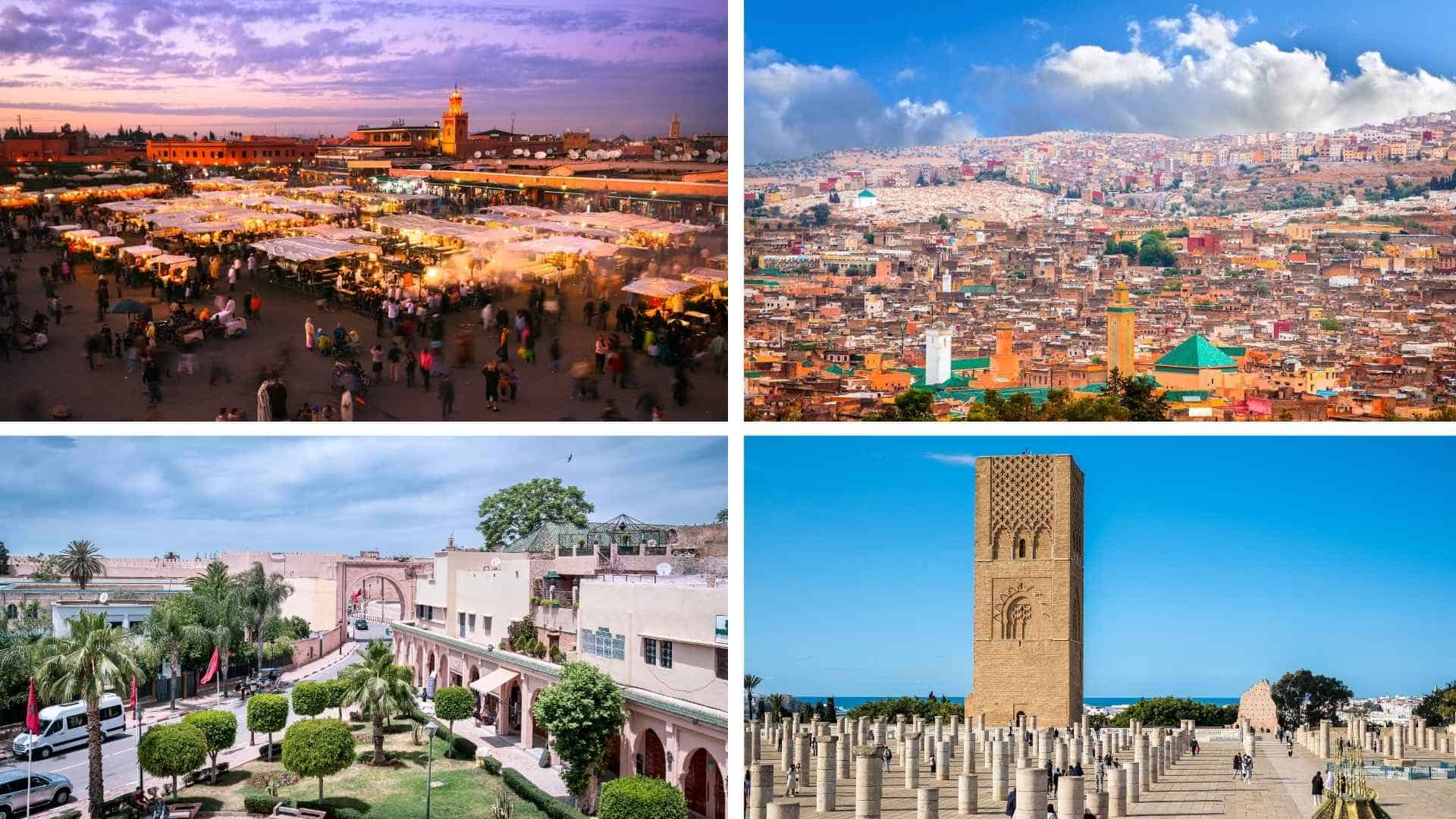
Some places feel preserved behind glass. Beautiful, but distant. The Imperial Cities of Morocco don’t behave that way. Life goes on inside the old walls. Kids walk to school past centuries-old mosques. Shopkeepers open their doors beneath carved cedar lintels. Conversations drift through quiet courtyards where sultans once made decisions that shaped the country.
If you want to understand Morocco — not just see it — the imperial cities are the best place to begin. They tell the story of power, faith, trade, and daily life, all layered together and still in motion.
This guide walks through their history, their atmosphere, and how to explore them without rushing past what makes them special.
Imperial Cities at a Glance
- Number of imperial cities: 4 — Marrakech, Fes, Meknes, Rabat
- Why they matter: Former royal capitals that shaped Morocco’s political, religious, and cultural identity
- Best known for: Historic medinas, palaces, city walls, mosques, and traditional neighborhoods
- Typical travel route: Marrakech → Fes → Meknes → Rabat (or reverse)
- Ideal trip length: 7–12 days for all four cities at a comfortable pace
- Best time to visit: Spring and autumn for the easiest walking weather
On This Page:
What Makes the Imperial Cities of Morocco So Important?
The Imperial Cities of Morocco were once the beating heart of royal power. Each served as a capital under different dynasties, and each left a distinct mark.
You notice it immediately. Fortified walls rise around the medinas. Palaces appear behind plain doors. Religious schools, carved fountains, shady gardens, and long ceremonial avenues show how rulers expressed prestige. None of this erased what came before. Instead, every era layered its own ideas on top of the last.
Walking through these cities feels like reading the country’s history in chapters — not through textbooks, but through streets, stones, and people going about their lives.
The Four Imperial Cities of Morocco
There are four: Marrakech, Fes, Meknes, and Rabat.
They share the same royal past, yet each holds a different mood. Marrakech is direct and energetic. Fes feels scholarly and inward. Meknes is understated, almost shy. Rabat carries itself with quiet confidence and modern ease.
Together, they form a map of Morocco’s identity.
Marrakech — The Red City
Marrakech was founded in the 11th century and grew powerful thanks to its position on desert trade routes. The red walls, the palms, the dust, the mountain backdrop — everything feels theatrical at first. Then the rhythm sets in.
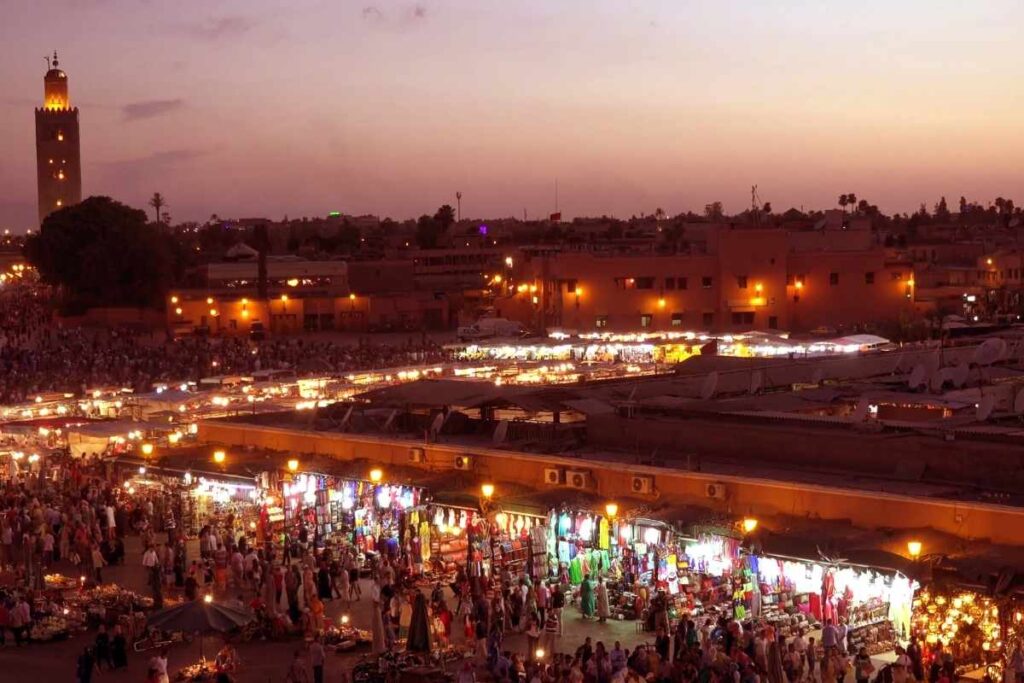
Spend time around Jemaa el-Fna at dusk, and the city reveals itself slowly. Smoke rises from food stalls, storytellers gather circles of listeners, and the Koutoubia minaret glows as the call to prayer floats across the sky. Step away, and narrow lanes lead to quiet riads where the noise disappears like someone closed a door.
Palaces such as Bahia and El Badi show different visions of grandeur, while the Majorelle Garden offers a calm escape when you need space to breathe. Two to four days is usually enough to find your pace here, especially if you let a local guide help you decode the labyrinth of souks.
Fes — Morocco’s Spiritual and Cultural Heart
Fes feels older — not only in years, but in attitude. Founded in the 9th century, it became a center of learning and religion. The presence of Al Quaraouiyine University, considered the world’s oldest still in operation, adds a sense of continuity that’s hard to miss.
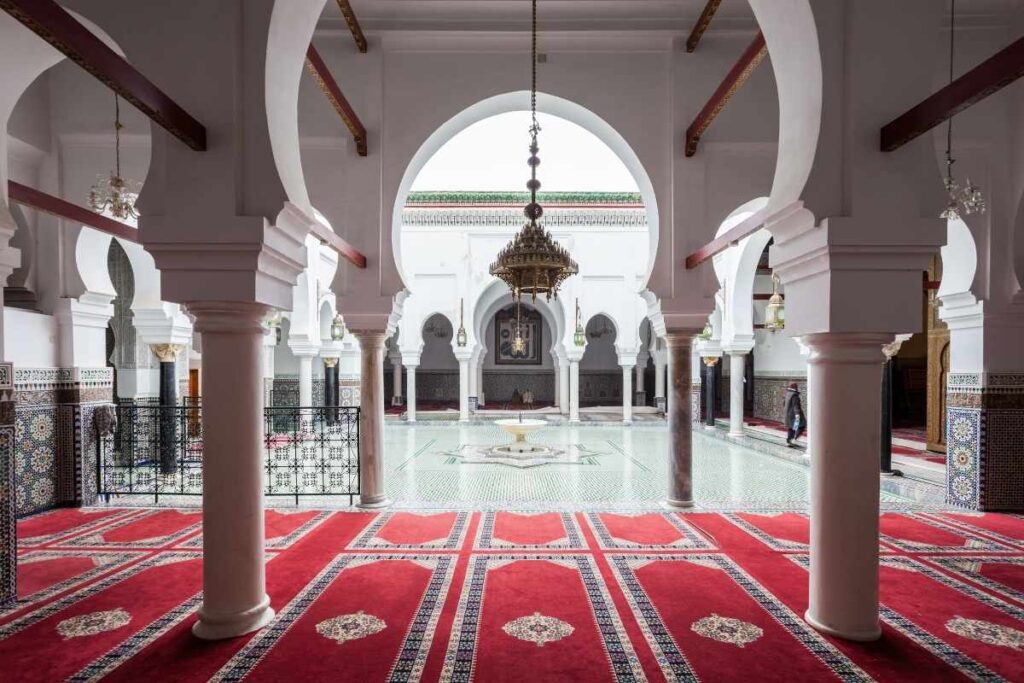
Inside the medina, time folds in on itself. Tanners work in sun-lit pits, craftsmen carve wood in tiny workshops, students pass quietly through madrasas. You might walk ten minutes and cross what feels like centuries.
Fes can be overwhelming without context. Streets twist, directions disappear, and every alley seems to have another door. A knowledgeable local guide doesn’t spoil the adventure — it deepens it. With two or three days, you start to see patterns: the rhythm of prayer, the logic of neighborhoods, the pride locals have in tradition.
Meknes — The Quiet Imperial City
Meknes rarely shouts for attention. That’s part of its charm.
Under Sultan Moulay Ismail in the 17th century, the city turned into a grand project of walls, gates, and royal complexes. Some survive in their full scale; others remain as ruins that hint at ambitious dreams.
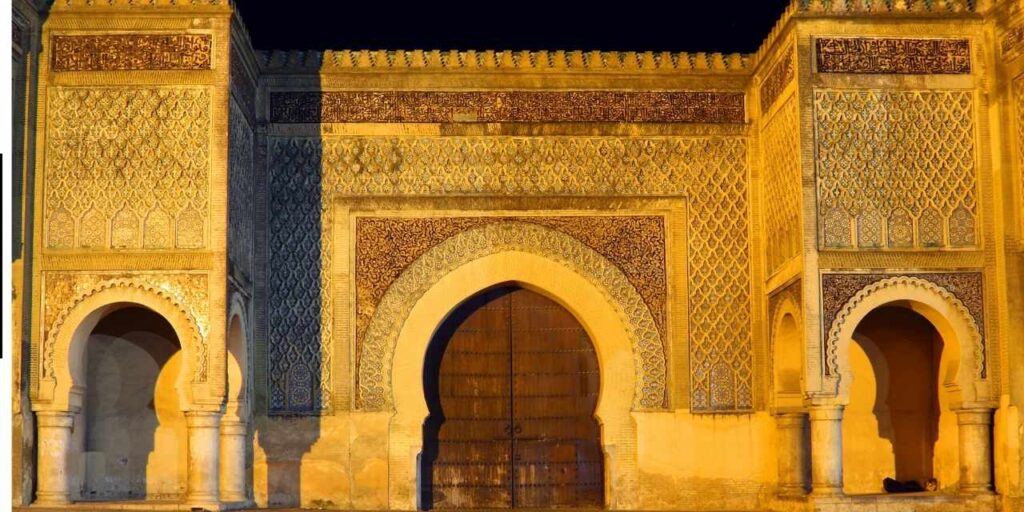
Standing before Bab Mansour, you feel how power once announced itself. Inside the royal granaries and stables, the engineering seems almost stubborn in its precision. Yet outside these monuments, life moves at an easier pace. Cafés overlook simple squares, the medina is calmer than Marrakech or Fes, and people have more time to talk.
Many travelers visit Meknes on a day trip, often combining it with Volubilis — the Roman ruins set in rolling countryside — but staying a night lets the city slow you down in the best way.
Rabat — Modern Capital, Imperial Soul
Rabat surprises people.
It’s the current capital, with embassies, government buildings, and wide boulevards — but the imperial past sits softly beneath that structure. The Hassan Tower rises above the riverfront. The Mausoleum of Mohammed V feels both solemn and welcoming. The Kasbah of the Udayas, painted in white and blue, opens to views of the Atlantic that make you want to linger.
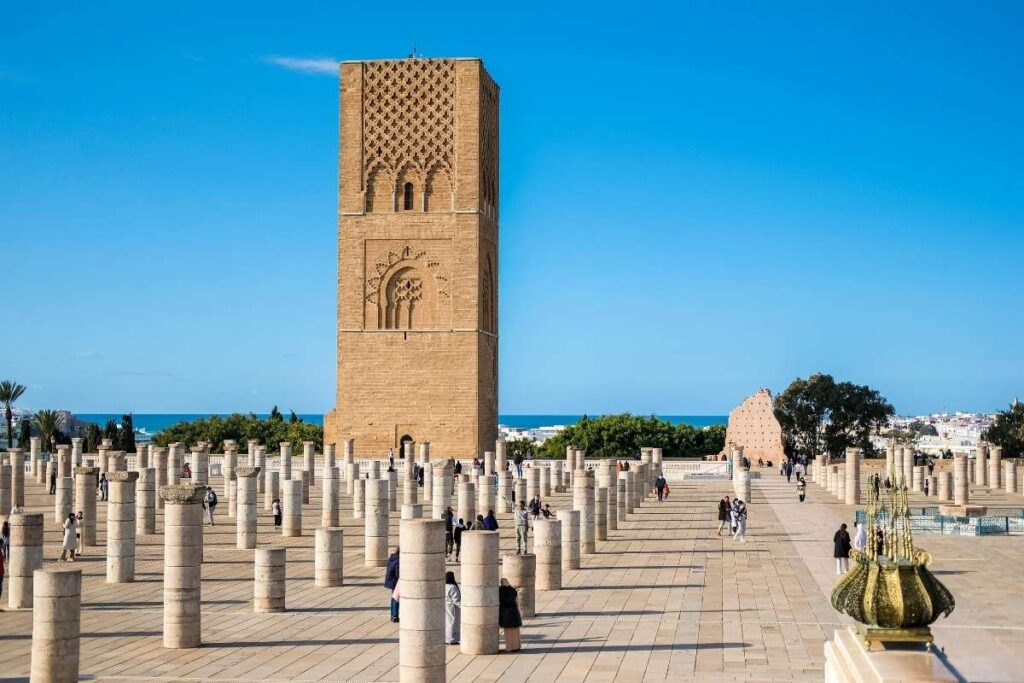
Chellah, with its mix of Roman remains and Islamic ruins, overtaken by storks and gardens, feels like time layering itself gently rather than fighting.
Clean, organized, and easier to navigate than the other imperial cities, Rabat works beautifully as a peaceful pause in a longer journey. One or two days usually feel right.
How to Travel Between the Imperial Cities of Morocco
Most travelers connect the cities by train. The routes are straightforward, comfortable, and scenic enough to let you watch the landscape change from plains to hills and back again.
A classic route begins in Marrakech, moves north through Fes, continues to Meknes, and finishes in Rabat. Others start in the north and work their way down. The “best” order isn’t the rule — it’s whatever gives you time to absorb rather than race.
How Long Should You Spend?
Five to seven days lets you explore two cities with intention. Eight to ten days gives space for three. Two weeks invite a slower journey through all four, where mornings can begin with coffee in quiet squares instead of a checklist.
If you can, avoid rushing. The imperial cities reward patience — conversations with shopkeepers, quiet corners, small discoveries you don’t find in guidebooks.
Best Time to Visit the Imperial Cities of Morocco
Spring and autumn offer the easiest weather for walking. Summer brings intense heat inland, especially in Marrakech and Fes, though evenings soften. Winter can feel mild and atmospheric, with fewer crowds and clearer streets.
Every season has its rhythm; what matters more is matching your expectations to the climate.
Read more about the best time to visit Morocco
Safety and Respect
The imperial cities welcome travelers from all over the world and are generally safe. Normal awareness goes a long way: staying alert in crowded medinas, choosing licensed guides when you need orientation, and showing respect around religious spaces.
Kindness and curiosity are often returned with warmth.
Do You Choose Imperial Cities or the Coast?
It depends on what you’re seeking.
If you’re drawn to history, architecture, and living tradition, the Imperial Cities of Morocco offer depth. If the idea of sea breeze, slower days, and long walks along the water calls your name, coastal towns might feel right.
Many visitors blend both — a few days of immersion in history, followed by quiet time near the ocean. It’s a balance that works.
Explore Morocco’s Imperial Cities
Each imperial city reveals a different chapter of Morocco’s royal history. Explore detailed travel guides for each destination:
You can also browse all destinations in our complete Morocco city guides.
Final Thoughts: Why the Imperial Cities Matter
The imperial cities tell Morocco’s story not through museums, but through neighborhoods that still breathe. You see it in the way light hits old walls at sunset, in the ritual of mint tea poured carefully for guests, in the conversations that move easily between the past and the present.
Whether you visit one city or all four, traveling through the Imperial Cities of Morocco helps you understand the country at its roots. It becomes less about checking places off a map and more about listening, watching, and letting the layers unfold.
Recommended Tour:
Imperial Cities Tour of Morocco
Journey through Morocco’s historic imperial capitals and explore royal cities shaped by dynasties, architecture, and centuries of tradition.
Frequently Asked Questions
The imperial cities of Morocco are Marrakech, Fes, Meknes, and Rabat. Each city served as a capital under a different dynasty and still reflects royal history through architecture, medinas, and monuments.
They shaped Morocco’s political, cultural, and religious identity. Dynasties ruled from these cities and left behind palaces, mosques, city walls, and historic quarters. Many traditions still begin in these former capitals.
Marrakech is often the first stop. It offers a strong introduction with lively souks, palaces, and public squares. Fes suits travelers interested in history and craftsmanship. Rabat feels calmer and modern. Meknes works well as a quieter, less crowded option.
Most travelers spend 7 to 10 days. This allows enough time to visit all four cities without rushing. Shorter trips usually focus on two or three cities.
Yes, especially in northern Morocco. Fes, Meknes, and Rabat sit along the same travel corridor. Marrakech lies farther south but connects easily by train or road.
Fes feels older and more traditional. Its medina focuses on craftsmanship, religion, and daily life. Marrakech feels louder and more theatrical, with markets, gardens, and public squares at the center of the experience.
Yes. Rabat offers a balanced view of Morocco. It combines historic sites with a relaxed coastal feel and modern city life. Many travelers appreciate its slower pace.
Yes. Guided tours make logistics easier and add historical context. Many travelers choose imperial cities tours to understand dynasties, architecture, and local customs more deeply.
Absolutely. They offer history, food, culture, and easy transport connections. Together, they provide a clear overview of Morocco’s past and present.
Spring and autumn are ideal. Temperatures stay comfortable, and sightseeing feels easier. Summer can be hot, especially in Marrakech and Fes.