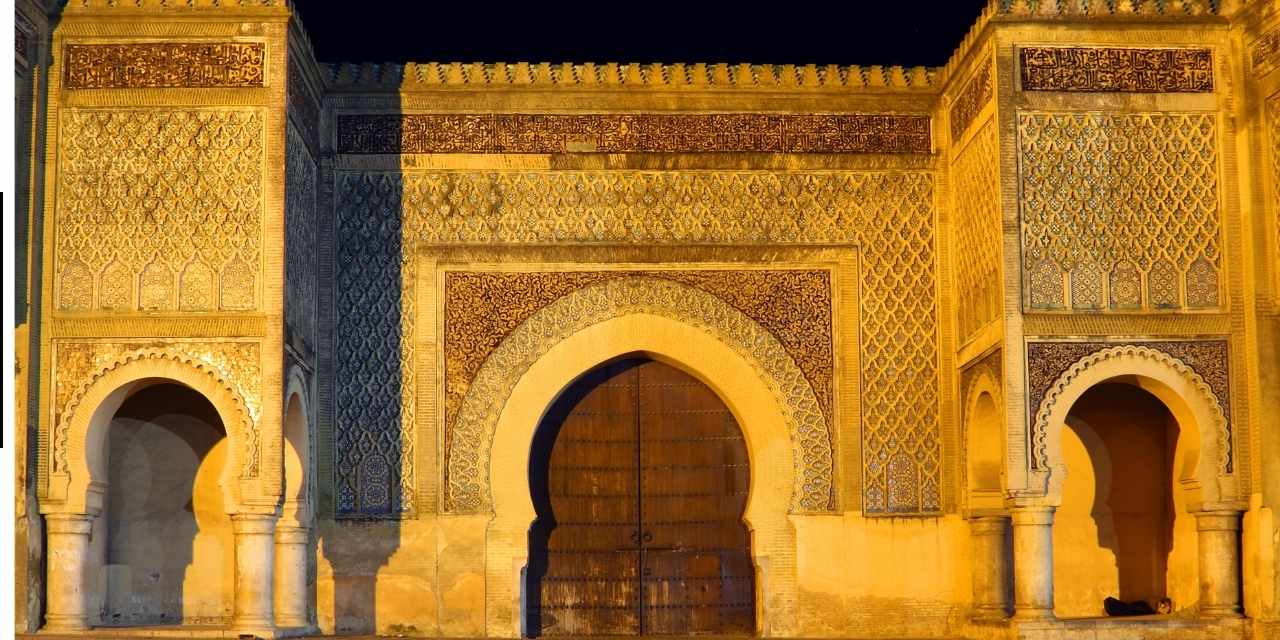
Meknes rewards visitors who enjoy exploring historic neighborhoods, discovering local crafts and learning about Morocco’s imperial past. Its monumental gates and royal buildings tell the story of Sultan Moulay Ismail’s capital, while the medina and Place El Hedim remain useful starting points for a day in the city.
The best things to do in Meknes range from admiring Bab Mansour and visiting Dar Jamaï’s music museum to exploring the imperial district and planning a trip to nearby Volubilis. Whether you have a few hours or two days, a little planning will help you choose the right combination.
Before you go: Some historic monuments have undergone restoration, and access can change. Check the latest opening information before making a special journey to an individual site.
Is Meknes Worth Visiting?
Yes. Meknes is worth visiting if you enjoy architecture, history, markets and places that reveal different chapters of Morocco’s past. It is also a useful base for exploring Volubilis and Moulay Idriss Zerhoun.
The city offers a different experience from a longer stay in Fes. In Meknes, you can build a day around a handful of historic areas and leave time for a museum, a meal and a walk through the medina. If you want to see every major imperial monument, however, check access first: restoration may affect which interiors are open.
How Many Days Do You Need in Meknes?
- Half a day: An introduction to Place El Hedim, Bab Mansour and part of the medina, with time for one additional visit.
- One full day: City highlights and selected museums or imperial sites, subject to opening.
- Two days: Time for Meknes on one day and a separate outing to Volubilis and Moulay Idriss on the other.
You can combine Meknes and Volubilis in one day, but you will need to choose fewer stops in the city and plan transport carefully.
Meknes Attractions at a Glance
The durations below are estimates for the visit itself. Add time for meals, local transport, queues and breaks. Scroll sideways on a small screen to see all columns.
| Attraction or experience | Main appeal | Visit duration | Free or paid | Area | Planning note |
|---|---|---|---|---|---|
| Bab Mansour and Place El Hedim | Monumental gate and central square | 30–60 minutes | Exterior viewing free | Historic center | Check restoration barriers and visibility. |
| Meknes medina and souks | Historic streets, markets and crafts | 1–2 hours | Walking free; purchases extra | Medina | Narrow passages and uneven surfaces. |
| Dar Jamaï National Museum of Music | Musical heritage in a historic palace | 45–75 minutes | Paid | Place El Hedim | Check opening days and temporary closures. |
| Mausoleum of Moulay Ismail | Imperial funerary architecture | 30–45 minutes | Confirm locally | Imperial district | Visitor areas and tomb chamber access differ. |
| Bou Inania Madrasa | Marinid architecture and decoration | 30–45 minutes, if open | Confirm locally | Medina | Confirm current interior access. |
| Heri es-Souani and Dar al-Ma | Granaries, stables and waterworks | 45–90 minutes, if accessible | Confirm locally | Imperial district | Check which parts are open. |
| Sahrij Swani | Historic reservoir | 15–30 minutes | Confirm locally | Near Heri es-Souani | Check public approaches and access. |
| Meknes Mellah | Jewish heritage and historic streets | 30–60 minutes | Street walking free | Historic city | Confirm access to individual sites. |
| Volubilis | Archaeological remains and mosaics | 1½–2½ hours on site | Paid; transport extra | Outside Meknes | Allow travel and exposed, uneven walking. |
Start at Bab Mansour and Place El Hedim
Admire Bab Mansour
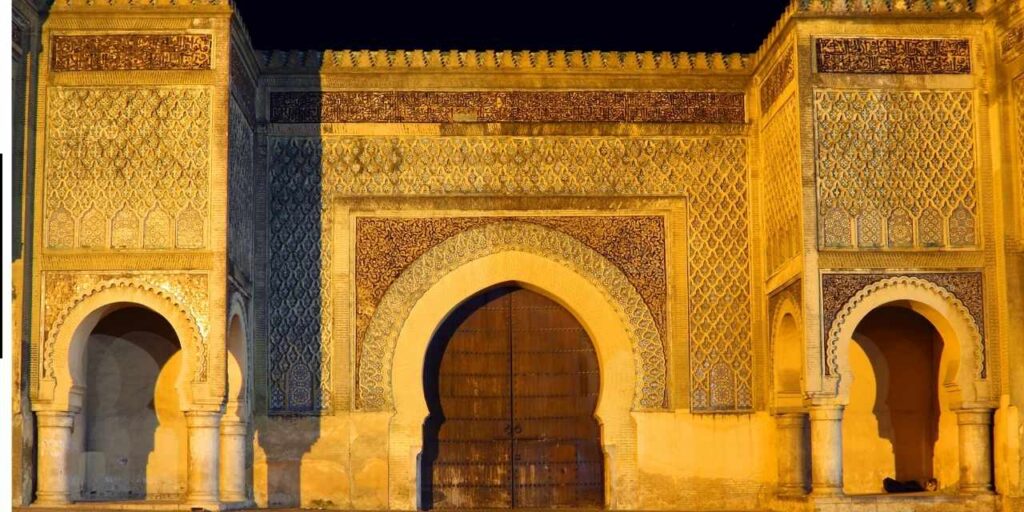
Bab Mansour is one of the most recognizable landmarks in Meknes. Facing Place El Hedim, the monumental gateway marks the boundary between the historic medina area and the imperial city.
Take time to look at its large arch, inscriptions, columns and decorative tilework. The gateway makes an excellent first stop because it gives you a sense of the scale of Moulay Ismail’s imperial ambitions before you explore the surrounding streets.
The principal experience is viewing Bab Mansour from outside. Restoration and barriers can affect what is visible, so check the latest local information if seeing the façade is a priority. Do not assume that the gate’s interior or passage is open to visitors.
Allow: Around 15–30 minutes for the gate, or longer if you plan to explore the square.
Spend Time in Place El Hedim
Place El Hedim is a practical meeting point and a useful landmark throughout your visit. The square sits close to Bab Mansour, Dar Jamaï and entrances to the medina, making it easy to begin your day here and return later.
Walk across the square, pause to look at the gateway and decide which part of the historic city you want to explore first. Cafés around the area offer places to sit, although a table generally comes with a purchase.
The square is also an option for an evening walk or meal. Activity varies by day and season, so leave your plans flexible rather than expecting a particular performance or atmosphere.
Good to know: Viewing the square and the exterior of Bab Mansour is free. Food, drinks and other services cost extra.
Explore the Meknes Medina and Souks
Walk Through the Historic Medina
The medina is where a Meknes sightseeing day becomes less about individual monuments and more about the streets connecting them. As you walk, look for carved doorways, market stalls, workshops and passages leading toward neighborhood mosques and homes.
The medina forms part of the Historic City of Meknes UNESCO World Heritage property, which also includes the imperial city. UNESCO recognizes the city’s historic urban fabric and monuments, while also noting the need to conserve vulnerable parts of the property. Heritage status does not mean that every historic building is intact or open to visitors.
Place El Hedim is a useful reference point when navigating independently. Before heading into the lanes, save your accommodation and the square on a map, and note the name of the gate or street you used to enter.
The medina has narrow passages, uneven surfaces and deliveries moving through its streets. Wear comfortable shoes, take breaks and give yourself extra time if you are traveling with young children or have mobility concerns.
Allow: Around 1–2 hours for a flexible walk, with extra time for shopping or museum visits.
Browse Crafts and Local Markets
Meknes has a long tradition of craftwork, and the souks offer opportunities to see and shop for items such as textiles, ceramics, leather goods and metalwork.
Some workshops are active workplaces rather than attractions with scheduled visits. If you want to photograph a craftsperson or look inside a workshop, ask permission first. When buying something or arranging a paid service, agree on the price and what it includes before proceeding.
You do not need to shop to enjoy the medina. A walk between the square, market streets and museum can be a rewarding way to understand the layout of the historic city.
Visit the Meknes Mellah
The Mellah is Meknes’s historic Jewish quarter. A walk through the neighborhood can add another layer to your understanding of the city’s history and communities.
Treat the Mellah as a living neighborhood, and check individual opening arrangements if you want to visit a synagogue or another heritage site. Access to public streets does not necessarily mean that historic interiors are open.
Best for: Visitors interested in local history and those with enough time to explore beyond the main square.
Visit Meknes’s Imperial and Cultural Landmarks
Visit the Mausoleum of Moulay Ismail
The Mausoleum of Moulay Ismail is associated with the ruler who made Meknes his imperial capital. Its courtyards and decorated spaces introduce visitors to the craftsmanship and religious architecture of the imperial city.
The mausoleum is among the Moroccan religious monuments that have welcomed non-Muslim visitors. Access to visitor areas is different from access to the tomb chamber itself: non-Muslims are generally allowed to view the chamber from an adjoining area rather than enter it. Follow current signs and staff instructions, as arrangements can change. See the Moroccan tourism brochure for background.
Dress respectfully, keep voices low and check the current rules before taking photographs. You may be asked to remove your shoes in certain areas.
Allow: Around 30–45 minutes. Nearby: Bab Mansour and other sites in the imperial district. Before you go: Confirm opening hours, admission and temporary restrictions locally.
Discover Dar Jamaï National Museum of Music
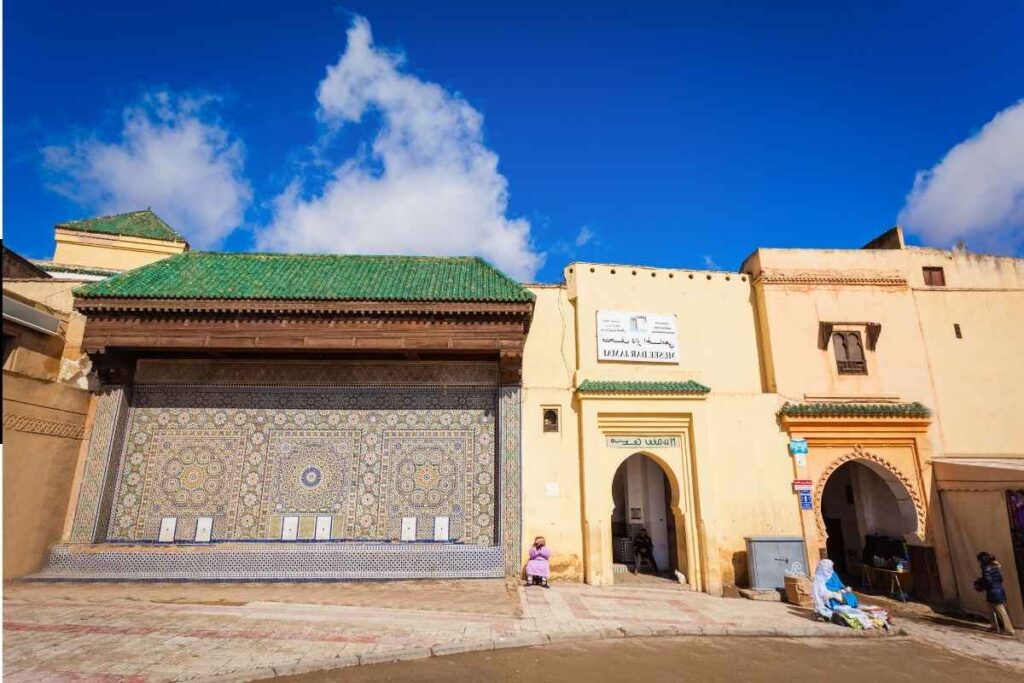
Close to Place El Hedim, Dar Jamaï is a good choice for visitors who want an indoor cultural stop as well as a look at a historic palace.
The building houses the National Museum of Music, with displays devoted to Moroccan musical heritage and instruments. The palace itself is part of the appeal: allow time to appreciate its architecture as well as the exhibitions.
The National Museums Foundation lists Dar Jamaï as open from 10:00 a.m. to 6:00 p.m., with Tuesday as its closing day. Its published standard admission for adults over 18 is 30 MAD. These details were checked on 14 November 2026; confirm them again before visiting, especially around holidays or temporary exhibitions. See the official museum listing.
Allow: Around 45–75 minutes. Best for: Music, history and architecture enthusiasts; visitors looking for an indoor stop. Combine with: Bab Mansour, Place El Hedim and a medina walk.
Check accessibility and photography arrangements directly with the museum if they are important to your visit.
See Bou Inania Madrasa in Meknes
Bou Inania Madrasa is a historic religious school in the Meknes medina. Its carved wood, plasterwork and tile decoration make it an appealing stop for travelers interested in Moroccan architecture.
This is the Bou Inania Madrasa in Meknes, not the similarly named madrasa in Fes. If you are using a map or arranging a guide, make sure the location refers to Meknes.
The Meknes tourism council describes the madrasa’s courtyard and historic student rooms, but information about restoration and visitor access has not been consistent across sources. Confirm locally whether the interior is open before including it in a fixed itinerary. Do not assume rooftop access is available.
Allow: Around 30–45 minutes if open. Combine with: The medina and nearby market streets.
Explore Heri es-Souani, Dar al-Ma and Sahrij Swani
The imperial district extends beyond the area around Bab Mansour. Among its most interesting sites are the structures associated with Heri es-Souani, Dar al-Ma and the Sahrij Swani reservoir.
These names refer to related but distinct parts of the historic complex:
- Heri es-Souani is associated with the imperial granaries and stables.
- Dar al-Ma, or the “House of Water,” includes covered chambers connected with the historic water system.
- Sahrij Swani, also known as the Agdal Basin, is the nearby reservoir.
The local tourism council describes Dar al-Ma’s well chambers and the surviving arcades of the granary and stables area.
The area is farther from Place El Hedim than the central medina stops. Depending on the weather, your available time and walking preferences, a local taxi may be more practical than walking.
Allow: Around 45–90 minutes if the relevant parts are accessible, plus transport. Before you go: Confirm which structures are open, the visitor entrance, admission and whether restoration affects the route. Do not rely on an old opening schedule alone.
Consider Qara Prison if It Is Open
Qara Prison, also spelled Kara, is an underground site in the imperial area. Its vaulted spaces have inspired many stories, but accounts differ about how the complex was used.
If it has reopened when you visit, it may be an interesting addition for travelers who have extra time. Ask about the current visitor route and check access before making the journey. Treat dramatic stories about the site as interpretations unless they are supported by reliable evidence.
Allow: Around 30–45 minutes if open. Planning note: Underground spaces may involve steps and low light; current accessibility information has not been verified.
What to Eat in Meknes and What to Do in the Evening
Try Moroccan Food Around the Medina
A sightseeing day in Meknes is a good opportunity to try familiar Moroccan dishes in a local setting. Depending on the menu and season, you may find tagines, grilled meats, salads, soups, bread and pastries.
For a quick lunch, look for a café or restaurant near your route through the medina. If you prefer a longer meal, leave enough time between visits rather than planning every stop back-to-back.
Menus, prices and opening hours vary, so check what is available before sitting down. If you have allergies or dietary requirements, explain them clearly and confirm the ingredients and preparation with the restaurant.
For an introduction to dishes you may see on menus, explore our guide to traditional Moroccan food.
Return to Place El Hedim in the Evening
Place El Hedim is an easy place to return to after sightseeing. You might walk through the square, have dinner nearby or choose a café where you can sit and watch the activity around you.
If you plan to stay out after dark, check the route back to your accommodation and arrange a taxi if you prefer not to walk. A rooftop or terrace view may require a purchase or reservation.
Free and Family-Friendly Ideas
You can enjoy several parts of Meknes without buying an attraction ticket:
- View Bab Mansour from Place El Hedim.
- Explore public streets in the medina.
- Browse market stalls without making a purchase.
- Take a flexible walk through historic neighborhoods.
Families may find it easier to choose one or two main visits, add a meal break and leave room for a slower pace. Consider the weather, uneven surfaces and each child’s interests before choosing a longer route or an underground site.
Meknes Itineraries for Half a Day, One Day or Two Days
The routes below are flexible suggestions. Opening days, restoration work, transport, weather and your walking pace can all change the order. Check your priority attractions first and leave room for breaks.
Half a Day in Meknes
Allow approximately 3–4 hours. If you have only a few hours, stay around the historic center and select one interior visit.
- Start at Place El Hedim. View Bab Mansour and use the square to orient yourself.
- Walk into the medina. Explore a few market streets without trying to cover every lane.
- Choose one visit. Pick Dar Jamaï for music and architecture, or the Mausoleum of Moulay Ismail for imperial history, subject to opening.
- Take a break. Stop for a drink or a meal before continuing your journey.
This route gives you an introduction without assuming you can fit in every imperial monument.
One Full Day in Meknes
Allow approximately 6–8 hours, including lunch and local transfers.
Morning: Begin at Place El Hedim and Bab Mansour, then spend time in the medina. If Dar Jamaï is open and interests you, visit the museum before lunch.
Lunch: Choose somewhere near the square or along your route. Allow enough time to sit down and rest, especially in hot weather.
Afternoon: Visit the Mausoleum of Moulay Ismail, then consider the Heri es-Souani area if current access has been confirmed. Use a local taxi if you prefer to avoid a longer walk between areas.
Evening: Return toward Place El Hedim for a walk or dinner, or head back to your accommodation.
If a monument is closed, substitute a longer medina walk or a visit to the Mellah rather than trying to force another major destination into the afternoon.
Meknes and Volubilis in One Day
Allow approximately 8–10 hours from Meknes, depending on transport and the number of stops. A combined day is possible, especially with a private driver or a well-planned route, but it is a selective visit.
Start with Bab Mansour and Place El Hedim, then choose a short medina walk or one open interior. After lunch—or earlier if conditions and opening hours make that preferable—travel toward Volubilis.
Allow around 1½–2½ hours at the archaeological site, plus the journey in each direction. You may be able to add a short stop in Moulay Idriss Zerhoun, but confirm the route and return arrangements before leaving Meknes.
The trade-off: You will have less time for Meknes’s museums and imperial sites. If you want to visit several interiors without rushing, stay an extra day.
Two Days in Meknes and the Surrounding Region
Day 1: Meknes. Spend the day around Place El Hedim, Bab Mansour, the medina and your choice of museum or imperial sites. Check access before traveling to Heri es-Souani or Bou Inania.
Day 2: Volubilis and Moulay Idriss. Leave time for the archaeological site, a meal, the hillside town and the return to Meknes. Arrange your transport in advance or confirm the public and shared-taxi connections locally.
This option gives you more flexibility if a monument has restricted hours or if you want time for photographs and breaks.
How to Get Around Meknes
Walking in the Medina and Historic Center
Walking is useful for exploring the area around Place El Hedim and the medina. The streets give you access to markets, historic buildings and small stops that are easy to miss from a vehicle.
Not every attraction is close to the square, however. Check your route before setting out, particularly for the imperial district and the reservoir. Surfaces, slopes and steps can make a short distance take longer than expected.
If you use a phone map, save important locations before leaving your accommodation. Place El Hedim, Bab Mansour and your accommodation’s nearest accessible street or gate are helpful reference points.
Taxis and Train Stations
Meknes has more than one railway station, including Meknès Al Amir and Meknès. When buying or checking a train ticket, note the station served by your selected train and plan the onward journey to your accommodation or the medina.
A petit taxi can be useful for local transfers, including journeys between the historic center, stations and attractions farther apart. Confirm the arrangement before setting off and allow extra time for traffic.
For intercity travel, check current schedules with ONCF. Train times, driving times and door-to-door journeys are different: remember to add the journey to and from each station.
Should You Hire a Guide in Meknes?
You can explore Meknes independently, especially if you are comfortable navigating the medina and checking opening information yourself.
A guide may be useful if you want more historical context, help with orientation or a route tailored to the time you have. For a combined visit to Volubilis, a guided experience may also simplify transport—but check whether the price includes a local guide, admission and waiting time.
Compare formats and inclusions in our guide to the best tours in Meknes.
Volubilis and Moulay Idriss from Meknes
Visit the Archaeological Site of Volubilis
Volubilis is one of Morocco’s best-known archaeological sites and a rewarding addition for travelers interested in ancient history. The remains include mosaics, columns, streets and monumental structures set in the countryside north of Meknes.
The local tourism council places Volubilis approximately 28 kilometers from Meknes. By direct road transport, allow roughly 30–45 minutes each way as a planning estimate, with extra time for traffic or stops.
At the site, plan for exposed walking and uneven ground. Bring water, sun protection and comfortable shoes, particularly during warmer months.
The Ministry of Culture’s ticketing page listed admission for a foreign adult at 100 MAD and a foreign child aged 7–13 at 50 MAD when checked on 14 November 2026. Other categories have different prices. Tickets are separate from transport and any guide service. Check the official Volubilis ticket page and confirm current opening hours before you go.
Explore Moulay Idriss Zerhoun
Moulay Idriss Zerhoun is a hillside town close to Volubilis and can be paired with the archaeological site on a regional outing.
Its sloping streets and viewpoints make it a different experience from Meknes’s medina. Allow time for the terrain, especially if you are traveling with children or prefer to limit climbing.
Visitors can explore public areas of the town, but access to the religious shrine is restricted. Follow local signs and guidance, and ask permission before photographing people.
Plan Transport and Your Return
A private driver or a hired vehicle can make it easier to coordinate Meknes, Volubilis and Moulay Idriss in one outing. Before agreeing on a price, confirm the route, waiting time, stops, admission exclusions and where you will be dropped off.
Shared taxis can be a lower-cost option, but a shared ride to Moulay Idriss is not necessarily a direct service to the Volubilis entrance. You may need another transfer, and departure times can depend on passenger availability.
Check the current taxi stand and connections locally. If you arrange a return pickup, agree on the meeting point and time before starting your visit; do not assume a taxi will be waiting when you finish.
If your trip begins and ends in Fes, see our guide to the best day trips from Fes for Fes-origin routes and travel considerations.
Frequently Asked Questions About Visiting Meknes
Is Meknes worth visiting if I am already going to Fes?
Yes, if you have an interest in imperial architecture, museums and regional heritage. Meknes offers its own historic sites and is well placed for Volubilis. If your schedule is very short, compare the journey and the attractions currently open with what you would otherwise do in Fes.
How many days do you need in Meknes?
A half-day gives you a brief introduction. One full day is useful for city highlights, while two days allow a separate outing to Volubilis and Moulay Idriss without compressing your Meknes visit.
Can you explore Meknes without a guide?
Yes. You can visit the square, navigate the medina and organize selected attractions independently. A guide is optional and may be helpful for historical context, orientation or a more complicated regional itinerary.
Can non-Muslims visit the Mausoleum of Moulay Ismail?
Non-Muslim visitors have generally been allowed into designated visitor areas of the mausoleum, while access to the tomb chamber is restricted. Check the current arrangements and follow staff instructions.
Are Heri es-Souani and Bou Inania Madrasa open?
Access has been affected by restoration, and published information is not always consistent. Check locally before your visit, including which parts of each site are accessible.
Can you visit Meknes and Volubilis in one day?
Yes, with planned transport and a selective city itinerary. Allow enough time for the road journey, the archaeological site, meals and the return. A second day is preferable if you also want to visit several Meknes interiors.
What are the best free things to do in Meknes?
You can view Bab Mansour from Place El Hedim, walk through public streets in the medina and browse the souks. Museum entries, food, drinks, purchases and guided services cost extra.
Is Meknes a good destination for families?
Meknes can work well for families who choose a manageable route and allow time for meals and breaks. Consider heat, walking surfaces, steps and individual children’s interests when selecting attractions. Check specific accessibility needs with each venue.
Plan Your Meknes Visit
For a first visit, start with Place El Hedim, Bab Mansour and the medina, then choose the museum or imperial sites that interest you most. If Volubilis is a priority, decide early whether you want a selective combined day or an extra day for the region.
Before you leave, check the latest access arrangements for restoration-sensitive monuments and confirm any transport you need. For help comparing guided options, explore the best tours in Meknes, or learn more about the country’s historic capitals in our guide to Morocco’s imperial cities.