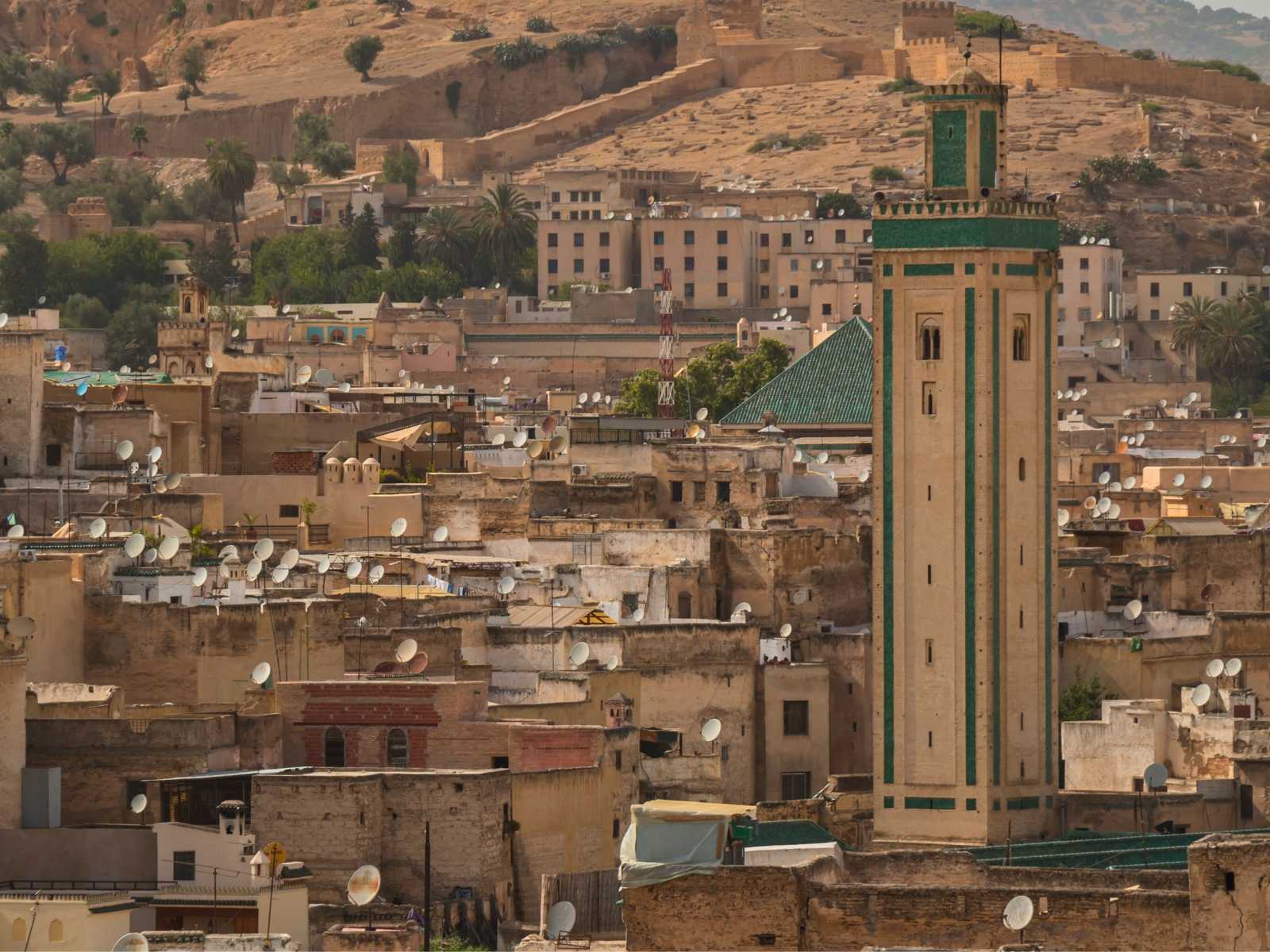
This Fes travel guide is for travelers who are drawn to places with depth. Fes doesn’t reveal itself quickly, and it doesn’t try to. The city asks for patience, attention, and a willingness to walk slowly. In return, it offers something rare: a living medieval city where tradition is not preserved for display, but practiced every day.
Often described as Morocco’s cultural and spiritual capital and one of the historic imperial cities of Morocco, Fes has long been a center of learning, craftsmanship, and religious life. Its influence reaches far beyond its walls, shaping how Moroccan culture, education, and faith developed over centuries.
To understand how tradition shapes daily life, you can explore our Moroccan culture guide.
If you’re planning a wider Morocco itinerary, you can explore our complete Morocco travel guides covering major cities, routes, and travel tips.
Fes Travel Snapshot
This Fes travel guide introduces Morocco’s historic cultural capital, known for its vast medieval medina, religious schools, artisan traditions, and centuries-old intellectual heritage.
Location: Northern inland Morocco
UNESCO Status: Medina listed as a UNESCO World Heritage Site
Known For: medieval urban scale, craftsmanship, universities, religious scholarship
Best For: culture-focused travelers, history lovers, immersive city exploration
Mid-Range Budget: €50–€110 per person per day
Ideal Stay: 2–3 days for structured medina exploration and guided visits
Best Time to Visit: spring and autumn for comfortable walking weather
Not Ideal If: you dislike crowds, dense historic environments, or complex navigation
On This Page:
Is Fes Worth Visiting?
Yes — Fes is one of Morocco’s most historically rich and culturally immersive destinations. Known for its vast medieval medina, traditional craftsmanship, and deep intellectual heritage, it offers one of the most authentic urban experiences in North Africa. While it can feel intense compared to coastal or modern cities, spending two to three days here allows travelers to understand the cultural heart of Morocco in a way few other places offer.
While Fes can feel overwhelming at first, many first-time visitors find that a guided introduction quickly makes the city easier to understand.
Why Fes Feels Different From Other Moroccan Cities
Unlike Marrakech, which overwhelms with scale and constant movement, Fes feels more inward and historically layered. The medina is denser, older, and more residential, and daily life continues in ways that feel less adapted to tourism.
Compared to coastal cities like Essaouira or Tangier, Fes feels enclosed and deeply traditional, shaped more by scholarship, religion, and craftsmanship than by trade routes or modern expansion.
For travelers, this difference matters. Visiting Fes is not about seeing highlights quickly — it’s about understanding how one of the world’s oldest continuously functioning cities still operates today.
Where Fes Is Located and Why It Matters for Travelers
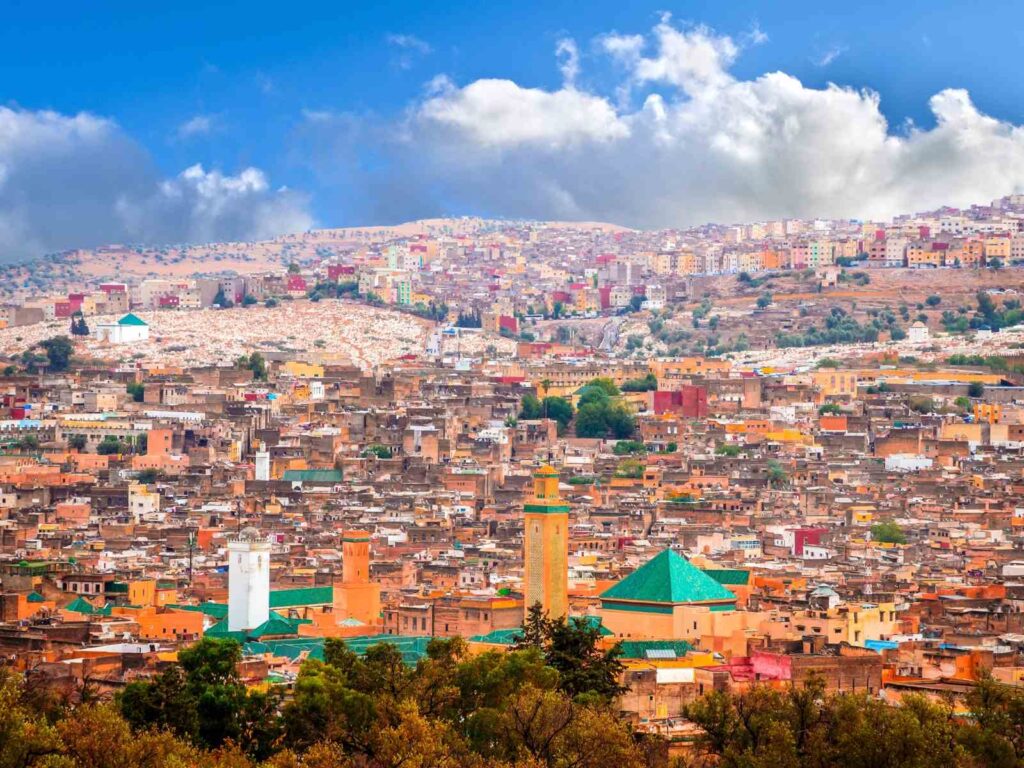
Fes sits in northern Morocco, between the Rif Mountains and the Middle Atlas. Its inland location gave it protection and importance, especially during periods when trade, scholarship, and religion shaped power more than coastal access.
Fes is served by an international airport and direct train connections from Casablanca, Rabat, and Tangier, making it one of Morocco’s easiest historic cities to access.
Why Fes Works Well as a Travel Base
This position also makes Fes a natural base for exploring northern Morocco. From here, the landscape changes quickly, moving from dense urban neighborhoods to green hills, cedar forests, and historic imperial cities.
Unlike coastal destinations, Fes feels grounded. The climate is more extreme, the streets more enclosed, and the atmosphere more intense — all of which contribute to its character.
How to Get to Fes
Thanks to its international airport and strong rail network, Fes is straightforward to reach from most major Moroccan cities. Fes–Saïss Airport receives flights from major European cities as well as domestic connections from Casablanca and Marrakech.
For travelers already inside Morocco, the train is often the most comfortable option. Direct rail services connect Fes with Casablanca, Rabat, Tangier, and Meknes, with modern ONCF trains running several times daily. Long-distance buses also operate nationwide, though trains are generally faster and more reliable.
If arriving late at night or with heavy luggage, arranging a riad pickup in advance is strongly recommended, since vehicles cannot enter the medina itself.
What to See in Fes: A Travel Guide to the Medina
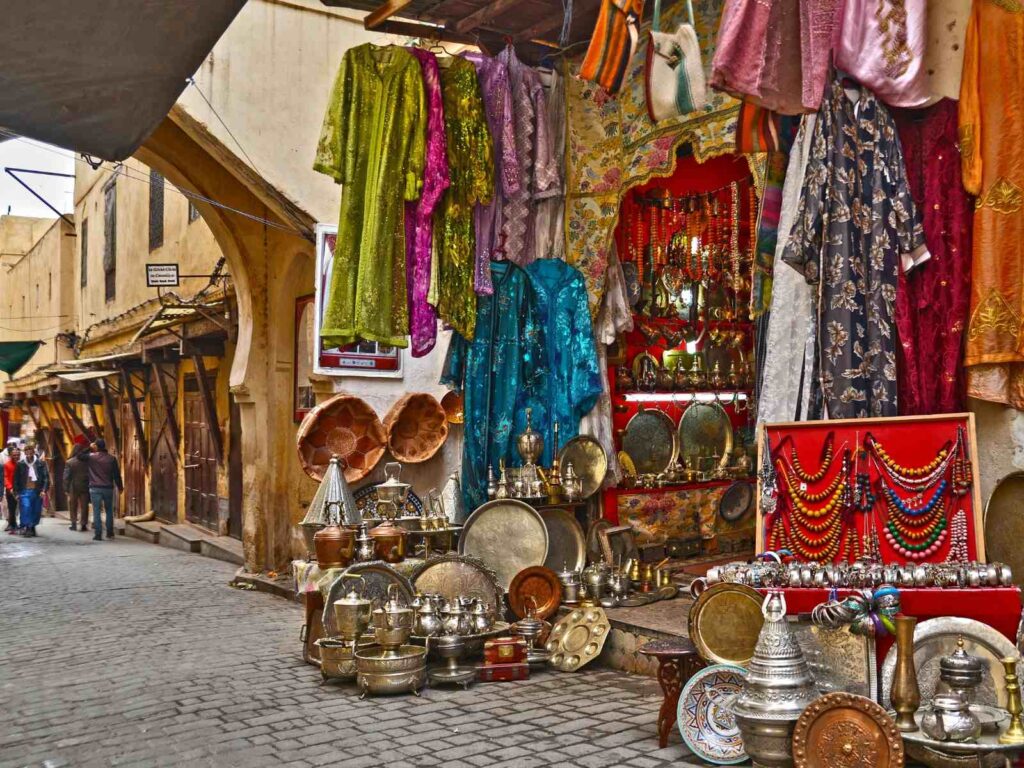
Any serious Fes travel guide begins inside the medina. The historic medina forms the core of any visit and the natural starting point of most itineraries. Known as Fes el-Bali, it is one of the world’s largest and best-preserved medieval urban areas, and many of the city’s highlights are explained in our Things to Do in Fes guide.
With thousands of narrow streets and alleyways, it is both fascinating and overwhelming. The Fes medina is one of the most complex in Morocco, and first-time visitors often benefit from starting with a guided orientation walk. UNESCO recognizes its importance, and you can learn more about its global significance on the UNESCO World Heritage listing.
Key Historic Sites Inside the Fes Medina
While wandering is part of the experience, several historic landmarks help first-time visitors understand the structure and cultural importance of the Fes medina. These sites are among the most historically significant and visually striking places to include in your route.
Bou Inania Madrasa
One of the most architecturally refined religious schools in Morocco, known for its carved cedar wood, intricate zellige tilework, and balanced courtyard design. It is one of the few historic madrasas in Fes accessible to non-Muslim visitors.
Bab Boujloud (Blue Gate)
The ceremonial western entrance to the old medina and the most recognizable gateway into historic Fes. Its blue-and-green tiled façade marks the transition from the modern city into the medieval street network.
Al-Attarine Madrasa
Smaller than Bou Inania but exceptionally detailed, this 14th-century school is admired for its delicate decorative craftsmanship and intimate proportions.
Nejjarine Museum of Wooden Arts & Crafts
Located inside a restored caravanserai, this museum explains traditional Moroccan woodworking, tools, and artisan techniques while also offering one of the best rooftop viewpoints over the medina.
Including these landmarks in your first exploration of the medina provides useful orientation points while also revealing the artistic, religious, and commercial history that shaped Fes over centuries.
Daily Life and Traditional Craftsmanship in the Medina
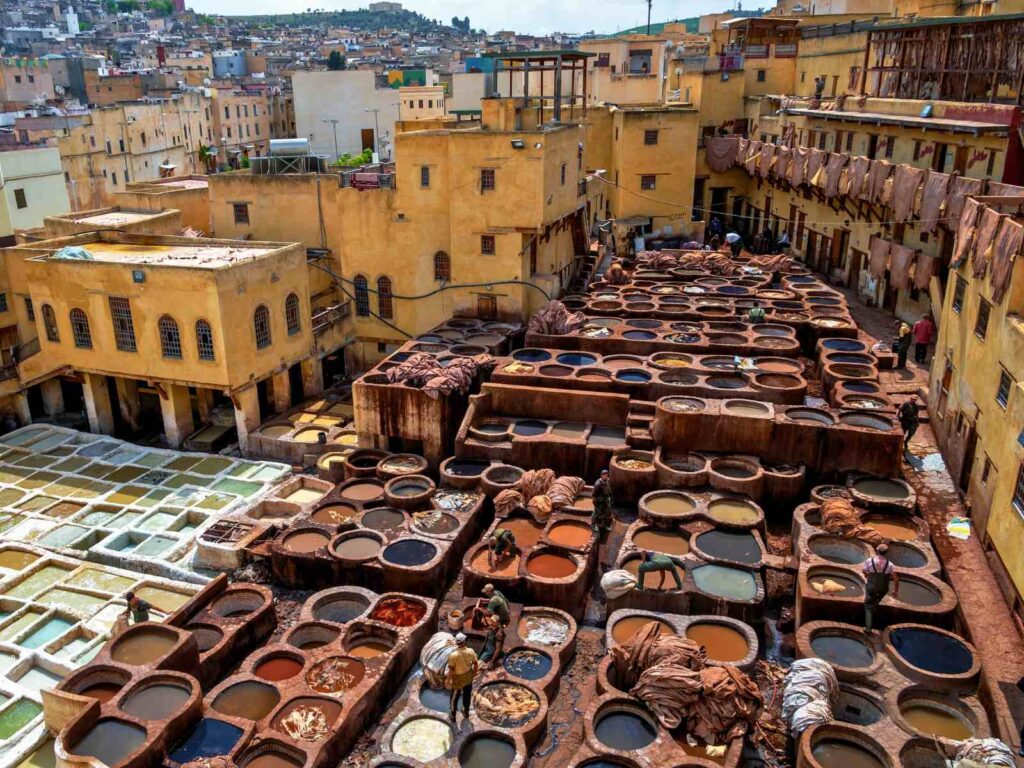
The medina is not a museum. People live and work here. Donkeys still deliver goods. Artisans still shape leather, metal, and wood by hand. The famous Chouara Tannery is one of the most visible examples of this continuity, operating much as it has for centuries.
Religious and educational landmarks are woven throughout daily life. Madrasas such as Bou Inania are not hidden behind gates; they sit quietly along busy streets. Al Quaraouiyine, often cited as one of the world’s oldest universities, remains a symbol of Fes’s intellectual legacy.
To explore these places meaningfully, context matters. This is why many travelers choose to start with a structured visit. You can explore structured walking routes and local experiences on our Fes visitor activities page.
Food in Fes: Traditional and Deeply Rooted
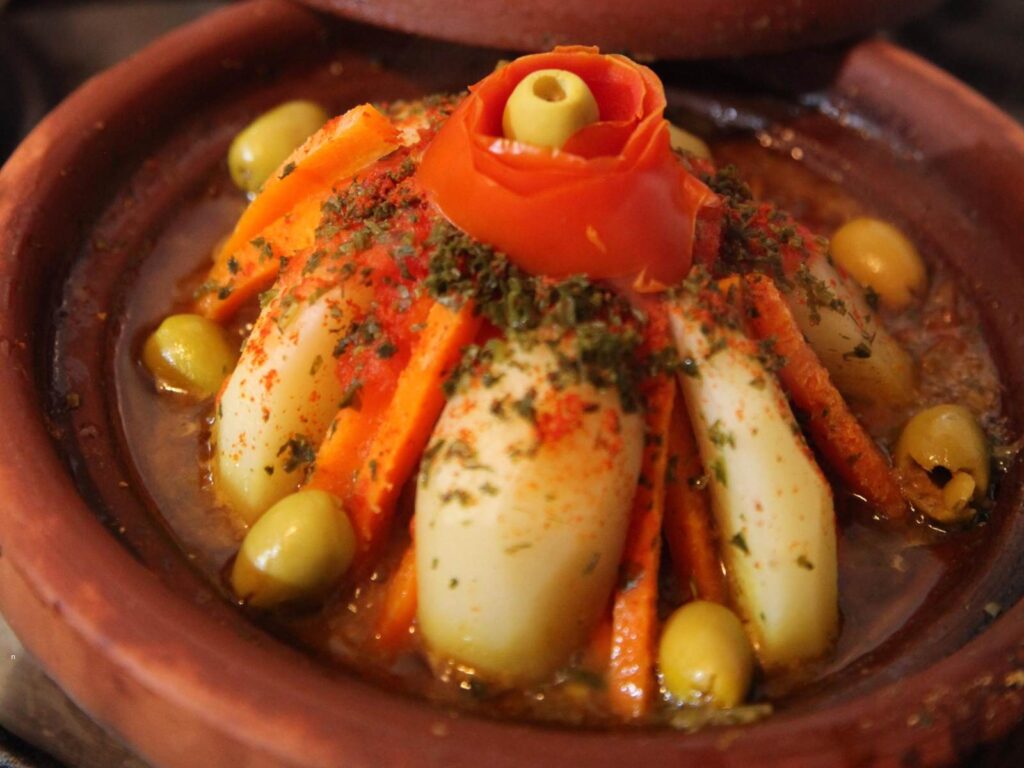
Fes is often considered Morocco’s culinary capital, with recipes shaped by centuries of Andalusian, Arab, and Amazigh influence. Traditional dishes here tend to be richer and more complex than in other cities, often combining sweet and savory elements in the same meal.
You can learn more about regional dishes in our traditional Moroccan food guide.
Specialties such as pastilla, slow-cooked lamb with prunes, and refined tagines appear frequently, alongside everyday street foods like harira soup and fresh bread baked in neighborhood ovens. Meals in Fes are rarely rushed, and many travelers remember the city as much for its kitchens as for its architecture.
Food-focused walks or cooking workshops can add useful context, and you can explore options in our Best Tours in Fes guide, especially for travelers interested in understanding how family traditions and seasonal ingredients shape Moroccan cuisine.
For travelers planning meals across the country, our Morocco food guide highlights essential dishes to try.
Guided Experiences in This Fes Travel Guide
Fes is one of the few Moroccan cities where guided exploration genuinely improves the experience. The medina is complex, and without local knowledge, it’s easy to miss what matters.
Good guides don’t rush. They explain how neighborhoods function, why trades are grouped the way they are, and how religious and social life overlap. Food-focused walks add another layer, connecting everyday meals to seasonal ingredients and long-standing customs.
For travelers who prefer organized experiences without losing authenticity, you can explore curated guided experiences designed to introduce the city’s history, craftsmanship, and local life in a structured way. These typically combine historical insight, artisan workshops, and guided medina navigation.
Day Trips from Fes in a Balanced Travel Guide
Fes is also well placed for day trips that add contrast without long drives.
Chefchaouen, known for its blue-washed streets, offers a softer, more relaxed atmosphere in the Rif Mountains. Meknes and the Roman ruins of Volubilis provide a clear sense of how different empires shaped the region. To the south, the Middle Atlas introduces forests, lakes, and cooler air.
These trips work best as complements, not distractions. They deepen your understanding of Fes rather than pulling you away from it. Practical options are outlined in the best day trips from Fes guide.
Best Time to Visit Fes According to This Travel Guide
Spring and autumn are the most comfortable seasons to explore Fes. Daytime temperatures are mild enough for walking, and evenings remain pleasant. Summer brings heat, especially inside the medina, where narrow streets trap warmth. Winter is quieter, with cool nights and clear days.
There is no wrong season, but your experience will change depending on when you visit. Fes in summer feels intense. In winter, it feels introspective.
How Long to Spend in Fes (Travel Guide Advice)
This Fes travel guide recommends at least two full days. One day barely scratches the surface. Two allow for orientation and depth. Three or more days give space for museums, workshops, and nearby excursions.
Fes is not about efficiency. It’s about immersion.
Getting Around and Where to Stay in Fes
The medina is pedestrian-only and explored on foot. Taxis operate outside its walls, connecting the old city to Ville Nouvelle, where streets widen and modern life takes over.
Accommodation ranges from traditional riads hidden behind modest doors to modern hotels with more space and predictability. Staying in the medina places you at the heart of the experience, while Ville Nouvelle offers comfort and quiet.
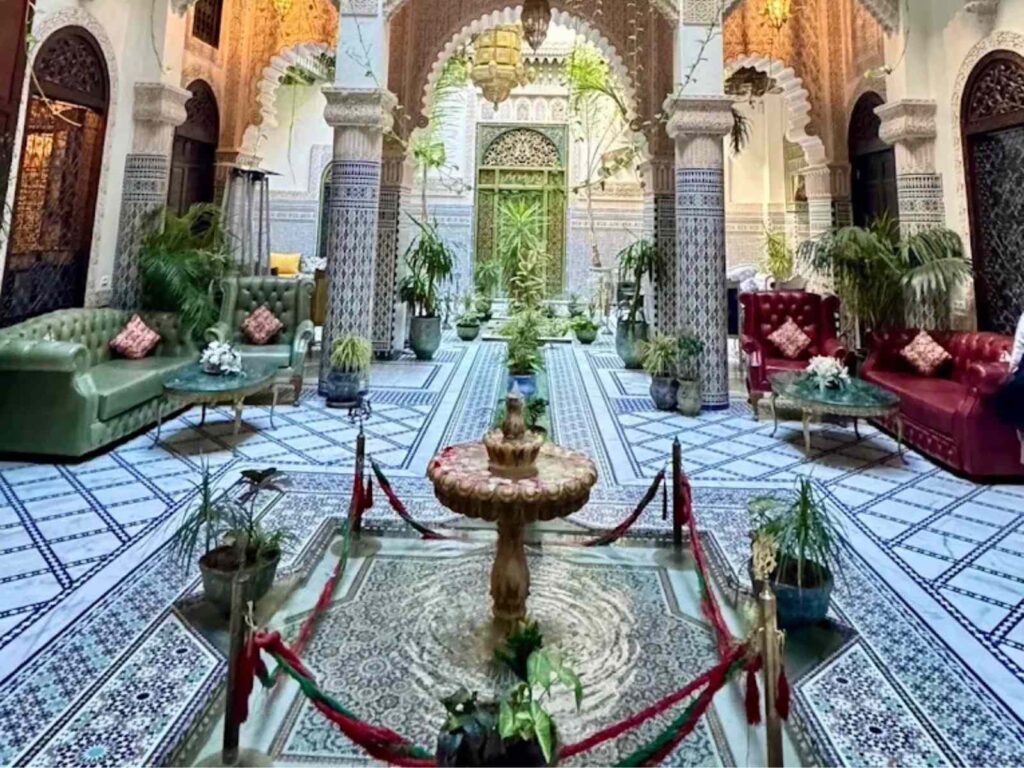
The right choice depends on how deeply you want to engage with the city.
Practical Advice from This Fes Travel Guide
Fes rewards preparation. Comfortable shoes matter. Modest dress is appreciated, especially near religious sites, and you can read more in our what to wear in Morocco guide. Most importantly, time matters. Rushing through Fes leads to frustration. Moving slowly leads to understanding.
If you allow the city to unfold at its own pace, it reveals layers most travelers never see.
Safety and Visitor Awareness in Fes
Like most major Moroccan cities, Fes is generally safe for visitors who follow normal travel awareness. For broader advice, see our Morocco safety guide.
Tourism infrastructure in Fes is well established, with licensed guides, regulated accommodations, and clear visitor routes inside the historic center.
The main challenge for first-time visitors is navigation rather than security.
First-Time Visitor Tips for Fes
Fes is one of Morocco’s most rewarding cities, but it can feel intense for first-time visitors. The historic medina is vast, navigation is complex, and daily life unfolds at a pace very different from modern tourist cities. Knowing a few practical details in advance makes the experience far smoother and more enjoyable.
Start with a guided orientation walk.
Even travelers who prefer exploring independently often benefit from a licensed local guide on the first morning. Understanding the structure of the medina early prevents confusion later.
Expect navigation to be the main challenge.
The Fes medina contains thousands of narrow streets, many without clear signage or GPS accuracy. Save your riad location offline and carry its contact details in case you need assistance returning.
Ignore unofficial “guides”.
You may encounter people offering directions or guiding services inside the medina. Politely decline unless they are clearly licensed. If you need help, ask shopkeepers or return to a main street.
Dress modestly and comfortably.
Fes is a traditional religious city. Lightweight clothing that covers shoulders and knees is generally appreciated, especially near mosques and historic schools. Comfortable walking shoes are essential for uneven stone streets.
Carry small cash.
Many artisan workshops, small restaurants, and local taxis prefer cash payments. ATMs are available in Ville Nouvelle and near major medina entrances.
Plan your arrival carefully.
Cars cannot enter the medina. Arrange pickup with your riad in advance or confirm the nearest accessible gate so someone can meet you on foot.
Move slowly and allow time.
Fes rewards patience. Trying to see everything quickly often leads to frustration, while slow exploration reveals craftsmanship, architecture, and neighborhood life that many visitors otherwise miss.
For most travelers, once the initial orientation passes, Fes becomes far easier to understand — and often becomes one of the most memorable cultural experiences in Morocco.
Explore More Cities in Morocco
Planning a trip beyond Fes? Discover more destinations across Morocco:
Planning Your Visit with This Fes Travel Guide
Fes is not a city you simply visit. It’s a city you absorb. This Fes travel guide is meant to help you approach it with the right expectations — curiosity, patience, and respect.
Use it as a starting point, then explore further through: Things to Do – Tours & Activities – Day Trips & Excursions
The character of Fes reveals itself slowly — through its workshops, the call to prayer echoing across the hills, and the daily life of a medina that has never stopped functioning. For travelers planning a wider journey, Fes often becomes one of the defining cultural stops on a Morocco itinerary.
Travelers who give Fes the time it asks for rarely forget it — not because it tries to impress, but because it never stopped being real.
Frequently Asked Questions
Yes — Fes is one of Morocco’s most culturally rich destinations and is widely considered the country’s historical and spiritual center. Travelers interested in architecture, traditional craftsmanship, and immersive local life often find Fes to be one of the most memorable stops on a Morocco itinerary.
Most travelers should plan two to three full days in Fes. This allows enough time to explore the medieval medina, visit major landmarks, experience local food, and optionally take a nearby day trip without rushing.
Fes is best known for its vast medieval medina (Fes el-Bali), one of the largest historic urban areas in the world. The city is also famous for traditional leather tanneries, historic madrasas, artisan workshops, and its role as Morocco’s long-standing center of learning and religious scholarship.
Yes, the Fes medina can feel complex for first-time visitors because of its dense layout and thousands of narrow streets. Many travelers choose to begin with a guided orientation walk, which helps them understand the structure of the medina before exploring independently.
Fes is generally safe for visitors who follow normal travel precautions. The main challenge for newcomers is navigation inside the medina rather than security. Staying aware of surroundings, using licensed guides when needed, and avoiding isolated streets late at night are usually sufficient.
Spring (March–May) and autumn (September–November) are the most comfortable seasons to visit Fes, offering mild temperatures for walking. Summer can be very hot inside the medina, while winter is cooler and quieter with fewer crowds.
Staying inside the medina offers the most immersive experience, with traditional riads and immediate access to historic streets. Staying outside in Ville Nouvelle provides easier transport access, wider streets, and a quieter modern environment. The best choice depends on your travel style.
Yes — guided tours are strongly recommended in Fes, especially for first-time visitors. A knowledgeable local guide can explain the history, artisan traditions, and neighborhood layout, making the medina far easier to understand and navigate.
Yes, Fes is an excellent base for exploring northern Morocco. Popular day trips include Meknes, the Roman ruins of Volubilis, the blue city of Chefchaouen, and the cedar forests of the Middle Atlas.
Fes can feel intense at first, but it is highly rewarding for first-time visitors interested in culture, history, and authentic urban life. Starting with a guided walk and allowing enough time to explore slowly makes the experience much easier and more enjoyable.
