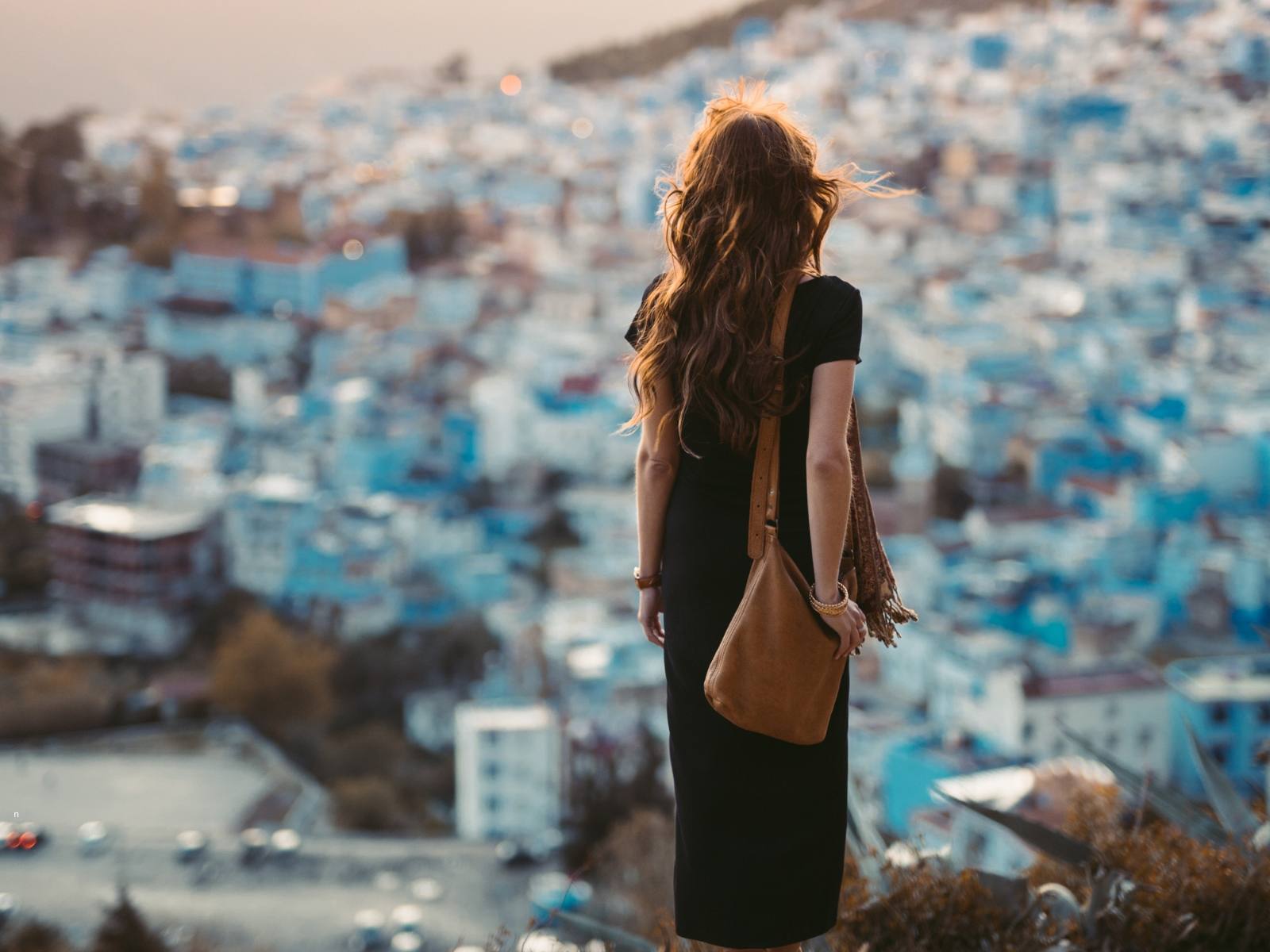
What to wear in Morocco depends on your route, but an easy starting outfit is a breathable top, loose trousers or a below-knee skirt, and comfortable walking shoes. Pack a shirt or light jacket for extra coverage and changing temperatures. Beachwear, a mountain hike, a desert overnight and a religious-site visit each need different preparation.
These are practical starting points, not a uniform for every traveler. Cultural recommendations, your own comfort, the weather and a venue’s entry rules are separate considerations. Moroccan people dress in varied ways, and expectations can change between a hotel pool, a neighborhood café and a place of worship.
A quick clothing guide for first-time visitors
Use clothes you already enjoy wearing. Check that you can walk, sit and climb steps comfortably, and that your layers work together.
| Setting or activity | Practical outfit | Useful extra | What to check |
|---|---|---|---|
| Medina sightseeing | T-shirt, loose trousers, trainers | Light overshirt | Heat and walking distance |
| Coastal town | Shirt, trousers or skirt, walking shoes | Wind layer | Wind and rain forecast |
| Hotel pool | Swimsuit or swim shorts | Dry town clothes | Pool policy |
| Hassan II Mosque tour | Covered shoulders and torso; below-knee clothing | Socks | Current visitor rules |
| Camel ride | Long trousers, comfortable top, closed shoes | Sun hat | Riding and walking time |
| Quad or buggy ride | Long trousers, closed shoes | Helmet and eye protection | Operator’s equipment rules |
| Mountain day walk | Walking trousers, grippy shoes | Warm layer and rain shell | Route, altitude and conditions |
The outfit suggestions are editorial recommendations. The mosque’s published clothing requirements are explained below; adventure providers may impose their own equipment rules.
Morocco dress code for tourists
For everyday sightseeing, clothing with some coverage is a versatile choice, particularly around religious places and in more conservative settings. A top covering your shoulders and loose trousers or a longer skirt makes it easier to move between different stops without changing clothes.
Canadian travel advice recommends conservative dress and respect for religious and social traditions. The UK’s Morocco guidance suggests that women consider loose clothing covering the arms, legs and chest, and asks visitors to follow local dress codes, especially during Ramadan. These are travel recommendations, not evidence that every street has a legally enforced sleeve length.
Choose how much coverage feels comfortable within the setting’s rules. Clothing does not prevent harassment, and responsibility for unwanted behavior lies with the person doing it. For wider preparation, read our Morocco travel safety guide and introduction to Moroccan culture and everyday customs.
What to wear in Morocco as a woman
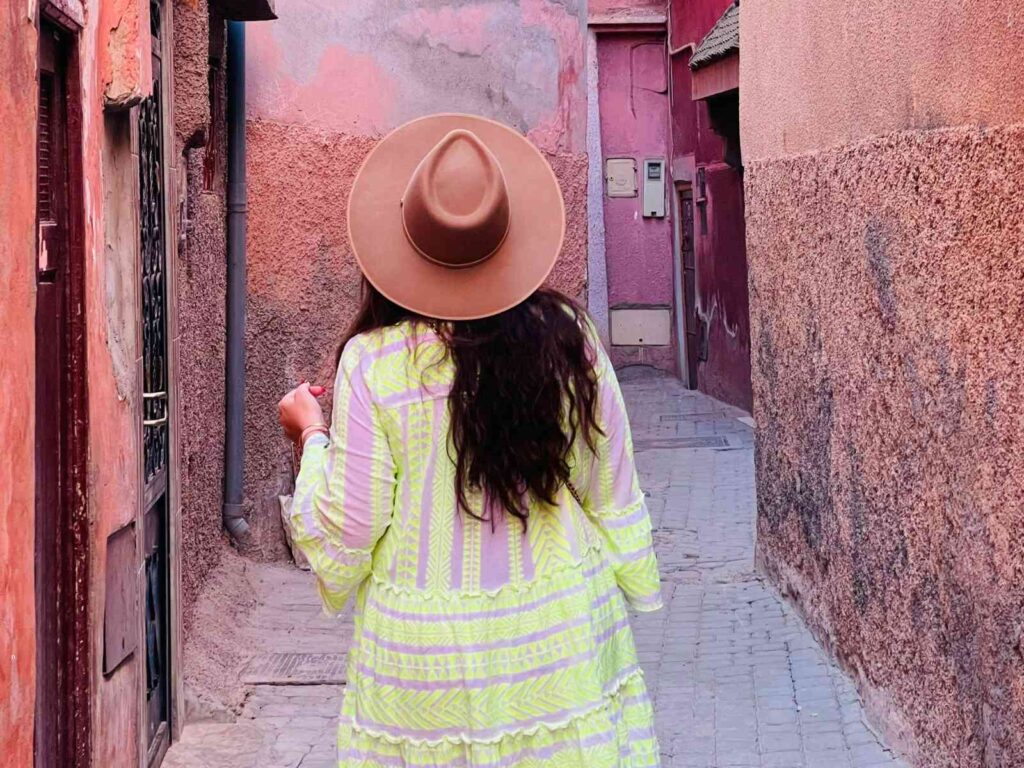
Useful combinations include wide-leg trousers with a short-sleeved top, a below-knee dress with an open shirt, or a long skirt with a light blouse. Pick fabrics you find comfortable in the forecast temperatures, rather than buying a special travel wardrobe.
For a day of sightseeing followed by dinner, try breathable trousers, a simple top and comfortable flats or trainers. A cardigan or overshirt adds warmth and coverage without needing a second outfit. A dress works too, provided its hem allows you to manage steps and does not trail on the ground.
What to wear in Morocco as a man
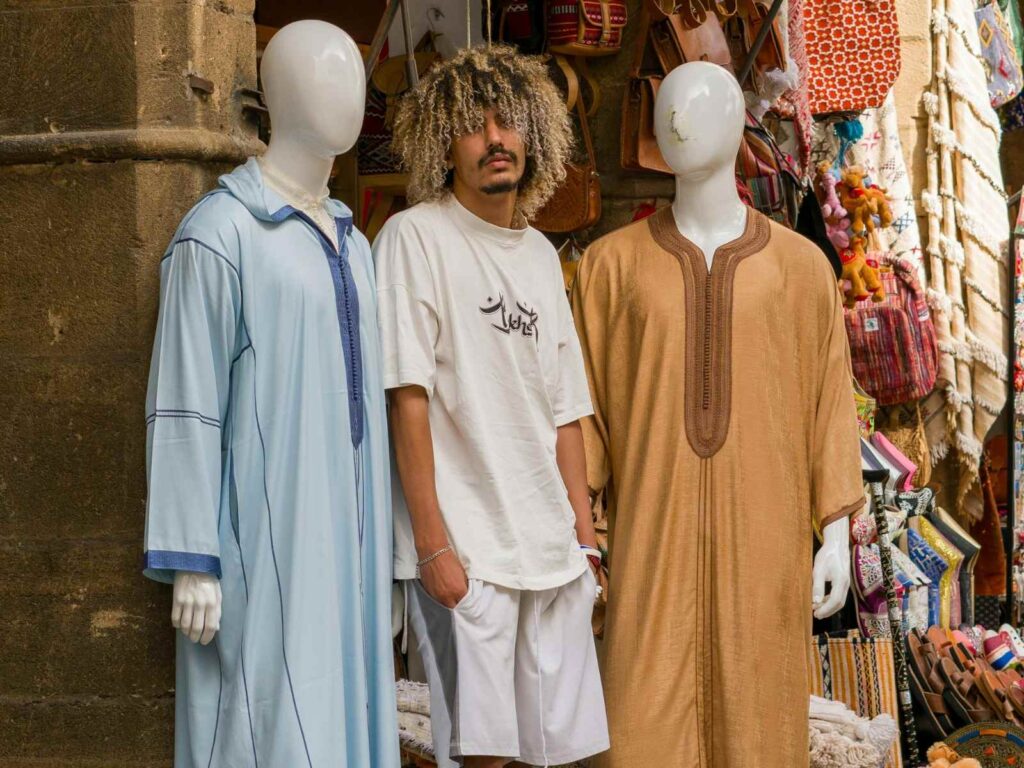
Start with lightweight trousers or chinos, a T-shirt or casual shirt, and broken-in walking shoes. In warm weather, an open long-sleeved shirt over a T-shirt gives you another sun-protection option.
For an evening meal, the same trousers with a collared shirt may be enough for your plans. Check a restaurant’s own requirements if you have booked somewhere with a dress policy. Keep a shirt on when moving from a pool or beach into town.
Shorts and sleeveless tops
Shorts and sleeveless tops can be options in casual holiday settings, but they are less adaptable when your day includes religious venues or more conservative surroundings. Knee-length shorts provide more coverage than short shorts; lightweight trousers give you more flexibility across stops.
If you prefer a sleeveless top or dress, carry a light shirt you can put on fully when needed. Do not assume a scarf draped over one shoulder meets a venue’s rules. Hassan II Mosque’s visitor rules specifically exclude shorts and sleeveless clothing.
Dresses and leggings
A midi or maxi dress is a practical option if it is easy to walk in. Test high slits, wrap fastenings and lightweight fabric for movement and wind before packing. The cut is a matter of preference unless your destination specifies a requirement.
Leggings can work for travel, exercise or layering. If you want more coverage for sightseeing, pair them with a longer shirt or tunic. For riding, choose trousers without seams or fastenings that become uncomfortable against a saddle. A garment’s comfort on a plane does not necessarily make it the best choice for an outdoor excursion.
Hair and head coverings
Women visitors do not generally need to cover their hair for ordinary sightseeing. Local operator Journey Morocco’s visitor FAQs distinguish personal clothing choices from a general expectation to cover the hair. A sun hat or scarf can still be useful for weather or personal comfort.
Check the rules of any religious venue individually. A headscarf is not an automatic entry ticket, and you should not assume every site requires one.
What to wear in Morocco by season
Morocco’s coast, inland cities and mountains have different conditions. The Moroccan National Tourism Office’s climate guide explains the coastal and inland contrast. Use the seasons below as packing starting points, then check forecasts for every overnight stop shortly before departure.
Spring from March to May
For March and April, start with a T-shirt or blouse, trousers, a sweater and a light rain layer. Layers let you adjust without packing complete outfits for every temperature. In May, check whether your inland stops need a lighter daytime wardrobe. Keep the mountain portion of your trip on a separate packing checklist.
Summer from June to August
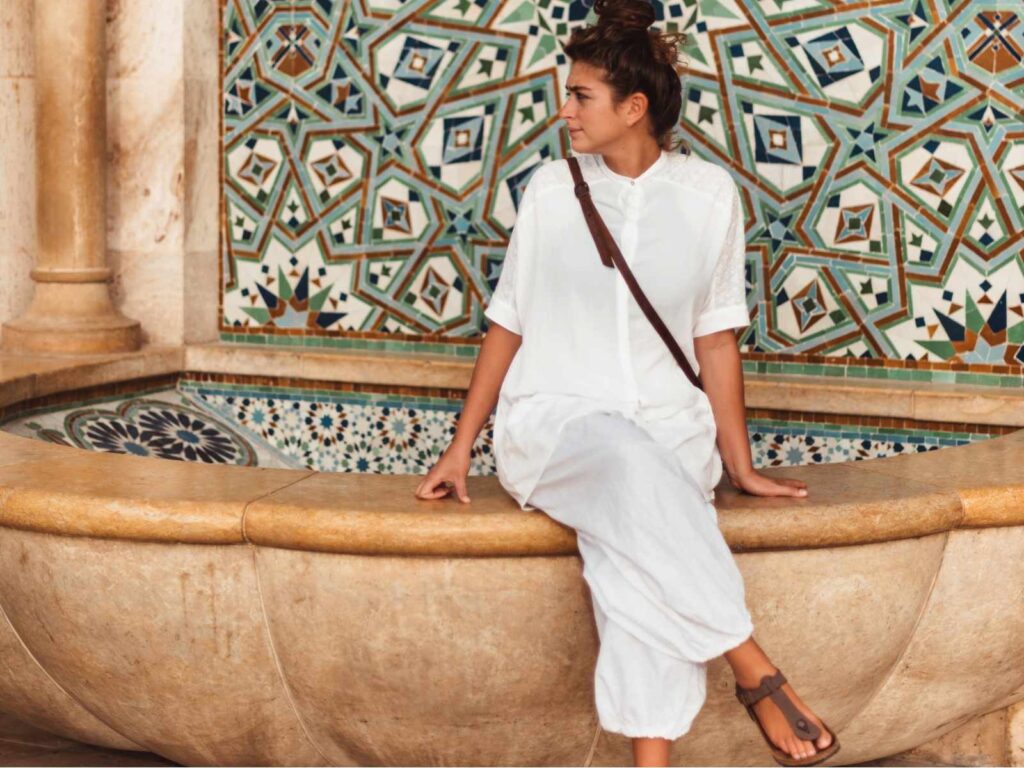
For inland sightseeing, choose airy clothes, a sun hat and comfortable shoes that will not rub during long walks. A loose long-sleeved shirt is an alternative to exposing more skin. Plan around the heat as well as dressing for it: clothes cannot make a long midday outing comfortable in extreme conditions.
Do not leave every extra layer at home just because it is summer. Bring a light wind layer for an Atlantic coast stay and check the needs of any mountain outing separately.
Autumn from September to November
September can still call for a summer-style packing plan in inland and desert locations. For October, a light daytime outfit plus a sweater or jacket is a useful combination. For November, reassess rain protection and evening warmth rather than assuming that an October packing list will be enough.
Canada’s climate guidance identifies November to March as the usual rainy season and advises monitoring regional forecasts. Pack a compact rain shell if your route or forecast warrants it.
Winter from December to February
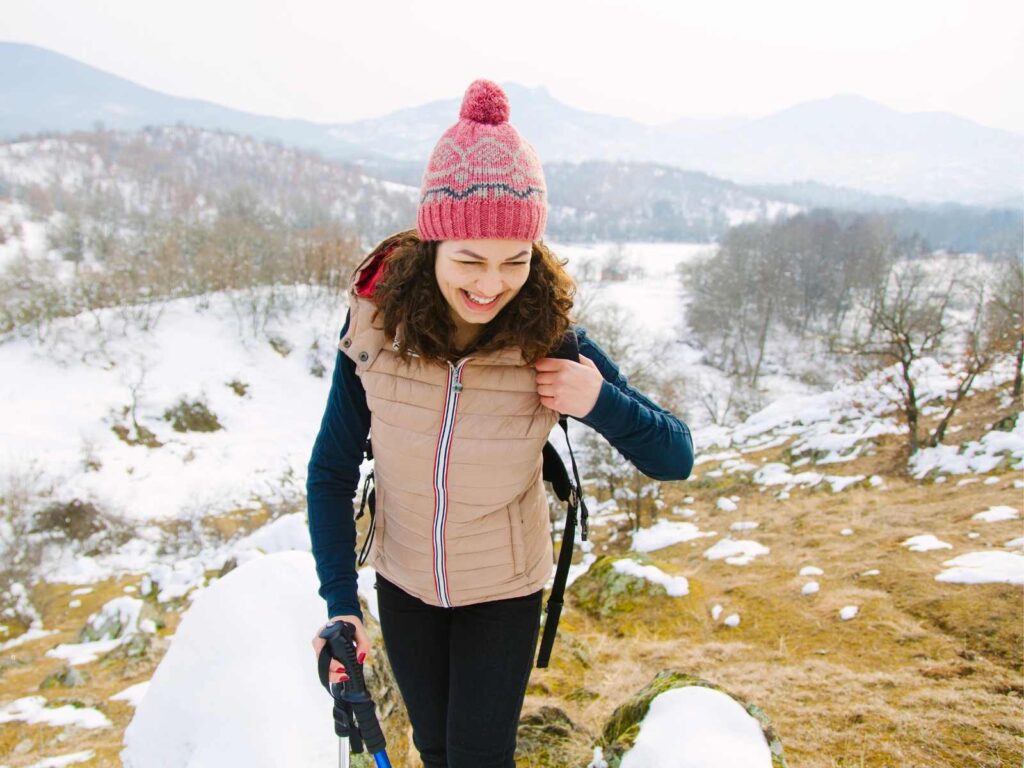
Pack long trousers, long-sleeved tops, a sweater or fleece, closed shoes and a jacket matched to your destinations. Add warm sleepwear if your accommodation’s heating is uncertain. Ask the property about heating rather than assuming a sunny daytime photograph tells you what the room will feel like at night.
Mountain travel requires more preparation. Research on Atlas Mountain snow cover shows that snow conditions vary with season and elevation. Ordinary city layers are not a winter trekking kit.
For route planning, our guide to the best time to visit Morocco compares seasons and destinations in more detail.
Adjust your outfit to the destination
Marrakech and Fes
For a walking day in either city, try a T-shirt, loose trousers and supportive trainers, with a shirt or light layer in your bag. Select the outfit around your stops, not a blanket idea that one city is unrestricted and another has a single dress code.
For Marrakech, check whether the day combines gardens, a medina walk, a rooftop dinner or an excursion outside the city. Fes sightseeing can also mean long stretches on foot and steps, so prioritize shoes you know you can walk in. Use the Marrakech travel guide or Fes travel guide to plan the day before deciding what belongs in your bag.
Coastal destinations
Pack for time in town as well as on the sand. A light wind layer is useful for an exposed waterfront walk, while shoes that work in the medina may be more helpful than beach sandals for a full day out. For an Essaouira visit, keep the coastal and sightseeing parts of your day in mind.
Mountains and village excursions
A short village visit with a brief walk needs different preparation from a remote trek or summit ascent. For a straightforward day walk, start with grippy footwear, comfortable walking trousers, a warm layer and a weatherproof outer layer, then adjust to your guide’s route information.
Ask for the highest altitude, walking time, terrain and current snow or ice conditions. Technical or winter routes may require specialist boots and equipment, which should come from the trek’s exact kit list. Do not treat this general clothing guide as preparation for a summit attempt. The FCDO’s hiking advice recommends researching routes, hiring a professional guide and checking activity insurance.
What to wear on a Morocco desert tour
First check which desert experience you have booked. Agafay is a rocky landscape near Marrakech, rather than the Sahara sand-dune setting associated with trips around Merzouga. Different terrain, travel time and overnight locations change what you need. Our Marrakech day-trip guide helps distinguish nearby excursions from longer journeys.
Camel rides
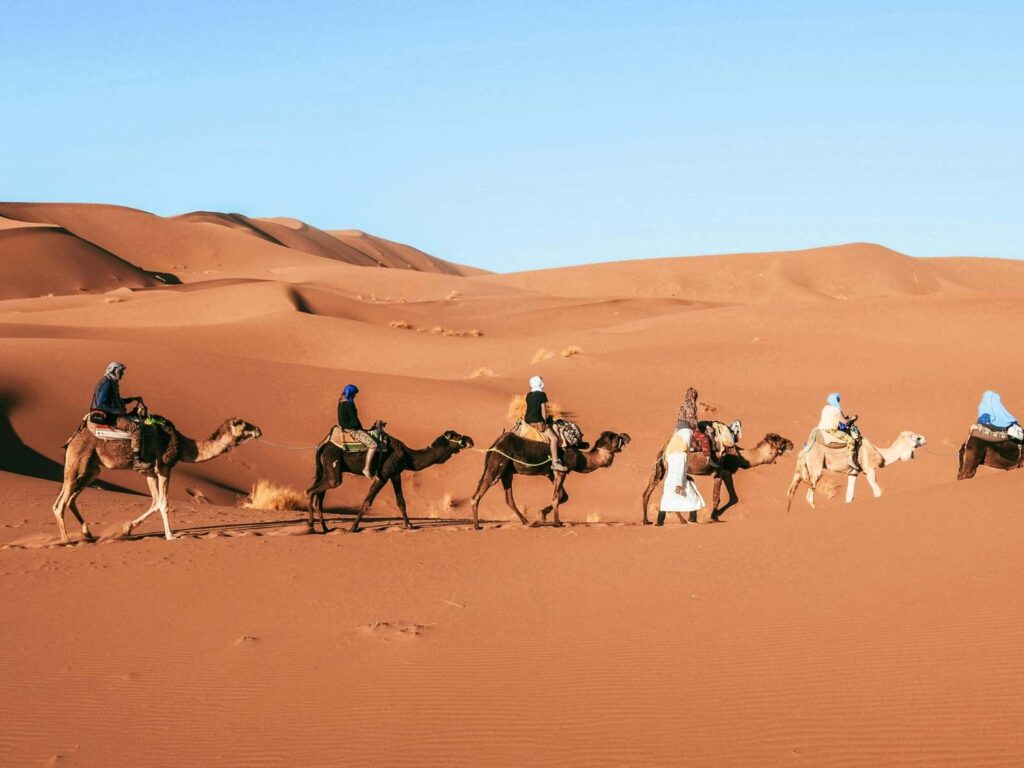
Long trousers help prevent saddle rubbing. Choose a top that lets you move comfortably and closed shoes for a mixed riding-and-walking outing. This is practical advice, not a universal admission rule. Morocco Active Adventure’s camel-trekking guidance also recommends long trousers and sun protection.
Check riding duration and the operator’s instructions before choosing an outfit. A flowing dress may work for dinner but can be awkward when mounting or riding.
Quad and buggy rides
Wear long trousers and closed shoes, and confirm the provider’s required protective equipment before booking. Use a properly fitted helmet and the recommended eye protection. The FCDO specifically advises wearing a crash helmet on quads.
Secure hair, jewelry, scarves and other loose fabric before riding. Do not wear a long scarf with ends trailing near machinery. One Agafay operator’s clothing guidance calls for closed shoes and a scarf tied short. Equipment provision varies, so ask your own operator about helmets, goggles, gloves and buggy restraints.
Desert dinners and overnight stays
For an outdoor dinner, comfortable trousers, a top and shoes suited to the ground are a useful starting point. Add a warm layer according to the forecast and the time you will be outside. Check whether the dining space is open-air and whether a return transfer is late at night.
For an overnight stay, ask about bedding, heating or cooling and the expected conditions at the exact camp. Cold-season nights may require thermal layers, a warm jacket and socks; summer nights are not automatically cold. Do not pack a heavy winter outfit solely because a tour is labeled “desert.”
Shoes to wear in Morocco
For most city itineraries, one broken-in pair of trainers or walking shoes is the most useful starting point. Choose grip and a fit you can tolerate for several hours, including on steps and uneven surfaces.
Supportive sandals can be an optional second pair for warm weather. Closed shoes offer more protection from dust and knocks in busy streets. Keep flip-flops for appropriate pool or shower use rather than relying on them for a full sightseeing day.
Bring hiking footwear only if the route needs it. A demanding trail, wet conditions or a specialist trek can require something different from city trainers. A compact pair of evening flats is optional; check whether you will actually use them before adding another pair.
Swimwear at pools, resorts and public beaches
Pack the swimwear you normally find comfortable, then check the property or beach facility’s policy. Journey Morocco’s beach guidance notes that swimsuits, bikinis and swim trunks are options in beach settings. That does not make swimwear suitable for every shared hotel space, restaurant or street.
Bring dry clothing to change into when you leave the swimming area. On public beaches, local practice varies. A rash vest, swim shorts or more covering swimwear can be a personal comfort choice, rather than a universal requirement. Ask your accommodation about the particular beach if you are unsure, and check sea conditions separately from clothing choices.
Religious sites and venue entry requirements
Check whether a site admits visitors before checking what to wear. Australian government advice warns non-Muslims against entering mosques that are not open to the public. Wearing covered clothing does not override an access restriction.
For a guided visit to Casablanca’s Hassan II Mosque, the Foundation’s official visitor rules require clothing covering the shoulders and torso and extending below the knees. Shorts and sleeveless clothes are excluded. Visitors must remove their shoes inside.
The Foundation’s published rules do not list a headscarf requirement. Check current instructions before visiting rather than applying a general rule from another country or venue. For other religious places, private events, restaurants and hotels, follow that venue’s own requirements.
A seven-day Morocco packing list
This example assumes a spring or autumn trip combining city sightseeing and an Atlantic coast stop, with a casual day excursion and laundry available once midway through the week. It does not cover technical trekking, a winter mountain trip or a desert overnight without the additions below. Quantities include what you wear while traveling.
Everyday clothing and essentials
- Four everyday tops, including at least one with sleeves beyond the shoulder.
- One lightweight long-sleeved shirt or overshirt.
- Two comfortable bottoms, such as trousers, or one pair of trousers and a longer skirt or dress.
- One sweater or fleece and a light jacket suited to the forecast.
- Five sets of underwear, with a midweek wash; take seven if laundry is uncertain.
- Four or five pairs of socks if you wear closed shoes, adjusted for laundry and activities.
- One set of sleepwear.
- One pair of broken-in walking shoes; optional supportive sandals if useful for your route.
- A sun hat, sunglasses and your usual sunscreen.
- A small day bag and a reusable water bottle.
Choose tops and bottoms that mix easily. A dinner outfit can be made from the same pieces. Add a small rain shell if your jacket is not rain-resistant and the forecast calls for it. An optional scarf is useful if you enjoy wearing one, but it is not compulsory packing for everyone.
Add only what your itinerary needs
- Winter or cold nights: warmer coat, thermal base layers, warm socks, hat and gloves as conditions require.
- Mountain walks: the guide’s route-specific footwear and kit list, rain protection and extra insulation. Technical routes need specialist planning.
- Swimming: one swimsuit or pair of swim shorts, dry clothes for afterward and pool sandals if wanted.
- Desert overnight: a small overnight bag if requested, suitable evening and sleeping layers, and confirmation of bedding supplied by the camp.
- Quad or buggy excursion: closed shoes and long trousers, with the operator’s protective-equipment requirements confirmed in advance.
Before closing your bag, check the forecast for each destination, your accommodation’s laundry and heating, and the clothing or equipment instructions for every booked activity. You rarely need a separate wardrobe for each stop.
Frequently asked questions
Can tourists wear shorts in Morocco?
Yes, shorts can be an option in casual holiday settings. They are not suitable for every planned stop: Hassan II Mosque’s published visitor rules prohibit them. Lightweight trousers are a versatile alternative when your day includes different cultural settings.
Do women need to cover their hair in Morocco?
Generally, no for ordinary sightseeing. Religious venues need a separate check; consult the current visitor instructions for any site on your itinerary.
Can I wear sleeveless tops?
They can work in casual settings, but take a shirt or other layer if your itinerary needs more coverage. Bring a top with sleeves for venues that specify them.
Are leggings suitable for sightseeing?
They can be, if you find them comfortable for the weather and walking involved. A longer top is an option if you want additional coverage. For hikes or rides, choose clothing for the activity and follow the operator’s requirements.
What should I wear at a hotel pool or public beach?
Start with your preferred swimwear and check the facility’s rules. Public-beach customs vary. Bring dry clothing for town, restaurants and transfers instead of assuming pool or beach clothing works everywhere.
What shoes should I pack?
For a city-focused trip, start with broken-in trainers or walking shoes with reliable grip. Add sandals only if useful. If you are hiking or joining an activity, check whether the terrain or provider requires different footwear.
Do I need warm clothes for a desert trip?
Match your layers to the season, forecast and overnight location. Cold-season stays can need substantial warmth, but summer nights are not automatically cold. Ask the camp about bedding, heating or cooling before packing.
What should I wear for a religious site visit?
First confirm that you may enter. Then follow the site’s current clothing rules. At Hassan II Mosque, cover shoulders and torso, wear clothing extending below the knees, avoid shorts and sleeveless tops, and remove shoes inside.
Plan Your Morocco Trip
Preparing for your trip to Morocco? These guides help you plan your visit: