
Fes is a city of historic gateways, intricate architecture, busy markets and working craft districts. In Fes el-Bali, the older medina, a short walk can take you from a decorated madrasa to a square where metalworkers shape copper and brass. Beyond the old city, gardens, museums and the Mellah offer a different perspective on Fes.
The best things to do in Fes depend on how much time you have and how you like to explore. With one full day, you can visit a selection of medina highlights. With two days, you can add Fes el-Jdid and spend more time at museums, gardens or viewpoints.
Fes is also commonly spelled Fez. This guide uses both names for the same city and focuses on practical sightseeing: what to see, where to go, what you can enter, and how to organize your time.
Best Things to Do in Fes at a Glance
Scroll sideways to see all columns.
| Attraction or experience | Main appeal | Approximate visit duration | Free or paid | Area | Planning note |
|---|---|---|---|---|---|
| Fes el-Bali and Bab Boujloud | Historic streets, markets and architecture | 1–3 hours or more | Streets generally free | Fes el-Bali | A useful starting point for a medina walk |
| Bou Inania Madrasa | Carved wood, stucco and tilework | 30–45 minutes | Paid | Near Bab Boujloud | Check visitor hours and restricted areas |
| Al-Attarine Madrasa | Decorated courtyard and architecture | 30–45 minutes | Paid | Central medina | Combine with the Al Quaraouiyine area |
| Chouara Tannery viewpoint | View of leather production | 20–45 minutes | Terrace conditions vary | Eastern medina | Ask about any charge before entering |
| Nejjarine Museum | Wooden arts and crafts | 45–75 minutes | Paid | Central medina | Check current opening and stair access |
| Al Batha Museum | Islamic arts in a restored palace | 60–90 minutes | Paid | Place Batha | Check opening days before visiting |
| Royal Palace gates and Mellah | Palace exterior and Jewish heritage | 1–2 hours | Exterior streets generally free | Fes el-Jdid | Do not expect access to palace interiors |
| Jnan Sbil Gardens | Garden break | 30–60 minutes | Confirm current arrangements | Between the historic districts | Check opening hours locally |
| Marinid Tombs viewpoint | Panorama over the medina | 30–60 minutes, plus transport | Outdoor viewpoint generally free | North of Fes el-Bali | Allow for an uphill approach |
These durations are planning estimates. They do not include all travel, queues, meals or shopping time. Opening arrangements and prices can change, so confirm the details that matter to you before visiting.
Explore Fes el-Bali and the Blue Gate

Start at Bab Boujloud
Bab Boujloud, often called the Blue Gate, is one of the most recognizable entrances to Fes el-Bali. Its decorated arch makes it an easy landmark to find and a practical place to begin a first walk through the medina.
From the gate, you can follow streets toward markets, cafés and historic monuments. Two useful names to remember are Talaa Kebira and Talaa Sghira, major medina streets that can help you orient yourself as you explore.
You do not need to follow a rigid route at every moment, but having a starting point and a way back makes it easier to enjoy the surroundings. Save the gate’s location and your accommodation’s address before you set out.
Walk Through the Medina’s Streets and Markets
Fes el-Bali is more than a collection of monuments. It is a neighborhood where people live, shop, worship and work. As you walk, you may pass bakeries, small shops, workshops, fountains and places to stop for tea.
The wider Medina of Fez, which includes Fes el-Bali and Fes el-Jdid, is a UNESCO World Heritage Site. Its historic streets and buildings reflect the city’s long development as a center of trade, learning and craftsmanship.
Allow more time than the distance on a map might suggest. Some passages are narrow, surfaces can be uneven, and routes may involve slopes or steps. Watch for people carrying goods and other moving traffic, even in lanes where cars cannot easily pass.
Can You Explore Fes Without a Guide?
Yes. You can explore Fes independently, and a self-guided walk is a good choice if you enjoy setting your own pace. Start with a few landmarks rather than trying to see everything at once.
Before leaving your accommodation:
- Save your riad’s address and contact details.
- Ask which gate or road is easiest to use when returning.
- Download an offline map.
- Identify a familiar landmark, such as Bab Boujloud or Place R’cif.
- Carry enough cash for small purchases and attraction tickets.
A licensed local guide can be useful if you want historical context, help with orientation or an introduction to workshops. You can also take a guided walk on your first day and explore independently afterward. Compare your options in our guide to the best tours in Fes.
Visit Fes’s Madrasas and Historic Landmarks
Bou Inania Madrasa
Near Bab Boujloud, Bou Inania Madrasa is one of the most rewarding architectural stops in Fes. Its courtyard brings together carved cedarwood, intricate stucco and geometric tilework.
The madrasa is a useful first interior visit because it is close to the western entrance of Fes el-Bali. Allow around 30 to 45 minutes, or longer if you enjoy looking closely at architectural details.
Visitor admission is paid. Check current opening arrangements before your visit, particularly around prayer times, and respect any restricted areas. Ask on site if you are unsure about photography.
Fes and Meknes both have a Bou Inania Madrasa, so make sure directions or photographs refer to the Fes site.
Al-Attarine Madrasa
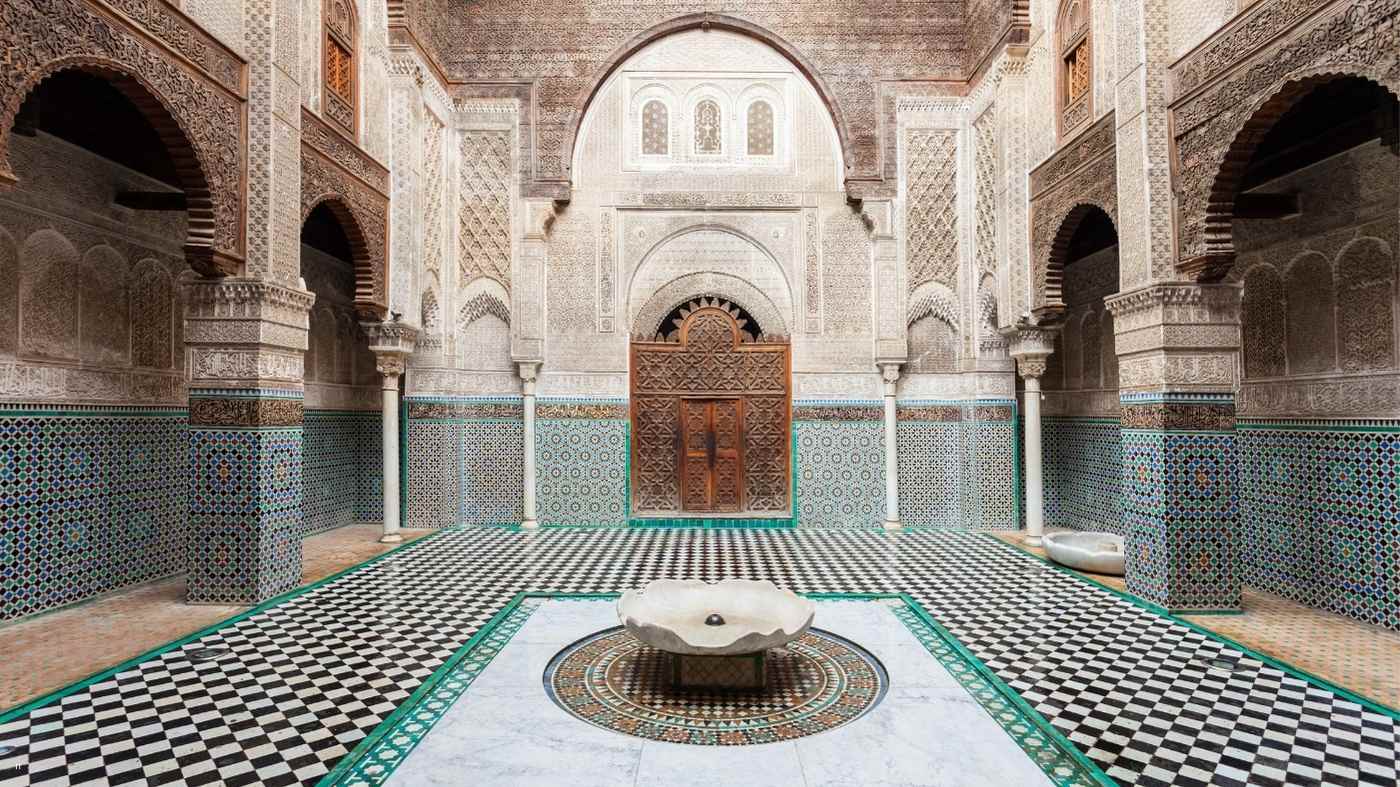
Al-Attarine Madrasa sits deeper in the medina, near the Al Quaraouiyine area. Its courtyard is smaller than some visitors expect, but its detailed decoration makes it a worthwhile stop for anyone interested in Moroccan architecture.
Look for the combination of tilework, carved plaster and wood. The madrasa fits naturally into a walk that also includes nearby markets and historic streets.
Allow around 30 to 45 minutes. Admission is paid, and current opening hours should be checked before you go. Bou Inania and Al-Attarine are generally open to non-Muslim visitors, although access can change and individual spaces may be restricted.
Al Quaraouiyine Mosque, University and Library
Al Quaraouiyine is associated with centuries of religious life and scholarship in Fes. The name can refer to several connected institutions, so it is helpful to distinguish the mosque, university and historic library when planning a visit.
The mosque is a working religious site generally reserved for Muslim worshippers. Other visitors can appreciate the surrounding streets and, where permitted, look toward the building from public areas without obstructing entrances.
The university and library have their own arrangements. Do not assume that a tour of one includes access to the others; check current visitor access before making them a priority.
The surrounding area combines well with Al-Attarine Madrasa and the central medina.
See Chouara Tannery and Fes’s Craft Districts
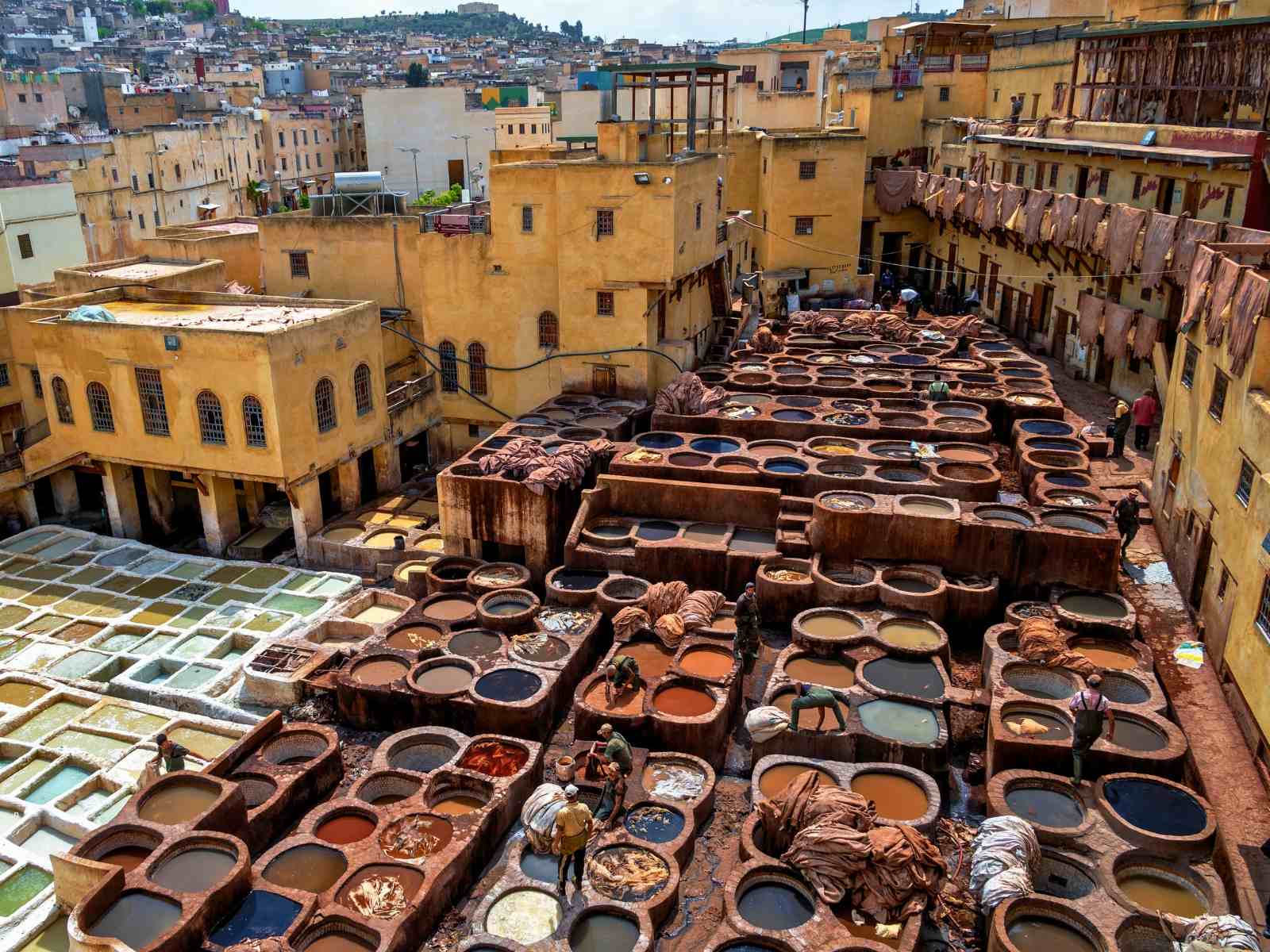
View Chouara Tannery from a Terrace
Chouara Tannery is one of the best-known sights in Fes. From above, visitors can see the vats and activity of a working leather-production area.
Most visitors view the tannery from a nearby terrace, often reached through a leather shop. A terrace visit is different from entering the working tannery itself.
Before going upstairs, ask whether there is a charge and whether the visit involves a shop stop. Conditions vary between terraces, so it is better to agree on them in advance than assume every viewpoint works the same way.
The smell can be strong, and reaching a terrace may involve stairs. Allow around 20 to 45 minutes, plus the time needed to find the location and return to your route.
Visit Place Seffarine and Artisan Workshops
Place Seffarine is a good stop for travelers interested in the crafts that remain part of daily life in Fes. Metalworking is associated with the square and its surrounding streets, where the sounds of tools can become part of your walk through the medina.
Elsewhere, you may encounter woodwork, ceramics, weaving and leather goods. Some workshops welcome visitors or offer demonstrations, while others are simply places of work.
Ask before entering a workshop or photographing the people there. If you would like to participate, look for a hands-on workshop and confirm what you will make, how long the activity lasts and whether materials are included.
Explore Fes’s Museums
Nejjarine Museum of Wooden Arts and Crafts
The Nejjarine Museum is a useful stop for understanding the woodwork seen throughout Fes, from carved doors and ceilings to furniture and tools.
The museum occupies a historic building near Nejjarine Square. Its setting makes it easy to combine with a walk through the central medina and nearby craft streets.
Allow approximately 45 to 75 minutes. Admission is paid. Check current opening hours and access arrangements before visiting, especially if stairs or upper-floor access are a concern.
Musée Al Batha des Arts de l’Islam
Near Place Batha, the Musée Al Batha des Arts de l’Islam offers a different experience from the busy medina lanes. The museum is housed in the restored Al Batha palace and presents Islamic arts alongside other objects connected to Morocco’s history.
Its collections include ceramics, textiles, metalwork and manuscripts. It is a good choice for travelers who want more context for the decoration and craftsmanship they have seen around the city.
The National Museums Foundation says Al Batha reopened in 2025. When checked on November 13, 2026, its listing gave opening hours of 10:00 a.m. to 6:00 p.m., closed Tuesday, and standard admission of 60 MAD for foreign visitors, 30 MAD for Moroccans and 15 MAD for children. Confirm current prices and eligibility before your visit.
Allow around one to one and a half hours.
Visit Fes el-Jdid, the Royal Palace Gates and Mellah
See the Royal Palace Gates
The Royal Palace gates are among the most photographed architectural details in Fes el-Jdid. Their large doors and decorative surroundings make a worthwhile exterior stop when exploring this part of the city.
Plan for a short visit and continue toward the nearby Mellah. The palace is a royal residence, so do not expect a standard visit to its interiors.
Follow any photography restrictions displayed at the site or communicated by staff.
Explore the Mellah and Jewish Heritage
The Mellah is the historic Jewish quarter of Fes. A walk through the area adds another layer to a visit that has focused mainly on Fes el-Bali.
Among the places travelers may wish to learn about is Ibn Danan Synagogue. If entering it is important to you, confirm current opening arrangements, any admission charge and photography rules before traveling there. Access may depend on local arrangements.
Fes also has a Museum of Moroccan Jewish Culture. Before adding it to a fixed itinerary, check its exact entrance, public opening and ticket information directly with the museum. The National Museums Foundation’s listing gives opening hours, but published location details should be confirmed before setting out.
The Royal Palace gates and Mellah work well together. Depending on your route and energy, you can also combine them with Jnan Sbil Gardens.
Relax in Jnan Sbil or See Fes from Above
Take a Break in Jnan Sbil Gardens
Jnan Sbil Gardens offer a change of pace between sightseeing stops. Paths, trees and restored garden features make it a pleasant place to pause after walking through the denser medina streets.
Allow around 30 to 60 minutes, especially if you want to sit and rest rather than simply pass through.
Opening information can vary between listings, so check locally before your visit. If you are planning a sunset viewpoint afterward, visit the gardens earlier in the day rather than assuming they will remain open in the evening.
Choose a Viewpoint: Marinid Tombs or Borj Nord
A view from the hills helps put the scale of Fes into perspective. Rooftops, walls and minarets spread across the landscape below, making a viewpoint a useful complement to time spent inside the medina.
The Marinid Tombs and Borj Nord are separate stops. Choose the one that fits your route rather than assuming they are the same place.
The approach to the viewpoints can involve an uphill walk. Depending on your starting point, a taxi may be more comfortable. Allow time for the journey, the visit and the return, and check the ground conditions if you are walking.
Borj Nord is associated with an Arms Museum, but its current visitor status and opening arrangements should be confirmed before you plan an interior visit.
Eat, Unwind and Discover More of Fes

Try Fassi Food
A meal is an important part of a day in Fes, whether you choose a restaurant in the medina or stop for something simple between attractions.
Look for dishes such as pastilla, tagines and local pastries. Menus and ingredients vary, so ask about the preparation if you have dietary requirements.
You can also explore food through an organized experience:
- A market walk may focus on ingredients and local shopping.
- A tasting tour usually includes food stops, but the portions may not add up to a full meal.
- A cooking class focuses on preparation and may or may not include a market visit.
Check what is included before booking, particularly if you need vegetarian options or have an allergy.
Visit a Hammam
A hammam can be a relaxing addition to a longer stay in Fes. Options range from local public hammams to spa-style treatments at hotels and riads.
The experience, facilities and level of privacy differ. Before booking, ask about opening arrangements, what to bring, whether treatments are included and the total price. If you have a preference for a private session or a particular type of treatment, confirm it in advance.
Join a Pottery or Craft Workshop
A workshop can give you more time to learn about a craft than a short stop during a medina walk. Depending on the provider, you may be able to watch a demonstration or take part in a hands-on activity.
Before booking, confirm:
- The workshop’s location and how to get there.
- The activity and time spent participating.
- The language spoken by the host or guide.
- Whether materials are included.
- Whether you can take your finished item home.
Some pottery and craft locations are outside the central medina, so allow time for transport. For guided cultural and artisan experiences, see our guide to the best tours in Fes.
How to Spend One or Two Days in Fes
One Day in Fes
With one full day, focus mainly on Fes el-Bali. This route gives you an introduction to the medina without requiring a trip across the city for every stop.
Morning: Bab Boujloud to Nejjarine
Start at Bab Boujloud and visit Bou Inania Madrasa if it is open. Continue through the medina toward Nejjarine Square. If the museum interests you and the timing works, visit it before lunch.
Allow around two to three hours, including time to navigate and pause along the way.
Lunch
Choose a restaurant or café in or near the central medina. Allow around one to one and a half hours for a comfortable break.
Afternoon: Al-Attarine, Seffarine and Chouara
Visit Al-Attarine Madrasa if open, then explore the streets around Al Quaraouiyine while respecting access restrictions. Continue toward Place Seffarine and, if you are interested, a Chouara Tannery viewing terrace.
Allow around two and a half to three and a half hours for the afternoon, depending on your pace and the stops you choose.
Late afternoon and evening
Return to a known gate or your accommodation. If you still have time and have arranged transport, you could add one viewpoint before dinner.
This is a full day. If you prefer a slower pace, skip one museum or madrasa and leave the viewpoint for another day.
Two Days in Fes
Two days let you separate the older medina from Fes el-Jdid and spend less time rushing between sights.
Day 1: Fes el-Bali
Follow the one-day medina route, choosing the interiors that interest you most. Take time for lunch and leave room to return to a shop, square or café that catches your attention.
Day 2: Al Batha, gardens and Fes el-Jdid
Begin at the Al Batha Museum if it is open. Continue to Jnan Sbil Gardens during confirmed opening hours, then head toward the Royal Palace gates and the Mellah.
If you want to enter Ibn Danan Synagogue or visit the Museum of Moroccan Jewish Culture, confirm access before building the day around either stop. Add a meal break and allow time for transport between accessible roads or gates.
A viewpoint, hammam or workshop can fill the remaining time if it fits your schedule.
What to Do with a Third Day
A third day gives you room to explore at a slower pace. You could book a cooking class, spend more time with an artisan, visit an additional museum or simply return to a part of the medina you enjoyed.
If you would rather explore outside the city, compare the options in our guide to the best day trips from Fes. Keep in mind that a day trip takes time away from sightseeing in Fes itself.
Practical Tips for Visiting Fes
Free Things to Do in Fes
Some of the most enjoyable parts of Fes cost little or nothing. You can:
- Walk through public streets in Fes el-Bali.
- See Bab Boujloud and other historic gates from outside.
- Visit public squares and observe the surrounding architecture.
- View the Royal Palace gates from the exterior.
- Explore the Mellah’s public streets.
- Take in a city view from an outdoor viewpoint.
Attraction interiors, guided walks and workshops usually cost extra. Check the current terms for garden and tannery terrace access rather than assuming every stop is free.
Things to Do in Fes with Kids
Fes can be interesting for families who enjoy markets, crafts and discovering a city on foot. A shorter medina walk, a garden break or a suitable hands-on workshop may be easier to manage than a long list of monuments.
Build in breaks and choose activities according to your children’s ages and interests. Before booking a workshop or tour, ask about the walking distance, steps, supervision and any age restrictions.
Things to Do in Fes at Night or in the Rain
In the evening, consider dinner at a restaurant or riad, a planned cultural activity or a walk along a route you already know. Ask your accommodation for directions and arrange your return if you are unfamiliar with the area.
On a rainy day, a museum, madrasa, cooking class or hammam can offer time indoors. Check opening arrangements first and remember that you may still need to walk outdoors or use stairs to reach the venue.
Walking, Mobility and Navigation
The historic medina is rewarding to explore on foot, but its surfaces and layout can be demanding. Expect some uneven paving, steps, slopes and narrow passages.
If you have mobility needs, contact attractions and accommodation directly about entrances, stairs and suitable routes. Detailed accessibility information is not consistently available for every site.
For longer transfers, a taxi between accessible roads or gates may be more comfortable than crossing several districts on foot. Ask your accommodation which meeting point works best.
Day Trips from Fes
Fes is a useful base for exploring more of northern Morocco. Meknes and Volubilis appeal to travelers interested in history, while the Middle Atlas offers a change of scenery.
A day trip works best when you have already allowed enough time for the city itself. Compare destinations and planning considerations in our guide to the best day trips from Fes.
Frequently Asked Questions About Visiting Fes
Is Fes worth visiting?
Fes is worth considering if you enjoy historic neighborhoods, architecture, crafts and food. Its medina offers a rich sightseeing experience, although the narrow lanes, slopes and navigation can feel demanding. Travelers who prefer a slower introduction may enjoy taking a guided walk or allowing extra time.
How many days do you need in Fes?
One full day gives you time for selected Fes el-Bali highlights. Two days allow a more comfortable visit that includes Fes el-Jdid, museums or gardens. A third day provides time for a workshop, a slower pace or a separate day trip.
Can you explore Fes medina without a guide?
Yes. You can explore independently. Save your accommodation details, identify a nearby gate and use an offline map. A licensed guide can be helpful if you want historical context or prefer assistance with orientation.
Can non-Muslims visit Al Quaraouiyine?
The Al Quaraouiyine mosque is generally reserved for Muslim worshippers. Other visitors can explore the surrounding public streets and respect the entrances and any posted restrictions. The university and library are separate places, so check their visitor arrangements individually.
Can you enter Bou Inania and Al-Attarine madrasas?
Both madrasas generally admit non-Muslim visitors to permitted areas for a fee. Opening times and restrictions can change, so check locally before visiting and respect any areas reserved for prayer or other uses.
How do you see Chouara Tannery?
Visitors commonly view Chouara Tannery from surrounding terraces, often reached through leather shops. Ask about any charge or shopping expectations before entering. Viewing the tannery from a terrace does not mean you can enter the working area.
What are the best free things to do in Fes?
Walking through public medina streets, seeing Bab Boujloud, exploring the Mellah and viewing the Royal Palace gates from outside are useful free options. Check current access conditions for gardens and viewpoints.
What can you do in Fes when it rains?
Consider a museum, madrasa, cooking class or hammam. Check that your chosen venue is open, and allow for outdoor walking or transport between stops.
Plan Your Fes Visit
Planning your visit to Fes? These guides help you organize your trip:
Plan Your Fes Visit
The best way to experience Fes is to choose the sights that match your interests and leave enough time to move between them. A focused day in Fes el-Bali introduces the city’s historic streets and landmarks, while a second day makes room for Fes el-Jdid, museums and a more relaxed pace.
Before you travel, check the opening arrangements for the places you most want to enter. Then use our Fes travel guide to plan the rest of your stay, compare guided tours in Fes, or explore day trips from Fes.