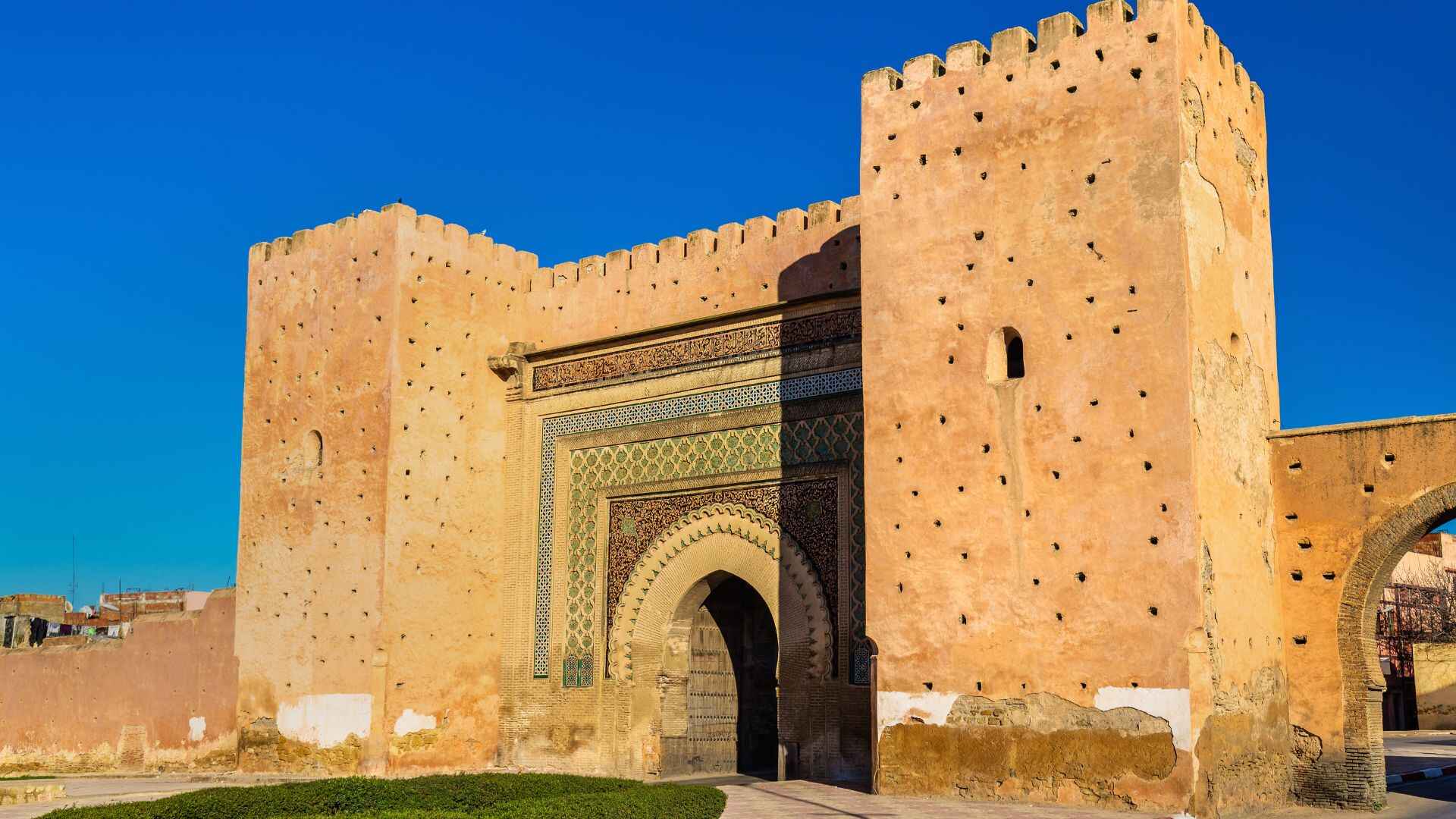
Meknes has a quiet way of surprising you. It isn’t loud like Marrakech, and it doesn’t try to impress you with theatrics like Fes. Instead, it reveals itself slowly. A wide square here, a monumental gate there, the soft hum of a medina where people still live their daily lives.
Meknes is one of Morocco’s historic imperial cities, alongside Fes, Marrakech, and Rabat, each reflecting a different chapter of the country’s royal past.
That calmness is exactly what makes the city special. You can actually breathe. Walk without rushing. You can stand in front of history and absorb it, rather than feeling pushed forward by crowds.
If you’re trying to decide what to see first, the best things to do in Meknes blend imperial history, local routines, and easy day trips that stretch the story further. Walk gently, take your time, and the city opens up.
You can explore more destinations in the country through our complete collection of Morocco city guides.
Top Things to Do in Meknes at a Glance
- See the monumental Bab Mansour gate in Place El Hedim
- Visit the peaceful Mausoleum of Moulay Ismail
- Explore the vast Heri es-Souani royal granaries and stables
- Wander the UNESCO-listed Meknes medina
- Take a half-day trip to the Roman ruins of Volubilis
- Visit the hill town of Moulay Idriss Zerhoun
Before diving into the detailed attractions, here’s a quick overview of why Meknes deserves a place on your Morocco itinerary.
Is Meknes Worth Visiting?
Yes — Meknes is one of Morocco’s most underrated imperial cities. It offers monumental gates, royal architecture, and a UNESCO-listed medina, but with far fewer crowds than Marrakech or Fes. Travelers who enjoy history, relaxed exploration, and authentic local atmosphere often find Meknes one of the most pleasant cities to visit in Morocco.
Discover Meknes’ Imperial Heritage
Meknes reached its peak in the 17th century, when Sultan Moulay Ismail decided this would be his capital. He imagined a city to rival European courts — fortified walls, massive gates, storehouses built as if nothing could ever run short.
Much of that ambition still stands, and you feel it long before you understand the details.
Bab Mansour
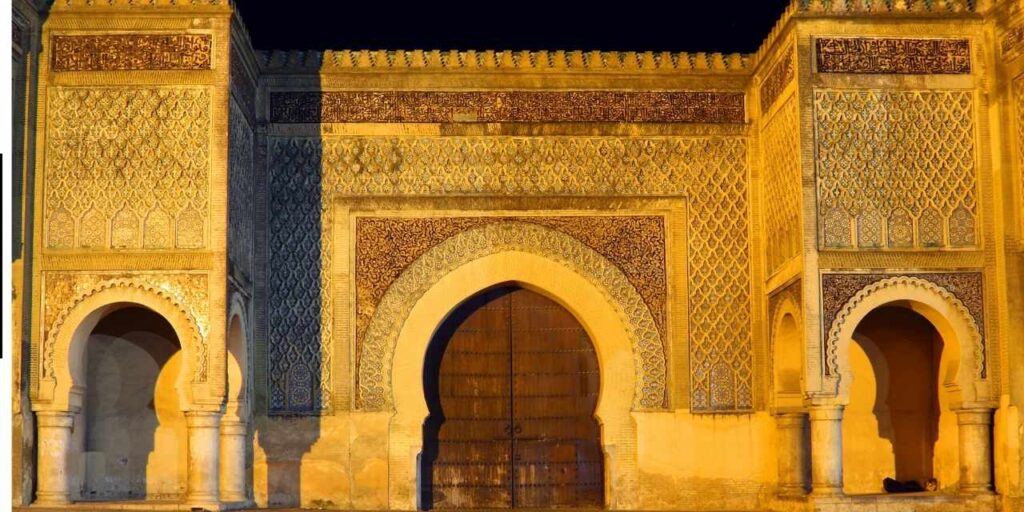
Bab Mansour isn’t just a gate. It’s a statement.
Standing across from it, in Place El Hedim, you feel the scale — the height, the symmetry, the tilework that pulls your eyes upward. The gate was built to impress visitors, to remind everyone arriving that this was a city of power.
Stay a few minutes. Watch how the square changes as the afternoon fades. Tea glasses clink. Children chase pigeons. The light softens, and the architecture becomes warmer, almost gentle.
It’s one of the most memorable things to do in Meknes, not because you “check it off” — but because you experience the shift in atmosphere around it.
Mausoleum of Moulay Ismail
Step into the Mausoleum of Moulay Ismail and the noise of the city seems to fall away.
It’s one of the few religious spaces in Morocco that non-Muslims may visit, and the experience feels intimate. Courtyards unfold one after another, tiled floors reflect the light, and green roofs mark the space with calm dignity.
You don’t need to say much here. Just walk slowly. Notice the details. Respect the silence.
It’s history — but it’s also presence.
Heri es-Souani: Royal Granaries & Stables
While palaces show power, Heri es-Souani shows logistics.
These were the royal granaries and stables, designed to feed thousands of horses and store food in case of siege. Inside, thick stone walls hold cool air; massive pillars rise like something carved from an underground cathedral.
You feel the practicality behind the grandeur. Power wasn’t only displayed in gates — it was measured in how long a city could endure.
Explore Meknes Medina & Everyday Life
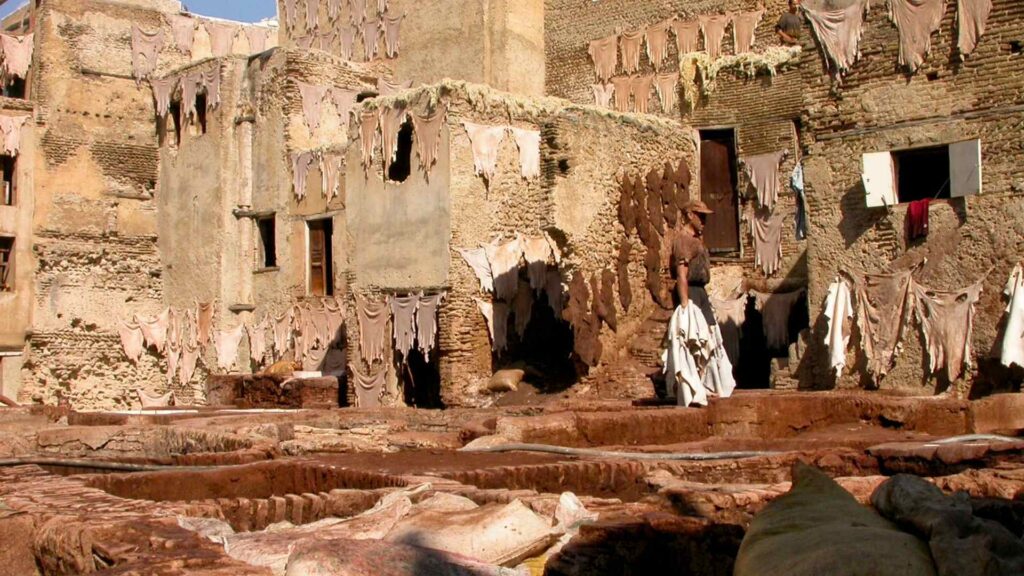
The medina here doesn’t rush you. It doesn’t overwhelm you. Instead, it invites you into daily rhythms.
People greet each other by name. Shopkeepers lean in their doorways. Kids carry bread wrapped in paper on their way home.
The Medina
Because Meknes’ medina is UNESCO-listed, much of its architecture and character remains intact. Souks stretch into narrow lanes, small workshops buzz with quiet focus, and bakeries bake bread that families bring from home.
You’ll find:
- fewer tourists
- easier conversations
- space to wander without pressure
It’s one of those rare medinas where you can actually observe instead of constantly negotiating your path.
Place El Hedim
Everything eventually leads back to Place El Hedim — the city’s living room.
Vendors set up stalls, cafés spill onto the square, and the view toward Bab Mansour frames everything. Sit down with a mint tea, and the city reveals more than any guidebook paragraph could explain.
Sometimes, the simplest moment becomes the highlight.
Visit Cultural & Historical Sites in Meknes
Beyond the obvious monuments, Meknes holds quieter places that gently deepen your understanding.
Together, these top attractions in Meknes create a rhythm that feels balanced rather than overwhelming. The city’s Meknes sightseeing highlights don’t compete with each other — they unfold gradually, rewarding visitors who slow down and look closely.
Dar Jamai Museum
Once a palace, now a museum, Dar Jamai feels like stepping into an old family story.
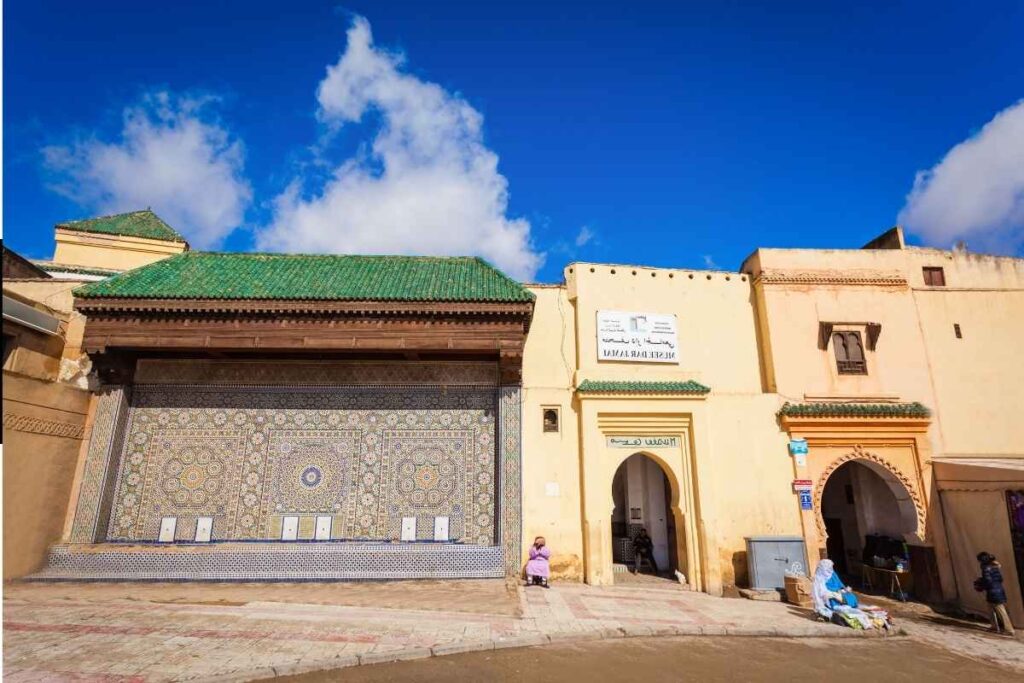
Rooms display textiles, ceramics, painted ceilings, and delicate woodwork. Some exhibits are simple, but the building itself carries beauty — especially the inner courtyard where shade gathers around the orange trees.
It’s not a rushed visit. It’s a pause.
Bou Inania Madrasa
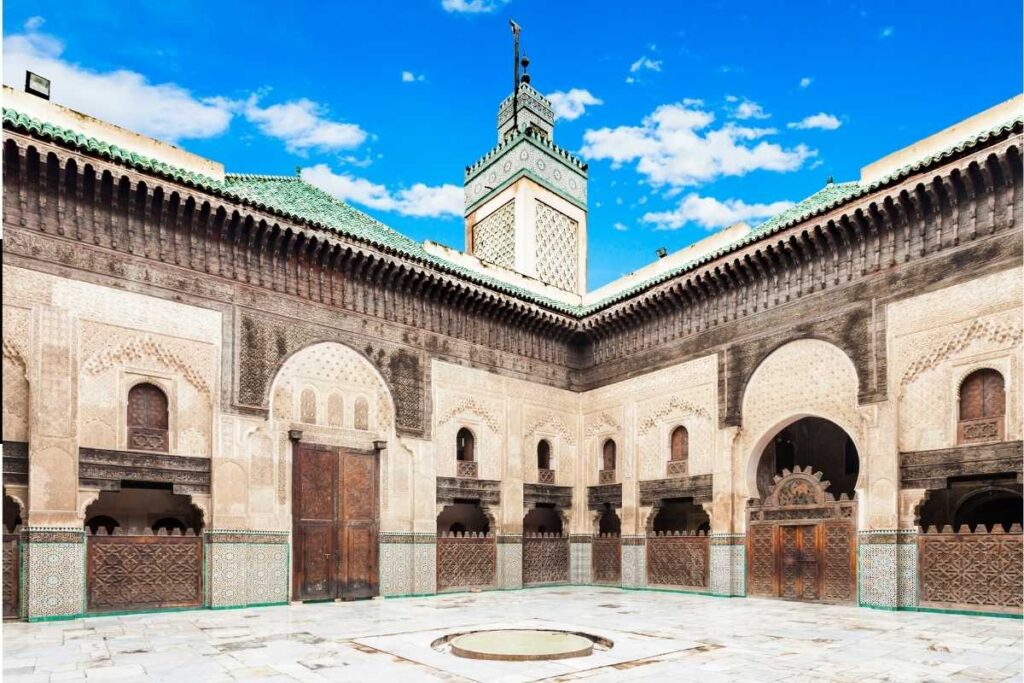
Bou Inania Madrasa connects Meknes to a long tradition of learning.
Walk through its doorway and notice how sound softens. The courtyard opens around you, framed by carved cedar and detailed plasterwork. Students once studied here, memorizing texts and debating ideas.
Standing there, the noise of the medina feels far away — even though you’re only steps from it.
Take a Day Trip from Meknes
Part of what makes Meknes special is its location. Within minutes, the city gives way to open fields, rolling hills, and stories older than the city itself.
Meknes is also commonly included in wider regional itineraries and appears among the best day trips from Fes, thanks to its short travel distance.
Volubilis Roman Ruins
Day Trips Distance & Travel Time from Meknes
- Volubilis Roman Ruins — about 35 km (40–45 minutes by car or grand taxi)
- Moulay Idriss Zerhoun — about 30 km (35–40 minutes by car)
- Both destinations can easily be visited together in one half-day or full-day trip
- Private drivers, shared grand taxis, or guided tours from Meknes are widely available
Volubilis stretches out across the landscape like a memory that never quite faded.
You walk among mosaics that still show mythological scenes, past stone streets worn smooth by time, through arches framing the countryside. It’s quiet, but not empty. The place feels lived-in, even thousands of years later.
For history lovers, it’s easily one of the essential things to do in Meknes — even if it technically sits just beyond its edge.
Volubilis, Moulay Idriss & Meknes Private Day Trip from Fes
Discover ancient Roman ruins, Morocco’s holiest town, and an imperial city on a private, full-day tour from Fes.
Moulay Idriss Zerhoun
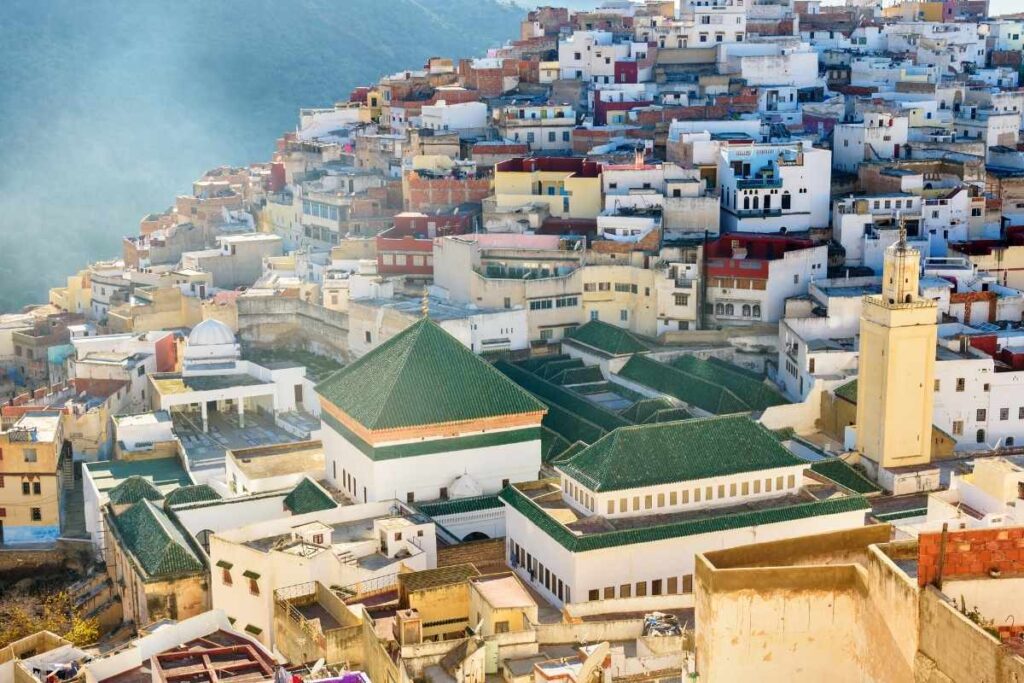
Climb the hill to Moulay Idriss, and the rhythm changes again.
White houses stack along the slopes. Views stretch across valleys. The town holds deep spiritual significance, but visitors experience it as peaceful — slow streets, small cafés, locals curious rather than hurried.
Together with Volubilis, it creates a full day where history, faith, and landscape intertwine.
Enjoy the Food Scene
Meknes doesn’t try to impress with flashy food trends. It cooks what it knows — and does it well.
Think slow-cooked tagines, grilled meats, seasonal vegetables, and pastries still warm from the oven. Bread arrives fresh, sometimes still steaming. Meals feel honest rather than staged.
Sometimes you eat in simple cafés. Sometimes, in small restaurants with a single chalkboard menu. Either way, it tastes like everyday Moroccan life — not a performance for visitors.
If you want to understand the dishes you’ll encounter, see our guide to traditional Moroccan food.
Should You Take a Guided Tour in Meknes?
You can absolutely explore on your own.
But a good guide adds something more: context, patience, and small details you’d probably never notice. They point out inscriptions. A good guide tells you who lived here. They explain why certain buildings look the way they do. Suddenly, a wall is not just a wall. It becomes part of a story.
If you want organized options, see our guide to the best tours in Meknes.
Perfect 1-Day Meknes Itinerary
If you only have one day in Meknes, this simple route helps you see the main historic sites without rushing.
How to Spend One Day in Meknes
- Morning: Start at Bab Mansour and walk across Place El Hedim while the square is still calm
- Late morning: Visit the Mausoleum of Moulay Ismail and the nearby royal district
- Lunch: Eat in a small medina restaurant or café near the square
- Afternoon: Explore Heri es-Souani royal granaries and stables
- Optional: Continue to Volubilis and Moulay Idriss for a half-day historical trip
- Evening: Return to Place El Hedim for tea and sunset atmosphere
Best Things to Do in Meknes for First-Time Visitors
If you’re short on time, start simple and meaningful:
- Bab Mansour
- Mausoleum of Moulay Ismail
- Heri es-Souani
- The medina at a relaxed pace
- Volubilis as a half-day escape
With only these, you already understand why Meknes deserves attention.
How Long Should You Stay?
Half a day gives you a glimpse. One day lets you connect places. Two days add nuance — and space to enjoy the countryside.
Meknes never feels like too much. If anything, it invites you to stay longer.
Best Time to Visit
Spring and autumn are ideal — warm, bright, and comfortable for walking.
Summer can be hot, but evenings cool down. Winter remains mild, with quieter streets and soft light that suits photography and unhurried wandering.
Whatever season you choose, Meknes rarely feels overwhelming.
Where to Stay in Meknes
Most visitors prefer staying near the historic medina or within walking distance of Place El Hedim, where the main monuments and restaurants are located.
- For first-time visitors: stay near the medina for easy sightseeing
- For quiet atmosphere: choose a traditional riad inside the old city
- For modern comfort: hotels near the Ville Nouvelle offer larger rooms and easier parking
Meknes is compact, so even hotels outside the medina remain close to major attractions.
How to Get to Meknes
Meknes is well connected to Morocco’s major cities and is easy to reach by train, car, or organized tour.
- From Fes: about 40 minutes by train or 1 hour by car
- From Rabat: around 2 hours by train or highway
- From Casablanca: about 3 hours by train
- From Marrakech: roughly 4–5 hours by train or car
The train station sits just outside the historic center, and taxis can quickly take you to the medina or Place El Hedim.
Final Thoughts: Why Meknes Stays With You
Meknes doesn’t compete. It doesn’t demand applause.
Instead, it offers moments — a quiet square at dusk, a stretch of ancient stone glowing in late light, tea on a terrace while the city goes on with its day.
That’s the beauty of discovering the best things to do in Meknes. You’re not chasing attractions. You’re learning to notice.
And when you leave, it lingers not because it dazzled you — but because it felt real.