
Start in the medina, follow Rue des Consuls to the Kasbah of the Oudayas, and you can go from market lanes to a view of the Atlantic in one morning. The best things to do in Rabat also include the Hassan Tower esplanade, the ruins at Chellah, and two distinct museums near Rabat Ville. Which ones you choose depends on how much time you have and what you most want to see.
Rabat is worth a stop for its royal monuments, archaeology and coast. On a half-day, choose one area. With a full day, combine the old town and the Hassan complex, then pick Chellah or a museum. A second day gives you time for both or a trip across the river to Salé.
Best Things to Do in Rabat at a Glance
The times below are estimates for each stop. Allow extra time for walks between areas, transport and meals. Admission prices listed in this guide were checked on 14 November 2026.
| Attraction | Main appeal | Time | Admission | Area | Planning note |
|---|---|---|---|---|---|
| Medina and Rue des Consuls | Market streets and crafts | 60–90 min | Free lanes | Old Rabat | Start at Bab El Had and finish near the Kasbah. |
| Kasbah of the Oudayas | Fortified lanes and estuary views | 45–60 min | Free public lanes | River mouth | Allow time for narrow lanes, slopes and steps. |
| Andalusian Gardens | Shaded paths and planting | 20–30 min | Free | Kasbah | The garden has separate hours. |
| Oudayas museum | Moroccan jewellery and adornment | 40–60 min | 60 MAD for foreign visitors | Kasbah | Closed Tuesday. |
| Hassan Tower and mausoleum | An Almohad landmark and royal memorial | 30–50 min together | Free visitor areas | Hassan | The esplanade and the gallery have separate hours. |
| Chellah | Ancient Sala and the Marinid necropolis | 75–120 min | 70 MAD standard admission, age over 25 | Southeast of the centre | Last entry one hour before closing. |
| Mohammed VI art museum | Modern and contemporary art | 60–90 min | 60 MAD for foreign visitors | Near Rabat Ville | Check the exhibitions. Closed Tuesday. |
| Museum of History and Civilizations | Archaeology and Roman bronzes | 45–75 min | 20 MAD adult tariff | Near Rabat Ville | Separate museum. Closed Tuesday. |
| Rabat quays | A riverfront walk below the old town | 25–45 min | Free public area | Rabat bank | An exposed walk in windy weather. |
| Salé marina and medina | Views across the river and old-town streets | 2–3 h with transfers | Free public lanes, some interiors paid | Salé bank | Take the tram to Bab Lamrissa and continue on foot. |
UNESCO’s Rabat World Heritage inscription covers historic and modern parts of the capital. The listed areas include the Kasbah, medina, Chellah, Hassan complex, Jardin d’Essais and sections of the planned modern city.
Explore the Rabat Medina and Kasbah of the Oudayas
Rabat Medina and Rue des Consuls
Enter through Bab El Had and follow Rue Souiqa into the medina. Turn toward Rue des Consuls for carpets, leather goods and other crafts, then continue toward the Kasbah. Allow 60–90 minutes if you plan to browse. Market lanes can be narrow and busy, and shop hours vary. Ask before photographing vendors or their stalls.
Kasbah Lanes and Viewpoints
The Kasbah of the Oudayas, also spelled Udayas, sits above the mouth of the Bouregreg. From the monumental gate, follow the public lanes to a viewpoint over the river, Salé and the Atlantic. These lanes are also a residential neighbourhood. Expect some stairs, uneven surfaces and wind near the outlook, and allow about 45–60 minutes.

Andalusian Gardens
The walled gardens are a short stop near the Kasbah entrance. Allow 20–30 minutes for the shaded paths and planted courtyards. The regional tourism board lists free entry and daily hours of 07:00–19:00. Check on the day, especially if you are visiting near closing time.
Oudayas National Museum of Adornment
Inside the Kasbah, this museum displays Moroccan adornment, including Amazigh jewellery. The Fondation Nationale des Musées lists opening hours of 10:00–18:00, a Tuesday closure and a 60 MAD ticket for foreign visitors. Allow 40–60 minutes. If you need step-free access or want to take photographs inside, ask the museum before visiting.
Visit Hassan Tower and the Mausoleum of Mohammed V
Hassan Tower and the Esplanade
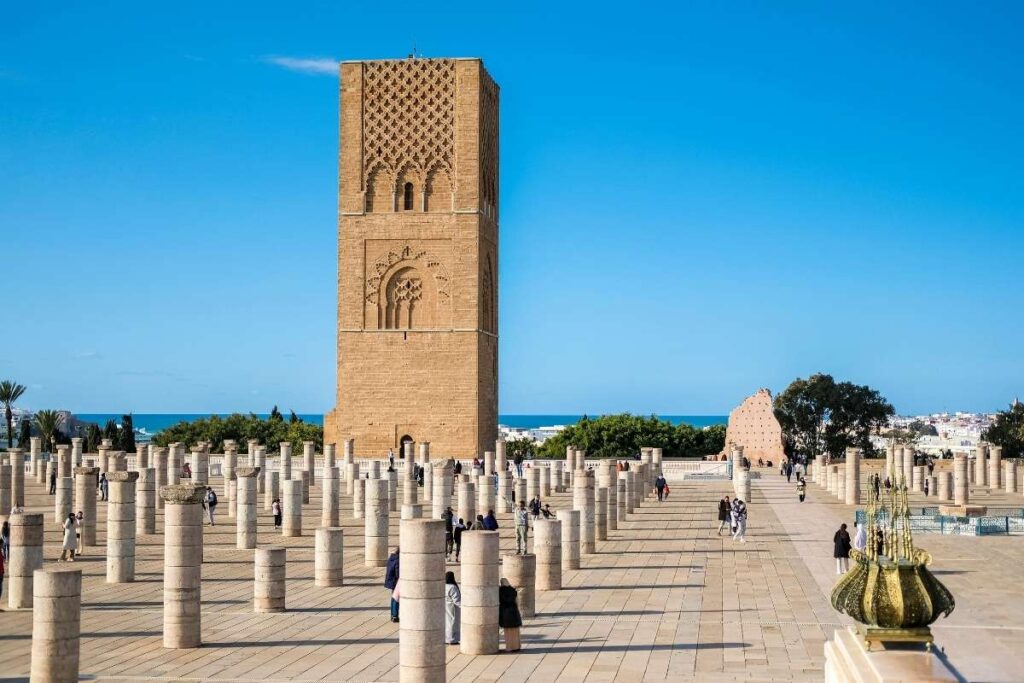
The tower is the unfinished minaret of a late 12th-century Almohad mosque. From the esplanade you can see how far the rows of columns extend across the former prayer hall. Plan to view the tower from ground level. The tourism board lists the landmark as open daily from 09:00 to 18:00. The plaza has little shade.
The Mausoleum Viewing Gallery
The mausoleum stands at the opposite end of the esplanade. When the public gallery is open, visitors can look down into the burial hall from a balcony. The tourism board’s listing gives hours of 08:00–18:00 on weekdays and 08:15–17:45 on weekends. Entry to the tower esplanade and the public gallery is free. Allow 30–50 minutes for both, including time for any access checks.
Cover shoulders and knees as a courtesy, keep voices low, and follow staff instructions on entry and photography. The approach can involve steps. Ask in advance if a step-free route is essential.
Explore Chellah and Rabat’s Museums
Chellah Archaeological Site
Chellah is a hillside site with two main layers to look for. The remains of Sala include a pre-Roman settlement and the Roman city of Sala Colonia. The later Marinid necropolis added medieval walls and funerary buildings. Allow 75–120 minutes at the site to see both areas. Paths can be uneven and steep, and the operator says some areas are inaccessible. A short taxi ride is useful when combining Chellah with the centre or the Hassan complex.

The official Chellah visitor page lists 09:00–18:00 from October to March and 09:00–20:00 from April to September. Last entry is one hour before closing. Check directly during Ramadan, when the operator’s published hours differ. Standard admission is 70 MAD for adults over 25, 50 MAD for ages 15–25, 30 MAD for ages 7–14 and free for children under seven. The adult ticket with an audioguide is 120 MAD. Buy a basic ticket online or at the entrance, and check audioguide availability in advance if you want one.
Mohammed VI Museum of Modern and Contemporary Art
Go to the Mohammed VI Museum for painting, sculpture and changing exhibitions of modern and contemporary art. It is at 2 Avenue Moulay Hassan, a short walk from the Rabat Ville station area. Allow 60–90 minutes. The museum lists 10:00–18:00, closes on Tuesdays and charges 60 MAD for foreign visitors. Check which exhibitions are running before you go.
Museum of History and Civilizations
If you are looking for the former Rabat archaeological museum, this is it. At 23 Rue El Brihi, it displays objects from prehistory through the Islamic period, including Roman bronzes from Volubilis. It is a good companion to Chellah or an alternative to an outdoor visit. Allow 45–75 minutes. The museum lists 10:00–18:00, closes on Tuesdays and lists an adult ticket at 20 MAD. Confirm current concessions and gallery access directly.
What to Do in Rabat When It Rains
Choose the modern art museum, the archaeology museum or the Oudayas museum on an open day. All three close on Tuesdays. For a Tuesday in the centre, check the current Villa des Arts exhibitions and their opening hours. In Hay Riad, the Seerah Museum offers free guided visits by reservation, with separate time slots for each language. Allow for the journey out to Hay Riad.
Walk the Bouregreg Waterfront and Atlantic Shore
Rabat Quays and Rabat Beach
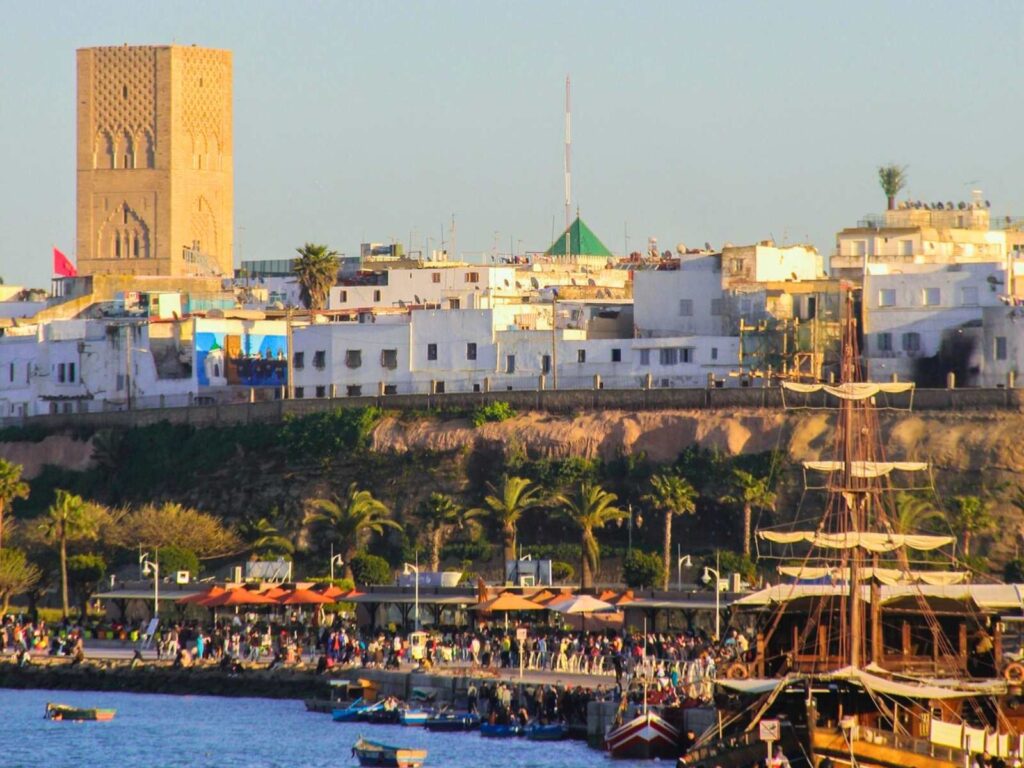
For a short walk, follow the Rabat-side quays below the medina and Kasbah. An out-and-back of 25–45 minutes leaves room for views across the river without committing to a crossing. The city beach lies below the Kasbah near the Atlantic mouth of the river. Expect a descent to the shore and exposed sand. Before swimming, check flags, lifeguard cover and current surf conditions.
Salé Marina and Medina
Bouregreg Marina is on the Salé bank. If you want a short visit across the river, take the tram to Bab Lamrissa and continue on foot. Allow two to three hours for a marina walk, a short medina visit and the return. Traditional flouka boats leave from the Rabat waterfront when operating. Ask at the quay about availability and the return before relying on one.
In the medina, the Marinid Madrasa is a separate ticketed stop with stone steps into its carved courtyard. The ministry lists 80 MAD for foreign adults. Published hours vary, so check the day. View the adjacent Great Mosque from outside. For a longer visit, see how to plan a Salé day trip.
Plan Half a Day, One Day, or Two Days in Rabat
Half a Day in Rabat
With three to four hours, start at Bab El Had, walk through the medina and Rue des Consuls, and spend the rest of the visit around the Kasbah. Choose the Andalusian Gardens or a short walk down to the quays, then leave time for a café stop. If royal history and art matter more, pair the Hassan complex with one central museum instead. Factor in the return to your train station.
One Day in Rabat
- Morning. Allow roughly two to two and a half hours for the medina, Kasbah lanes and Andalusian Gardens, including short walks.
- Lunch. Set aside 45–75 minutes. The Rabat food guide has ideas for a meal near your route.
- Early afternoon. Go to Hassan Tower and the mausoleum. Budget around 25–35 minutes on foot from the Kasbah area, or take a short taxi ride. Allow 30–50 minutes at the complex.
- Late afternoon. Choose Chellah by taxi or one museum near Rabat Ville. If Chellah is your top priority, move it earlier in the day so you have time before last entry.
Two Days in Rabat
Day one. Walk the medina and Kasbah, visit the gardens and Hassan complex, then leave time for a riverside break. Add the Oudayas museum if it is open and you want to spend longer in the Kasbah.
Day two. Start at Chellah. After lunch, visit one or both museums near Rabat Ville, or head across the river to Salé. For an extra evening, check the Royal Theatre’s performance calendar and book the show that fits your dates. For an overnight visit, see where to stay in Rabat.
Free and family options. Combine the medina, Kasbah lanes, gardens and quays for a route without admission fees. With children, choose fewer stops between breaks and consider a taxi to Chellah. The Jardin d’Essais Botaniques on Avenue de la Victoire is a separate outdoor option. The tourism board lists a Monday closure. If you prefer a landmark stop, consider the Royal Palace’s exterior Méchouar esplanade when security allows.
Getting Around Rabat Without a Car
Tram Stops and the Walk From Each
- Médina Rabat: a starting point for the old town. Continue on foot to Rue des Consuls and the Kasbah.
- Tour Hassan: budget about 5–10 minutes on foot to the Hassan complex, depending on the entrance.
- Mohammed V–Gare de Rabat: near Rabat Ville and about 5–10 minutes on foot from either central museum.
- Bab Lamrissa: on the Salé side. Allow about 5–15 minutes on foot to the marina or the edge of the medina, and longer to reach its interior streets.
Bab Chellah is a stop by the medina. For the archaeological site, consider a taxi and use the archaeological entrance as your destination. From Rabat Ville, walking to Chellah can take about 25–40 minutes depending on your starting point and pace. Check the official tram route map and current tram fares before setting off.

Arriving at Rabat Ville or Rabat Agdal
Rabat Ville puts you near the central museums and the Mohammed V–Gare de Rabat tram stop. High-speed Al Boraq services use Rabat Agdal. Check the station printed on your ticket and allow a separate transfer from Agdal. The Rabat transport guide covers arrival planning in more detail.
If you want a guide for the historic sites, compare guided Rabat city highlights. If you have another day to spare, use the separate guide to day trips from Rabat for Casablanca, Meknes and Volubilis, and other excursions.
Frequently Asked Questions
Is Rabat worth visiting on a first trip to Morocco?
Yes if you’re interested in royal and Almohad architecture, archaeology or the contrast between the medina and the Atlantic shore. On a short trip, choose the old town or the Hassan complex first and allow a separate afternoon for a longer sight such as Chellah.
How many days do you need in Rabat?
One full day works for the medina, Kasbah, Hassan complex and one museum or Chellah. Two days give you more time for both or for Salé. With half a day, focus on one area and leave room for a meal and your onward journey.
What can you see for free in Rabat?
The medina streets, public Kasbah lanes, Andalusian Gardens and Rabat quays are free to explore. The Hassan Tower esplanade and the mausoleum’s public gallery are free when open. The Oudayas museum and Chellah have separate admission.
Can you enter Hassan Tower and the Mausoleum of Mohammed V?
Visitors view Hassan Tower from the esplanade. At the mausoleum, the public gallery overlooks the burial hall when open. The esplanade and mausoleum have different listed hours. Follow signs and staff directions at the site.
How much time should you allow for Chellah?
Allow about 75–120 minutes at Chellah plus travel. The site has slopes and uneven paths, and last entry is one hour before closing. Go earlier if Chellah is a priority or verify your arrival time with the operator.
What can you do in Rabat when it rains, including on Tuesday?
The modern art, archaeology and Oudayas museums are good indoor choices on their opening days. All three close on Tuesday. Check Villa des Arts for a current exhibition or reserve an appropriate language slot at the Seerah Museum in Hay Riad.
Can you visit Rabat and Salé on the same day without a car?
Yes. Keep the Rabat part of the day selective and leave two to three hours for Salé and the return. Take the tram to Bab Lamrissa and walk to the marina or medina. Check at the quay if you prefer a boat crossing.
Is the Royal Palace open to visitors?
The palace interiors are closed to the public. The regional tourism board lists an exterior visit to the Méchouar esplanade when access permits. Follow security instructions and ask before taking photographs.