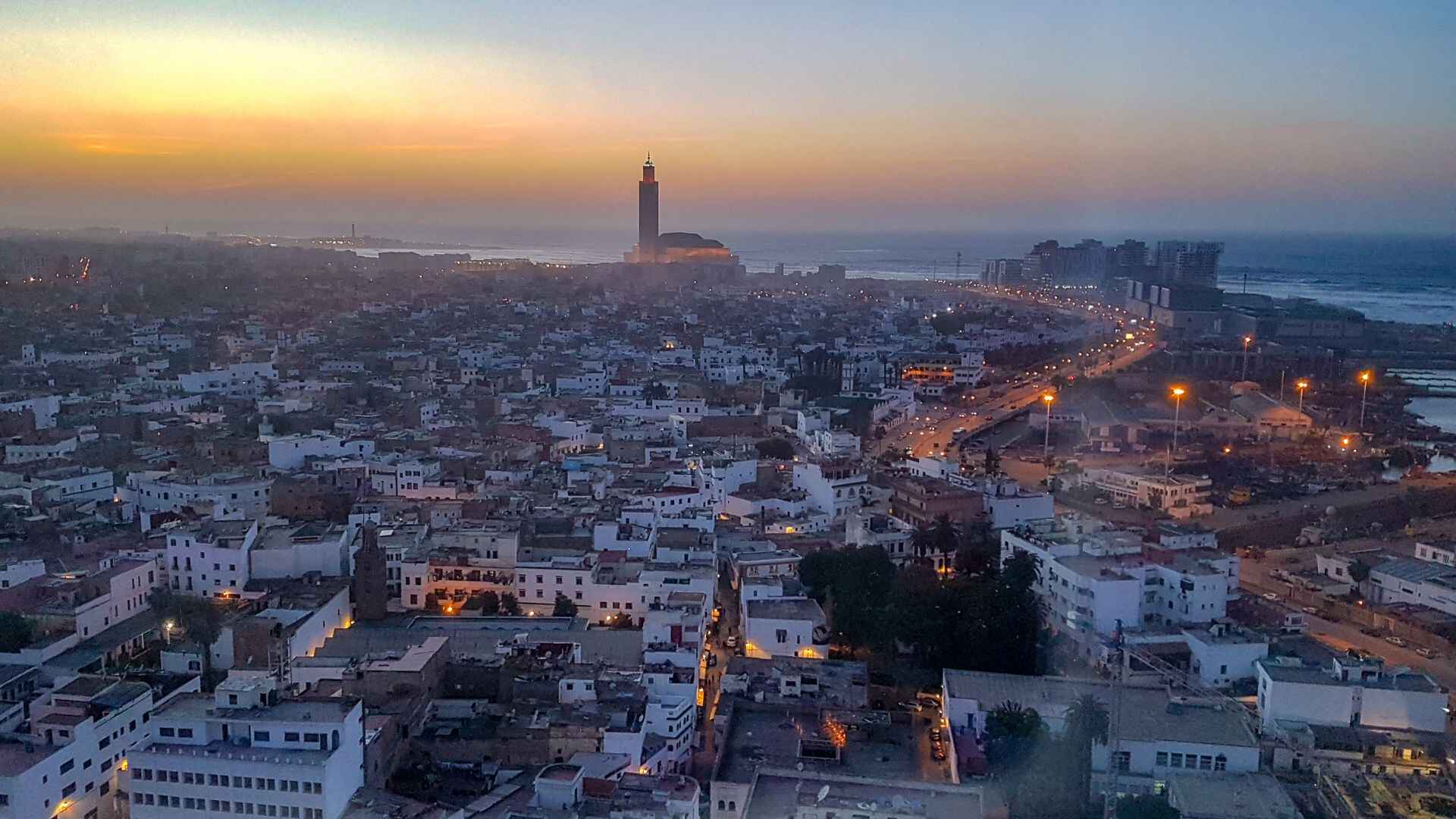
The best things to do in Casablanca don’t always reveal themselves at first sight. The city moves fast. Casablanca works hard. It feels like a place designed for real life, not for visitors — and maybe that’s exactly why it grows on you.
When travelers ask me about the best things to do in Casablanca, I tell them to take a breath first. Look past the traffic. Notice the Atlantic appearing at the end of a boulevard. Watch the cafés where the same regulars order the same coffee every morning. That’s when the city starts making sense.
Casablanca isn’t Marrakech, and it doesn’t try to be. It’s modern, layered, sometimes imperfect — but honest.
This guide shows you how to experience it that way.
Planning your trip? Start with the full Casablanca Travel Guide
Top Things to Do in Casablanca at a Glance
- Visit the Hassan II Mosque overlooking the Atlantic
- Walk through Place Mohammed V and the Art Deco center
- Explore the Habous Quarter (New Medina)
- Stroll along the Corniche and Ain Diab coastline
- Experience daily life at Casablanca Central Market
- Enjoy the city’s diverse food scene and cafés
If you only have one day in Casablanca, these highlights give you a balanced introduction to the city’s architecture, coast, culture, and everyday rhythm.
Explore the Landmarks that Shape Everyday Life
In Casablanca, landmarks don’t sit behind ropes. They live inside daily rhythm — kids playing nearby, commuters passing through, vendors calling across the street.
Hassan II Mosque
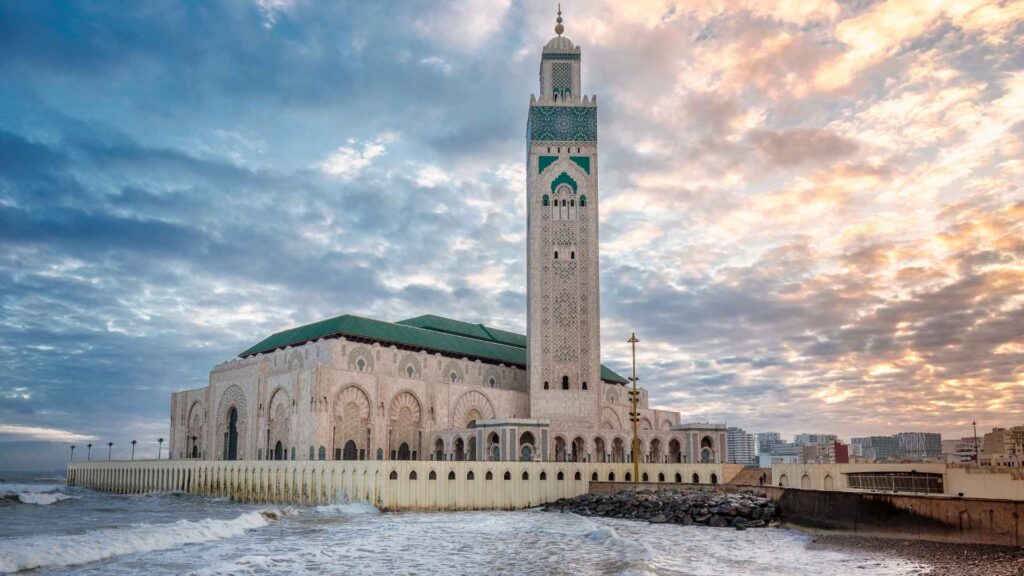
Almost every visit begins here.
Rising right above the Atlantic, the Hassan II Mosque feels both anchored and weightless. The sound of waves mixes with the call to prayer, and you understand why this building means so much — devotion, pride, and craftsmanship coming together in one place.
Walk the courtyard slowly. Notice the tiles, the carvings, the quiet precision. Inside, the space opens wide and soft.
Guided tours are worth taking. Not to tick off a box — but to understand the story behind what you’re seeing.
For official visitor information and opening hours, you can check the Hassan II Mosque details on the Hassan II Mosque page.
Place Mohammed V
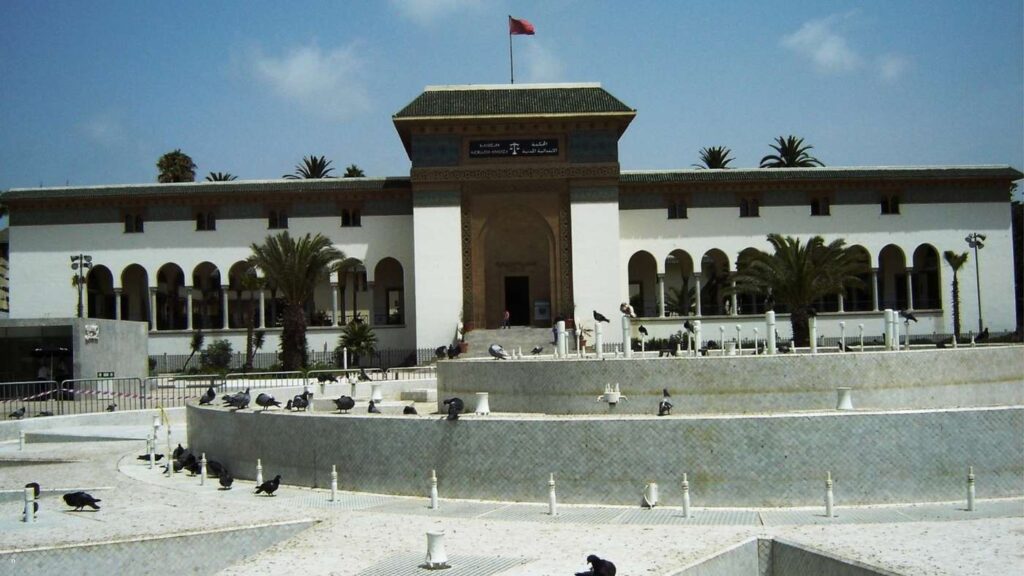
A short walk changes the mood completely.
Here, official buildings form a circle around the square. Art Deco curves. Moorish arches. Fountains that come alive at night. People cross the plaza without ceremony — talking, laughing, feeding pigeons, waiting for the next appointment.
Come back in the evening. The lights soften everything. It feels less formal, more human.
Habous Quarter (New Medina)
The Habous Quarter offers a very different side of Casablanca. Built during the early 20th century, it combines traditional Moroccan design with organized streets, arcades, and quiet courtyards. Bookshops, bakeries, olive stalls, and small craft stores line the lanes, making it one of the easiest places in the city to explore on foot.
Unlike older medinas elsewhere in Morocco, Habous feels structured and calm. It’s an ideal stop if you want atmosphere without getting lost, and many visitors consider it one of the most pleasant areas to wander for an hour or two.
Discover Casablanca Through Its Architecture
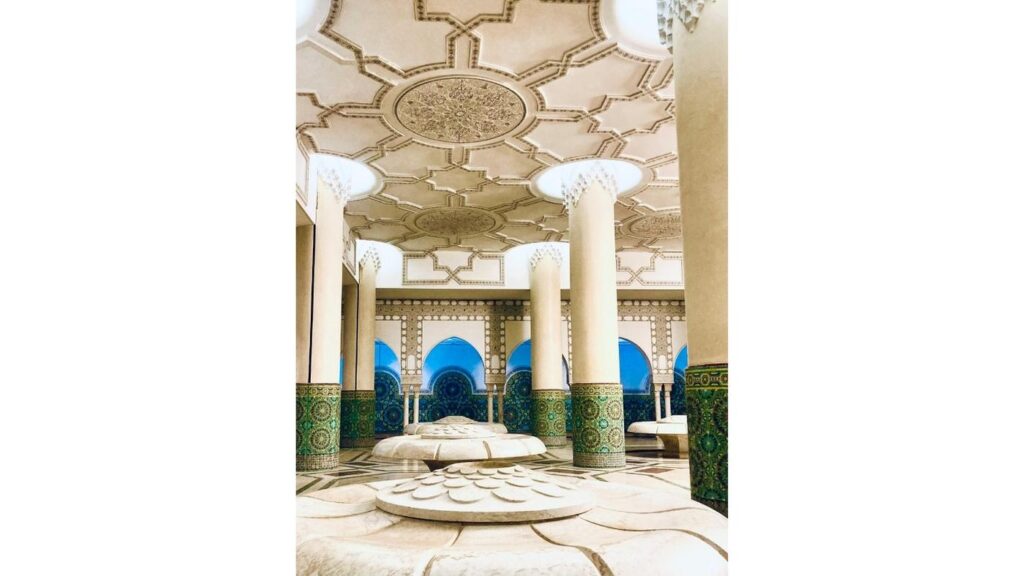
Casablanca doesn’t tell medieval stories. Its history is written in the 20th century, layered across façades and boulevards.
Art Deco Downtown
Walk on Boulevard Mohammed V with no plan.
Old cinemas, fading balconies shaped like waves, restored façades standing beside tired ones — everything reveals a city caught between European design and Moroccan identity.
Sit at a terrace, order coffee, and watch the trams glide past. For a moment, you can imagine how futuristic this neighborhood once felt.
Notre Dame de Lourdes Cathedral
Notre Dame de Lourdes Cathedral reveals another side of Casablanca’s layered identity. Built in the mid-20th century, the church stands out for its modern concrete structure and enormous stained-glass walls, which flood the interior with shifting colored light throughout the day.
Unlike the ornate historic mosques and traditional Moroccan architecture elsewhere in the country, this cathedral reflects Casablanca’s international influences and its period of rapid urban expansion. The design feels minimalist from the outside, but inside, the light and scale create a surprisingly peaceful atmosphere.
It’s not the city’s main attraction, yet it makes an interesting short stop if you enjoy architecture, photography, or discovering the quieter layers of Casablanca beyond the well-known landmarks.
Museum of Moroccan Judaism
Tucked inside a quiet residential district, the Museum of Moroccan Judaism feels intimate.
Photos, objects, clothing, prayer pieces — fragments of Jewish life from towns, villages, and cities across Morocco. Nothing dramatic. Everything personal.
It reminds you that Morocco is layered — communities, memories, traditions overlapping over time.
Where Casablanca Meets the Atlantic
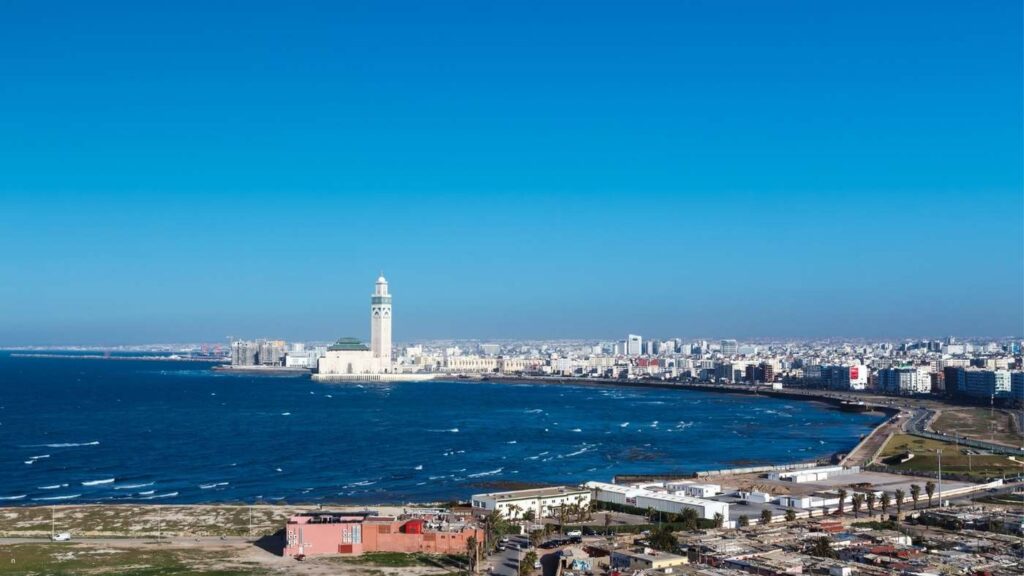
When the city feels overwhelming, the sea resets everything.
La Corniche Ain Diab
Along the Corniche, cafés face the water. People stroll, lean on rails, talk, and take photos. Nobody rushes.
Arrive at sunset. The light softens, the wind cools, and the city seems to breathe out.
Ain Diab Beach
Some days, the Atlantic roars. People come anyway.
Surfers chase waves—families picnic. Kids run barefoot along the sand. Even without swimming, the openness feels like relief after hours in traffic.
Experience Everyday Life — Not Just the Sights
To understand Casablanca, you need to watch how people actually live.
Central Market
Everything happens at once.
Fish on ice. Tomatoes stacked like small pyramids. Fresh herbs perfuming the air. Jokes, bargaining, greetings. Every corner smells different.
Pick your seafood. Ask to have it cooked. Simple, fresh, nothing staged — and somehow perfect.
It’s one of the most authentic and best things to do in Casablanca, because it shows life as it is.
Eating Across the City
Casablanca eats like a big, open port.
Tagines and couscous share space with sushi counters, Italian pasta, Lebanese grills, French bakeries, and tiny seafood spots with plastic chairs and great prices.
Lunch might be street food. Afternoon means pastries. Dinner could be refined or improvised.
Food here tells the truth: Casablanca is curious, practical, and always changing.
Why a Local Guide Can Change Everything
Casablanca is wide, and its stories hide behind regular-looking streets. A good guide fills in what you can’t see alone — how neighborhoods formed, how the port shaped the city, what existed before highways.
It turns simple sightseeing into understanding.
Want deeper context? Browse Tours & Activities
How to Plan Your Casablanca Sightseeing Route
Because Casablanca is spread out, planning your day by area makes exploring much easier. Most visitors start at the Hassan II Mosque in the morning, continue toward Place Mohammed V and the Art Deco center around midday, then head toward the Corniche or Ain Diab in the late afternoon for ocean views and sunset cafés.
Grouping sights this way reduces travel time and lets the city feel more relaxed instead of rushed. Taxis and ride-share apps are inexpensive and often the fastest way to move between neighborhoods.
Easy Day Trips from Casablanca
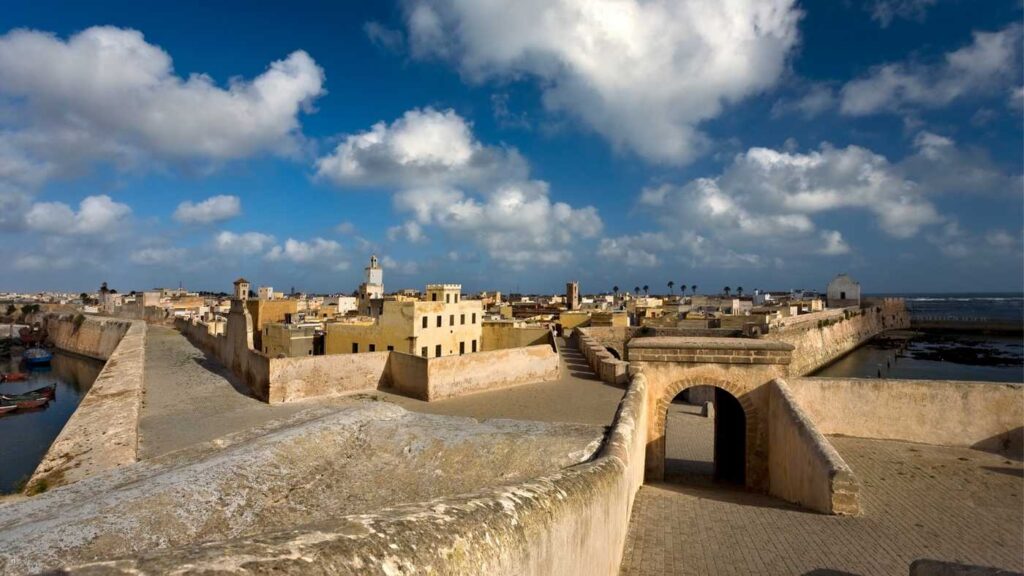
Another reason I like this city: when you want a change of scenery, it’s simple to leave — and just as easy to return.
Rabat feels calm and elegant, with ocean vistas and royal history. El Jadida brings Portuguese walls and a slower coastal rhythm. Azemmour moves like a painting — murals, river views, silence.
Each one adds depth to your journey.
See options here: Best Day Trips from Casablanca
How Long Should You Stay?
Half a day gives you headlines. One full day helps the city settle in. Two days let you breathe, taste more, revisit places, maybe slip away for a short excursion.
Casablanca rewards patience more than speed.
Best Time to Visit Casablanca
Spring and autumn feel easy. Summer warms up, but evenings by the sea stay pleasant. Winter turns a bit grey, yet still mild enough for long walks and café terraces.
For seasonal tips, see Best Time to Visit Morocco
Simple Tips So the City Flows Better
Use taxis or ride-shares for long distances. Dress respectfully near mosques. Expect crowds and noise. Plan your day by neighborhoods so you’re not crossing the city all afternoon.
Above all, give it time.
Common Mistakes Visitors Make in Casablanca
- Trying to walk everywhere — the city is larger than it looks
- Only visiting the mosque and leaving immediately
- Skipping the Corniche and coastal areas
- Expecting a traditional tourist-style medina like Marrakech or Fes
- Planning too little time to experience local cafés and markets
Casablanca rewards travelers who slow down, plan by neighborhood, and allow time to see both its landmarks and everyday life.
Plan Your Casablanca Visit
Explore more resources to organize your Casablanca trip:
Final Thoughts: Why Casablanca Stays With You
Casablanca doesn’t perform. It lives.
You see real workdays, flashes of frustration, sudden beauty — the mosque glowing at sunset, the sea pushing against the shore, the quiet of an old café between conversations.
Somewhere between a market meal, a walk along the Corniche, and a moment of stillness, you realize: this is modern Morocco. Complex. Creative. Always moving.
And that, for me, is what defines the best things to do in Casablanca — not just visiting places, but noticing how the city breathes.
Keep exploring Morocco with our City Guides and Things to Do
Best Tours in Casablanca: Top Day Trips & City Experiences
Discover the best guided tours in Casablanca, from city highlights to unforgettable day trips across Morocco.