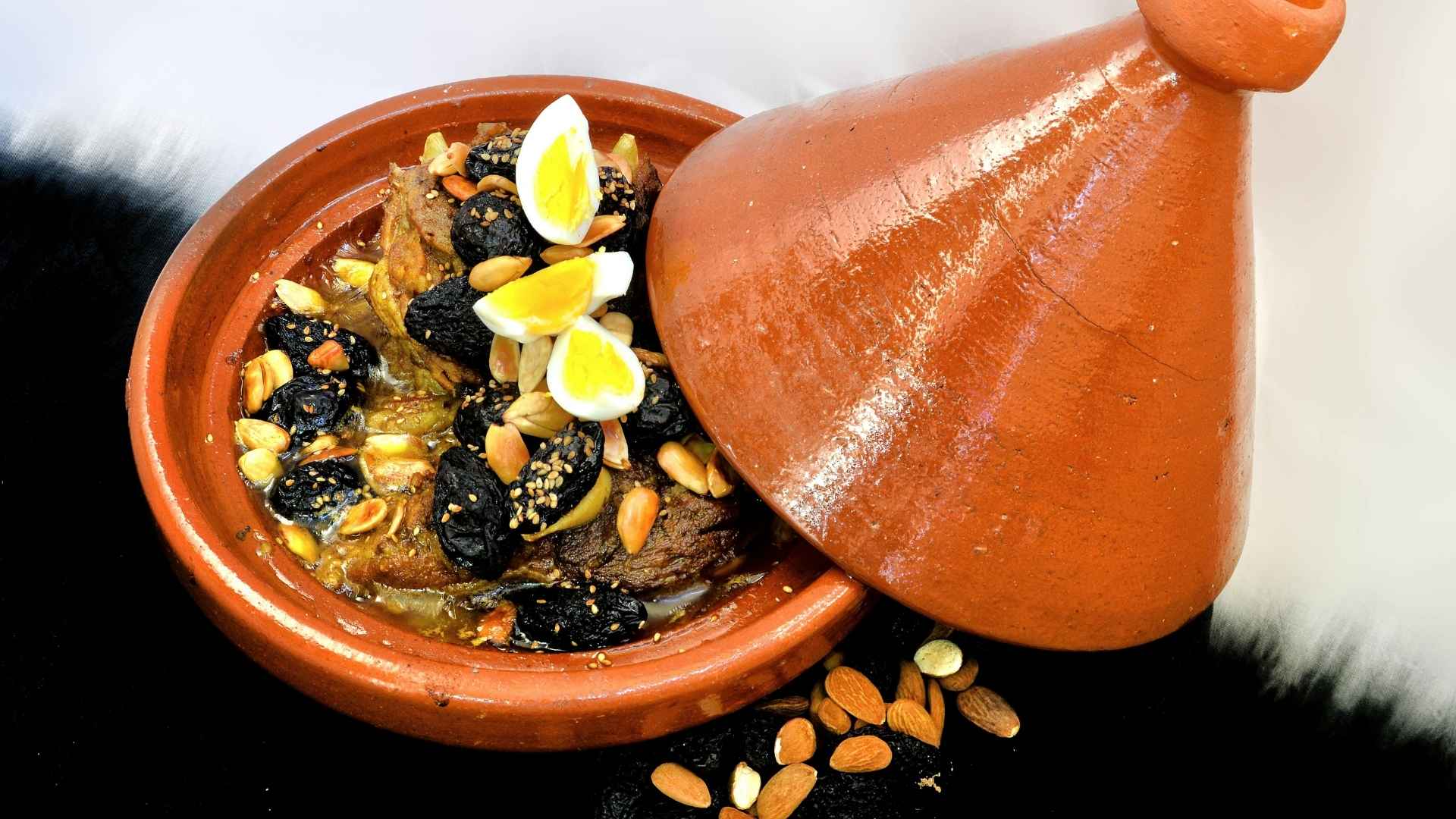
Order a tagine in Morocco and you might get chicken with tart preserved lemon and briny olives, or lamb with soft, sweet prunes. The same menu name can cover dishes that taste quite different. This guide to traditional Moroccan food explains what arrives at the table, how it’s made, and which ingredients to ask about before you order.
Start with the table if you’re choosing a dish. For regional specialties and ideas on where to try them, see the guide to what to eat in Morocco by city.
Traditional Moroccan Dishes at a Glance
| Dish | What it is | Typical ingredients | Flavor or texture | Common serving context | Ingredients to confirm |
|---|---|---|---|---|---|
| Tagine | A family of dishes named for the lidded cooking pot | Meat, fish or vegetables with spices | Saucy, from briny to sweet-savory | Main dish with bread | Stock, butter, nuts, chili |
| Couscous | Steamed grains with toppings and broth | Wheat semolina, vegetables, broth, often meat | Fluffy grains, savory broth | Friday lunch and other meals | Grain, meat stock, butter |
| Poultry pastilla | Crisp baked pie | Chicken or pigeon, thin pastry, eggs, often almonds | Sweet-savory, with a crisp shell | Celebrations or as a starter | Wheat, eggs, almonds, butter |
| Seafood pastilla | Savory baked pie | Fish or shellfish, thin pastry, often glass noodles | Crisp shell with a seasoned filling | Starter or main dish | Fish, shellfish, wheat, other pastry ingredients |
| Harira | Tomato and pulse soup | Chickpeas, lentils, herbs, sometimes meat | Tangy and hearty | Ramadan iftar and other meals | Meat, stock, flour, pasta, eggs |
| Rfissa | Chicken and broth over torn bread | Chicken, lentils, fenugreek, msemen or trid | Soft bread and fragrant broth | Family meals and special occasions | Wheat, stock, butter |
| Tanjia | Meat cooked in a tall clay jar | Beef or lamb, preserved lemon, garlic, cumin | Tender and rich | Main dish associated with Marrakech | Meat, preserved butter |
| Bissara | Puréed pulse soup or dip | Split favas or peas, garlic, cumin, olive oil | Earthy and creamy | Breakfast or lunch | Stock, added fats, bread |
| Msemen and baghrir | Layered flatbread and hole-topped pancake | Wheat flour or semolina, often served with toppings | Flaky layers or a spongy crumb | Breakfast or snack | Wheat, butter, milk, eggs, honey |
| Zaalouk and taktouka | Cooked vegetable salads | Eggplant or peppers, tomatoes, garlic, oil | Soft, garlicky, sometimes smoky | Sides or starters with bread | Chili, added fats, accompaniments |
| Sardines | Grilled fish or stuffed fried fillets | Sardines, seasoning or chermoula | Briny, rich, sometimes spicy | Main dish or market food | Fish, wheat coating, shared frying oil |
| Chebakia | Folded and fried sweet pastry | Wheat, sesame, honey or syrup | Toasted, crisp and sticky | Iftar or with tea | Wheat, sesame, nuts |
What Gives Moroccan Food Its Flavor?
Aromatic Spices and Chili Heat
Cumin, ginger, cinnamon, saffron and paprika can give a dish fragrance, earthiness or warmth. Actual chili heat depends on the preparation. A grilled fish marinade can have a kick, while a chicken tagine with olives may taste mainly salty and tart. Ras el hanout is a blend whose ingredients and proportions vary by spice seller or cook.
Preserved Lemon, Herbs, and Chermoula
Salt-preserved lemon adds a sharp, salty citrus note. Olives bring brininess, and parsley and cilantro can give sauces a fresh herbal flavor. Chermoula, often used to season fish, can combine those herbs with garlic, cumin, paprika, oil and lemon or vinegar. Some versions use hot pepper.
Moroccan Main Dishes and Soups
Tagine and Tanjia
Tagine, also spelled tajine, is the name of both a pot and a family of dishes. The pot has a shallow base and usually a conical lid that returns condensation to the food. Expect plenty of sauce in many versions and bread for scooping it up. Chicken with preserved lemon and olives is tart and briny. Lamb with prunes leans sweet-savory, while fish and vegetable versions bring different seasonings and textures.
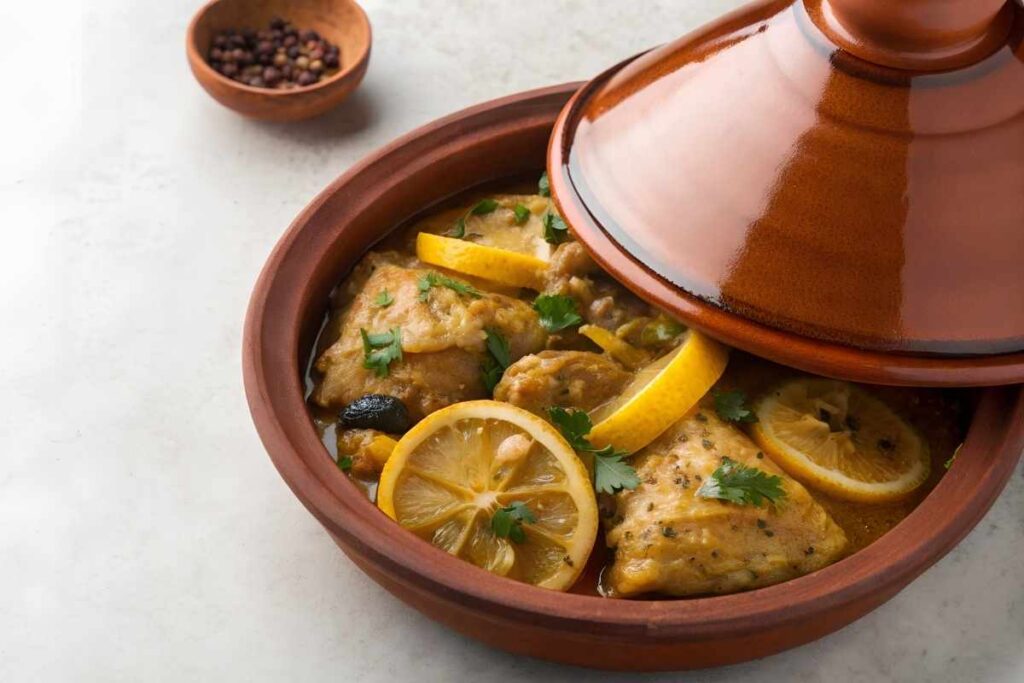
Tanjia, also spelled tangia, takes its name from a tall earthenware jar. The Marrakech preparation commonly cooks beef or lamb with garlic, preserved lemon and cumin. Some cooks add saffron or smen, a preserved butter. A traditional method cooks the jar slowly in the embers of a furnace, including those used to heat a hammam. The meat becomes tender and the sauce concentrated. See the Marrakech–Safi heritage guide for a look at the preparation.
Couscous and the Friday Meal
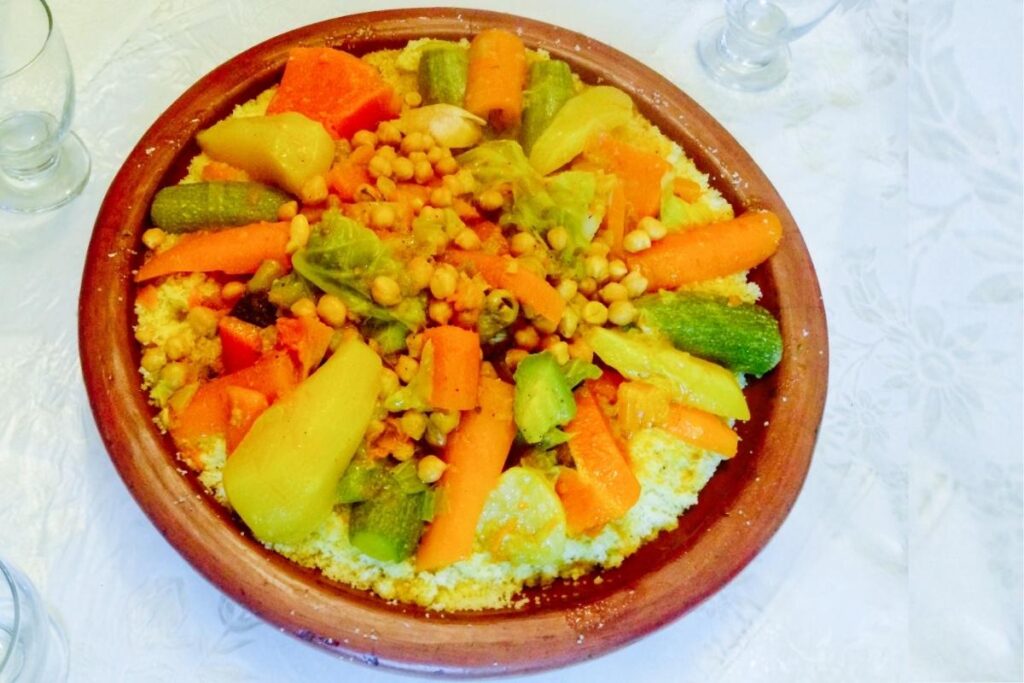
The light grains in a typical Moroccan couscous dish are steamed wheat semolina. Seven-vegetable couscous is a familiar version, with vegetables and broth and often beef, lamb or chicken. Tfaya, a sweet onion-and-raisin topping, is another preparation. If you see vegetables piled over the grains, ask what the broth contains.
Couscous is a common Friday lunch in many Moroccan households and is also served on other days. In 2020, UNESCO recognized the traditions of making and eating couscous as shared heritage of Algeria, Mauritania, Morocco and Tunisia.
Poultry Pastilla and Seafood Pastilla
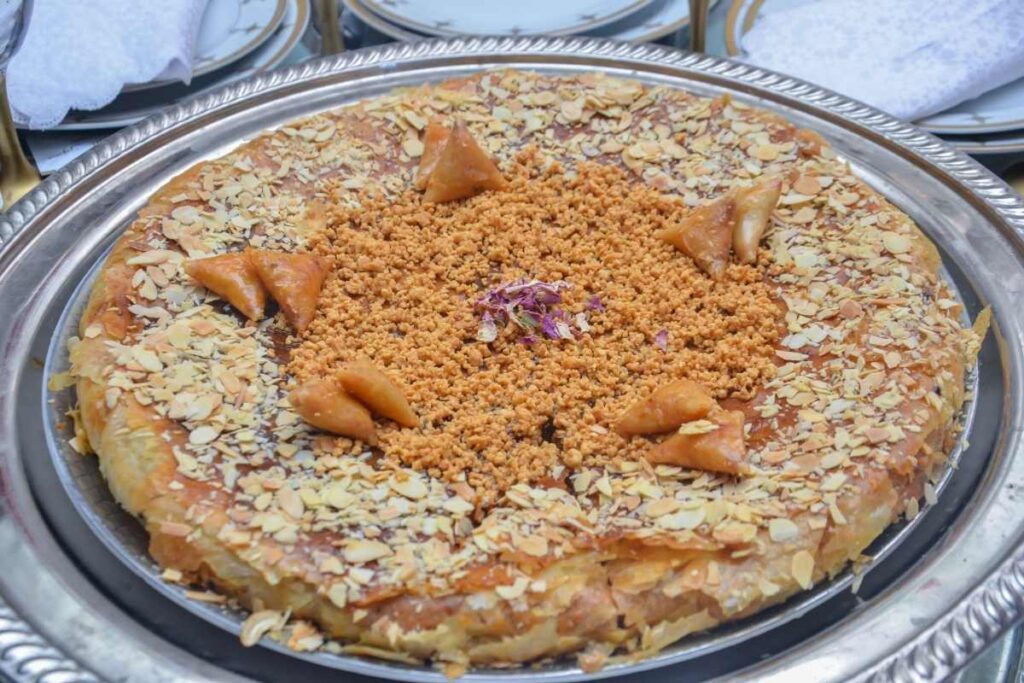
Pastilla, also spelled bastilla, is a baked pie with thin layers of pastry. A familiar poultry version combines chicken or pigeon with seasoned onions, eggs and almonds. Powdered sugar and cinnamon often finish the crisp shell, giving the pie its distinctive sweet-savory taste. It’s often served on special occasions.
Seafood pastilla has a savory filling that can include fish, shrimp or squid and seasoned glass noodles. Ask what’s inside before ordering. The two versions have different fillings, and the pastry, butter, toppings and other ingredients can vary by kitchen.
Harira and Bissara
Harira is a tangy tomato-and-herb soup commonly made with chickpeas and lentils. Depending on the recipe, it may contain meat, stock, vermicelli, egg or flour for thickening. It often appears at iftar, the meal that breaks the daily fast during Ramadan, and is also served year-round.
Bissara uses dried split fava beans or split peas, cooked and blended to a smooth purée. It can be thin enough to sip as soup or thick enough to scoop with bread. Olive oil and cumin are common finishes. If you’re avoiding animal ingredients, ask about stock as well as any fat added during cooking.
Rfissa
Rfissa brings together braised chicken, lentils and fragrant onion broth over torn msemen, trid or another bread base. Fenugreek gives many versions a distinctive aroma and the bread softens as it absorbs the broth. It’s served for some family gatherings and postpartum meals. A Meknes-style variation called bormache uses torn bread.
Méchoui and Moroccan Sardines
Méchoui is roasted lamb or sheep, traditionally cooked whole in some settings. You may also encounter it served as a portion of shoulder or leg. Rich, tender meat is often eaten with salt and cumin.
Sardines are a good example of how preparation changes the dish. Grilled sardines have a briny, oily richness. In another version, two opened fillets enclose chermoula before frying. The herbs, garlic and citrus give those fillets a brighter flavor. Ask about a flour coating if you need to avoid wheat.
Moroccan Breakfast, Breads, and Street Snacks
Khobz, Msemen, Baghrir, and Harcha
- Khobz is bread. A common everyday version is a round baked loaf with a firm crust and soft crumb, useful for scooping up a tagine or cooked salad.
- Msemen is a flatbread folded into layers and cooked on a griddle. Its edges can be crisp while the middle stays soft. Eat it plain, with honey or butter, or try a savory filled version.
- Baghrir, also spelled beghrir, is a spongy semolina pancake covered in little holes. Warm butter and honey can soak into the holes.
- Harcha is a semolina griddle bread with a grainy crust and tender center. Sweet and savory versions are both made.
Sfenj and Maakouda
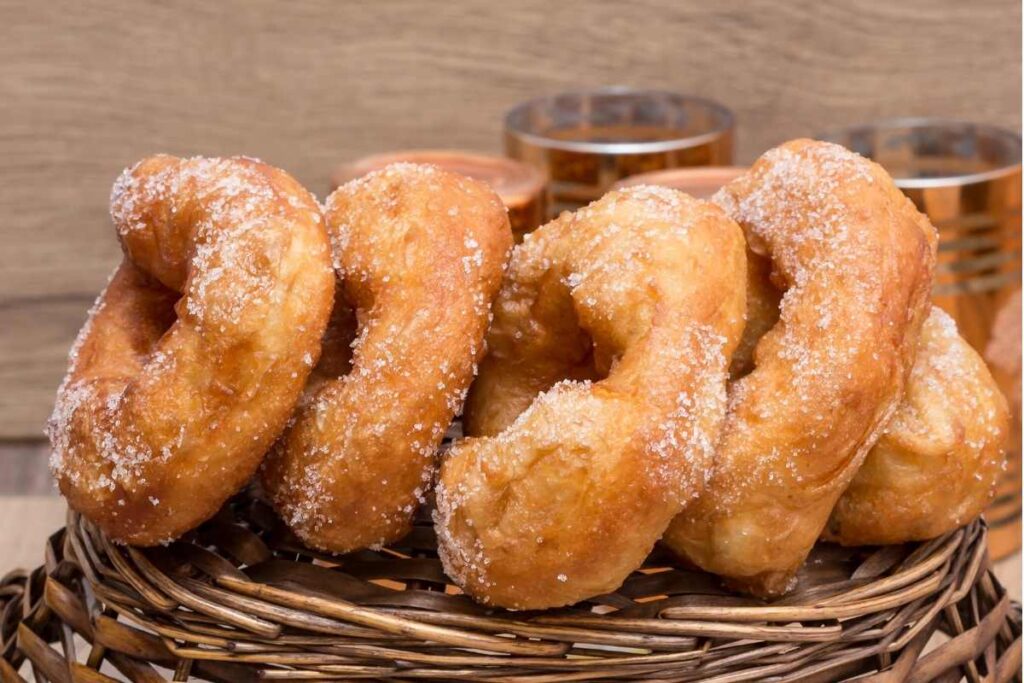
Sfenj is a fried dough ring with a crisp exterior and a springy, chewy middle. It can be served plain or finished with sugar. Maakouda is a seasoned potato fritter with a soft center, sold on its own or tucked into bread. Coatings and binders vary, so ask about flour and egg if you avoid either.
Cooked Salads, Spreads, and Sides
Zaalouk and Taktouka
Zaalouk is a soft cooked salad of eggplant and tomato, usually with garlic, oil and spices. Roasted eggplant can give it a smoky finish. Taktouka is based on peppers and tomatoes, with sweetness from the cooked peppers and sometimes a charred flavor. Both work as starters with bread or as sides alongside a main dish.
Amlou
Amlou is a nutty spread associated with southern Morocco’s argan-growing areas. A familiar version grinds roasted almonds with culinary argan oil and honey. It can be thick or pourable and is often served with bread at breakfast or tea. Ask what nuts and sweeteners the cook uses.
Moroccan Sweets and Mint Tea
Chebakia and Kaab el Ghazal
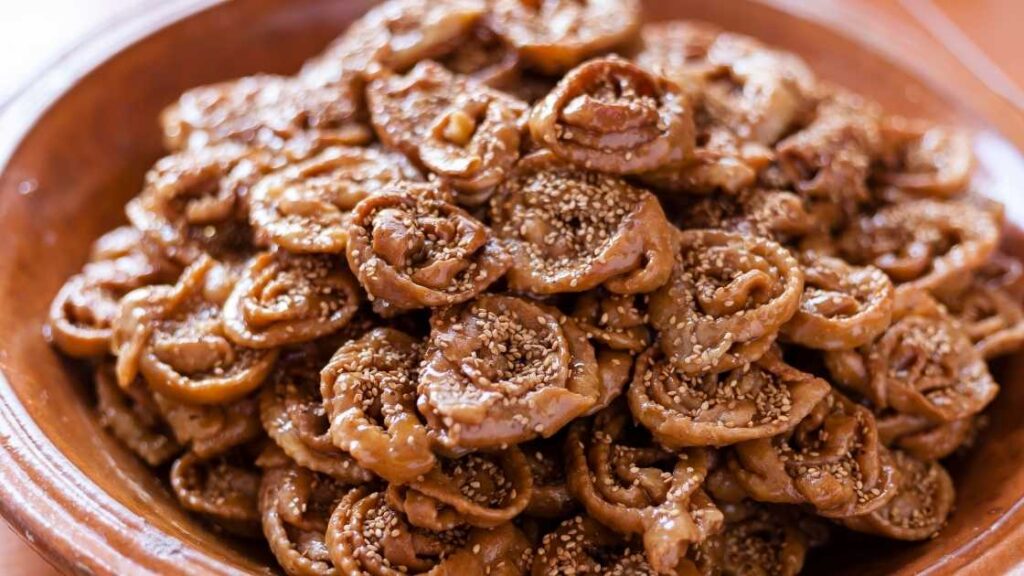
Chebakia is a folded, fried pastry usually made with sesame and coated in honey or syrup. It is sticky and lightly crisp, and often served with harira at iftar. Kaab el ghazal, sometimes listed as cornes de gazelle, are crescent-shaped pastries filled with almond paste, often scented with orange blossom water. If allergens matter, ask the bakery about the pastry, filling and shared equipment.
Moroccan Mint Tea
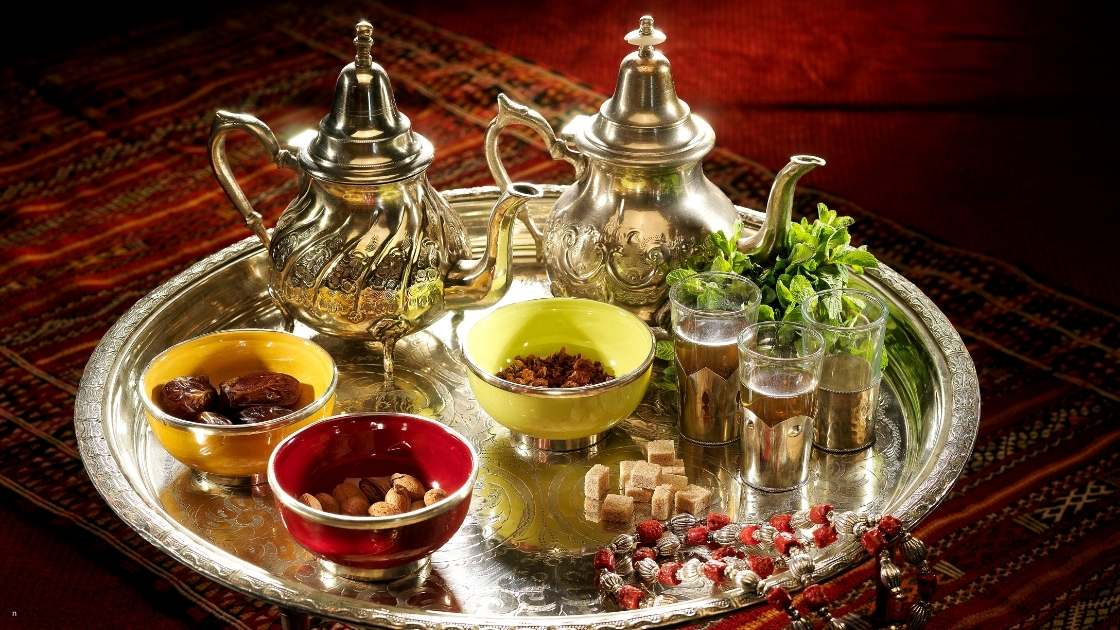
Moroccan mint tea usually combines green tea, fresh mint and sugar. Sweetness and herbs vary, so ask about less sugar before it’s brewed if you prefer. Tea is served at home and in cafés, and offering it is a common way to welcome a guest. A warm thank-you is enough if you’d rather decline. Read more about Moroccan hospitality and home visits.
Ingredients to Check Before Ordering
Vegetarian and Vegan Choices
Simple bissara, zaalouk, taktouka and vegetable tagine are good dishes to ask about. Find out whether the cook used meat or fish stock, animal fat, butter or other dairy, and whether toppings or accompaniments contain eggs or honey. A platter topped with vegetables can still be cooked with meat broth. See the guide to vegetarian and vegan ordering in Morocco.
Wheat, Nuts, Sesame, Fish, and Shellfish
Wheat semolina is standard in couscous. Ask about wheat in soup thickeners, bread, pastry and coatings. Almonds are common in amlou, poultry pastilla and kaab el ghazal. Chebakia often contains sesame, and seafood pastilla may contain both fish and shellfish. If you have an allergy or coeliac disease, ask about the exact recipe and shared fryers, cookware and utensils. Food Allergy Research & Education’s dining guidance explains what to ask about kitchen cross-contact.
Food and Water Precautions
Wash your hands before eating and choose fully cooked food served hot. If you’re uncertain about the water source, choose sealed bottled or properly treated water and check what ice is made from. Queues and good smells can tell you what’s popular, but they don’t show how food has been handled. For more details, see food and water precautions in Morocco and the CDC’s travel food and drink guidance.
Frequently Asked Questions
Is Moroccan food spicy?
It can be. Many dishes are fragrant from spices such as cumin, ginger or cinnamon, and some marinades, condiments and preparations also use hot pepper. Ask about the dish and any sauce served alongside it.
What is the difference between tagine and tanjia?
Tagine names a shallow, usually conical-lidded pot and a family of dishes made with meat, fish or vegetables. Tanjia names a tall clay jar and the slow-cooked dish associated with Marrakech, commonly made with meat, preserved lemon and spices.
What is pastilla made of?
A poultry pastilla often has thin pastry, chicken or pigeon, seasoned egg and almonds, with sugar and cinnamon on top. A savory seafood version can contain fish, shellfish and glass noodles. Ask about the pastry and filling separately if ingredients matter.
Is couscous Morocco’s national dish?
Couscous is an emblematic Moroccan dish and a common Friday meal. UNESCO recognizes the traditions around it as shared by Algeria, Mauritania, Morocco and Tunisia.
Is Moroccan couscous gluten-free?
Standard couscous is made with wheat semolina and contains gluten. If a kitchen offers another grain, confirm the ingredients and how it is prepared, including possible cross-contact.
Which Moroccan dishes can be vegetarian?
Zaalouk, taktouka, simple bissara and some vegetable tagines can be made without meat. Confirm the recipe with the kitchen, especially stock, animal fats and accompaniments.
Does Moroccan food contain nuts or sesame?
Some dishes do. Almonds commonly appear in amlou, poultry pastilla and gazelle-horn pastries, while sesame is common in chebakia. Check the specific dish, toppings and shared equipment when you need to avoid either.